I quit one of my jobs this week. I'm finishing the semester and I'm out. Hurrah!
I'm interviewing for another job, which would be full time but not permanent. My co-workers are all desperately curious but I can't talk about it at ALL. No, really, guys, not at all.
I'm keeping my current second job because I'm in the middle of a big, successful joint project with someone else whom I a) like and work well with and b) don't want to ditch. And it's going so well! New Maybe Job is okay with this and would schedule around it.
(My current third job - no, I'm not joking- is only this semester. Thank goodness. The constant rushing about is extremely wearing.)
My oldest kid has been stealing small stuff from friends. This has inspired despair but also a future post about the stuff that I know I'm doing right.
Also! Turns out having two jobs pays more!
Showing posts with label Education. Show all posts
Showing posts with label Education. Show all posts
Friday, February 15, 2019
Tuesday, June 11, 2013
"Grad School Is a Sunk Cost"
Some pratty little business-school first-year once told me that my experience in grad school was a sunk cost and therefore I should quit since I hated it. He then compared it to an opera ticket to a bad performance of Aida.
Although I'm the first to admit that economic theory goes whoosh over my head, the way I understand a sunk cost is like this: You paid/invested quantity X for Thing Y. You have received or will receive benefit amount Z. If you can receive more benefit from doing Thing A, then you should ignore the X you paid and not do Thing Y any more.
This dude- who is, I fervently hope, not doing anything with people any more - tried to say that I had put X amount of suffering into grad school and thus far received nothing, therefore I should quit. However, scientists can generally estimate whether or not they will ever graduate, and in how many years (+/- 2, but still). So further investment in grad school does in fact get you something - a PhD - which is worth more in future earnings, respect, and career possibilities than not having it. (At least, we hope.)
So I think grad school isn't like a sunk cost fallacy. It's like a 5-year T-bill. Cash it in early and get nothing, wait it out painfully and maybe get your investment back with some interest. Hope the government doesn't go bankrupt in the meantime.
(This happened to someone I knew in grad school: the lab's funding ran out before she graduated. You can imagine the disaster that ensued.)
(This happened to someone I knew in grad school: the lab's funding ran out before she graduated. You can imagine the disaster that ensued.)
Monday, April 29, 2013
Tatoe Speaks!
Well, in fact he's been saying word-like things for several months, but around 16 months (so in February) he started talking in grammatically correct, complete sentences. It's disconcerting, that's what, to hear a two-foot-tall and mostly incomprehensible person come out with "I want to go!" "Where's the ball?" "This is a tree".
The other one was still at "Dog! Woof!" when he was 16 months old. It's almost like having a Control Baby, and this one is the Has Chatterbox Sibling: Experimental Group A.
The other one was still at "Dog! Woof!" when he was 16 months old. It's almost like having a Control Baby, and this one is the Has Chatterbox Sibling: Experimental Group A.
Saturday, April 28, 2012
Addendum
I am, in truth, fairly keen on Bug learning to read before he goes to school. He will probably be capable of it without a lot of pushing ("It's a big M, Mama! May I have some french fries?"). This is: so the school can't screw it up.
I went to public schools. My sisters went to public schools. We currently hold three bachelor's degrees and two PhDs between us, and comprise a biologist, a chemist, and a nurse. Public schools are wonderful. However.
I still remember when my youngest sister, Prudence, ran afoul of the 'Phonics-based' reading method her (very good, Congressional Blue Ribbon, well-off suburban) school was using. "You need to sound the word out," they said to her. "Pl-ooo-uuu-gggg-hhh."
"But that's not how it's pronounced," she said.
"But you have to sound it out."
(Irrelevant postscript: Someone mentioned the stupid 'delayed' vaccine schedule to me today, because their kid with significant other medical issues was extra reflux-y after the kid's last shots, and I nobly did not scream POST HOC at them.)
I went to public schools. My sisters went to public schools. We currently hold three bachelor's degrees and two PhDs between us, and comprise a biologist, a chemist, and a nurse. Public schools are wonderful. However.
I still remember when my youngest sister, Prudence, ran afoul of the 'Phonics-based' reading method her (very good, Congressional Blue Ribbon, well-off suburban) school was using. "You need to sound the word out," they said to her. "Pl-ooo-uuu-gggg-hhh."
"But that's not how it's pronounced," she said.
"But you have to sound it out."
(Irrelevant postscript: Someone mentioned the stupid 'delayed' vaccine schedule to me today, because their kid with significant other medical issues was extra reflux-y after the kid's last shots, and I nobly did not scream POST HOC at them.)
Friday, April 13, 2012
Memories of Education
I was reading some of FMH's posts on her son, and thinking on some of the curious and unfortunate aspects of the US school system as a whole.*
Since schools must provide services for learning difficulties or disabilities,** but not to the 'academically gifted', the net effect is that the kids who have an easy time are frequently... bored. Really bored.
We can all understand the logic. Everyone should achieve a minimum level. We can all also understand that being that kid is really boring.
I grew up in a wealthy school district that did, in fact, provide services to the bored kids. Though it seems quite unfair in retrospect ("You did great, so here's more work!!) I liked having challenging work. I suppose I enjoyed the working ahead, too, though it had strange effects later; I took college classes at the local college before I could drive.
I very especially remember being set to tutor the kids who were having a hard time. And that? I did resent. I'm not sure I can articulate why, even now. Partly because I was learning no new content. I was learning how to explain things to people who just don't get it, which is indeed a valuable skill, but a ten-year-old doesn't usually appreciate that. I remember feeling it was tedious and exploitative. It was also like playing at mental gymnastics, like a game of Taboo with a group of well-read people. After a few rounds it gets boring again.
From a teacher's point of view, it's naturally very effective. They are making the most efficient use of their resources to help everyone get to the same minimum level. I understand. And yet, I retain the idealistic view that schools exist to help children reach their intellectual potential - not to drill in a minimum set of facts about Japan's history and the life-cycle of a caterpillar and how to add. If you can already add, isn't it time to learn something new?
(I'm not blaming the teachers. Teachers are over-worked, under-paid, and stuck with a class full of little darlings all day. If there were more! better paid! teachers, this would be easier. If schools had more money, they could do more individually-tailored education. And so on.)
I know that our school systems operate very far from the optimum. We will probably never be able to afford private schools. I will do as my mother did and make sure my kids get the education they need. I just wish it didn't have to be so hard for everyone.
* For those of you from other countries- it is in theory run state-by-state and in practice frequently run district-by-district, so each county or city may vary wildly from the next. It's hardly a system at all.
** Not that they always do a good job. And they try to weasel out of it at regular intervals. And there's always more need than money.
Since schools must provide services for learning difficulties or disabilities,** but not to the 'academically gifted', the net effect is that the kids who have an easy time are frequently... bored. Really bored.
We can all understand the logic. Everyone should achieve a minimum level. We can all also understand that being that kid is really boring.
I grew up in a wealthy school district that did, in fact, provide services to the bored kids. Though it seems quite unfair in retrospect ("You did great, so here's more work!!) I liked having challenging work. I suppose I enjoyed the working ahead, too, though it had strange effects later; I took college classes at the local college before I could drive.
I very especially remember being set to tutor the kids who were having a hard time. And that? I did resent. I'm not sure I can articulate why, even now. Partly because I was learning no new content. I was learning how to explain things to people who just don't get it, which is indeed a valuable skill, but a ten-year-old doesn't usually appreciate that. I remember feeling it was tedious and exploitative. It was also like playing at mental gymnastics, like a game of Taboo with a group of well-read people. After a few rounds it gets boring again.
From a teacher's point of view, it's naturally very effective. They are making the most efficient use of their resources to help everyone get to the same minimum level. I understand. And yet, I retain the idealistic view that schools exist to help children reach their intellectual potential - not to drill in a minimum set of facts about Japan's history and the life-cycle of a caterpillar and how to add. If you can already add, isn't it time to learn something new?
(I'm not blaming the teachers. Teachers are over-worked, under-paid, and stuck with a class full of little darlings all day. If there were more! better paid! teachers, this would be easier. If schools had more money, they could do more individually-tailored education. And so on.)
I know that our school systems operate very far from the optimum. We will probably never be able to afford private schools. I will do as my mother did and make sure my kids get the education they need. I just wish it didn't have to be so hard for everyone.
* For those of you from other countries- it is in theory run state-by-state and in practice frequently run district-by-district, so each county or city may vary wildly from the next. It's hardly a system at all.
** Not that they always do a good job. And they try to weasel out of it at regular intervals. And there's always more need than money.
Monday, December 26, 2011
Don't Know Much About Psychology
(I warn you in advance that I don't have much of a point here.)
I have a cousin who is now twenty. His father is 65 (second marriage) and has single-parented him since he was two or three. Now, I have NO qualifications in psych, but a five-year-old could diagnose this child with autism spectrum disorder. (Or Asperger's. Or whatever.) To spare you the long list, I've put it at the bottom of the post. He has... maybe two friends? At all. He creeped out my sister's very sweet, tolerant roommates until he was no longer welcome.
He does all the classic behaviors: avoidance of eye contact, inability to respond to normal social cues, easily overstimulated, stereotypical arm flapping, gross and fine motor issues, poor muscle tone, severe social developmental delays.
My uncle's response? "No! He doesn't have autism/ Asperger's/ anything wrong! He's just a little clumsy." This would be fine, but the kid worships his father, and won't listen to anyone else. We fear that he will never listen to anyone else on this problem; he's old enough to develop his own stubborn opinions. Last year he was in college, the same one as my sister; he failed out. She tried to help: set up appointments with the special ed center, with tutors... he never went to any of them because 'he was doing okay.'
How do you help those who won't help themselves?
(Everyone in my family has a serious mad on about my uncle, too.)
Autism Spectrum Disorder
Must meet criteria A, B, C, and D: (edited by me to include my cousin's issues)
A. Persistent deficits in social communication and social interaction , all 3 of the following:
1. Deficits in social-emotional reciprocity; abnormal social approach and failure of normal conversation through reduced sharing of interests, emotions, and affect and response
2. Deficits in nonverbal communication; poorly integrated- verbal and nonverbal communication, abnormalities in eye contact and body-language, deficits in understanding and use of nonverbal communication, reduced facial expression and gestures.
3. Deficits in developing and maintaining relationships: difficulties adjusting behavior to suit different social contexts, difficulties in sharing imaginative play and in making friends, absence of interest in [most] people
B. Restricted, repetitive patterns of behavior, interests, and activities
1. Stereotyped or repetitive motor movements (simple motor stereotypies, repetitive idiosyncratic phrases).
2. Ritualized patterns of verbal and nonverbal behavior
3. [Obsession with computer games to the exclusion of all else]
4. Hyper-reactivity to sensory input [difficulty with lots of noise or stimulation].
C. Symptoms must be present in early childhood [so very much]
D. Symptoms together limit and impair everyday functioning.
I have a cousin who is now twenty. His father is 65 (second marriage) and has single-parented him since he was two or three. Now, I have NO qualifications in psych, but a five-year-old could diagnose this child with autism spectrum disorder. (Or Asperger's. Or whatever.) To spare you the long list, I've put it at the bottom of the post. He has... maybe two friends? At all. He creeped out my sister's very sweet, tolerant roommates until he was no longer welcome.
He does all the classic behaviors: avoidance of eye contact, inability to respond to normal social cues, easily overstimulated, stereotypical arm flapping, gross and fine motor issues, poor muscle tone, severe social developmental delays.
My uncle's response? "No! He doesn't have autism/ Asperger's/ anything wrong! He's just a little clumsy." This would be fine, but the kid worships his father, and won't listen to anyone else. We fear that he will never listen to anyone else on this problem; he's old enough to develop his own stubborn opinions. Last year he was in college, the same one as my sister; he failed out. She tried to help: set up appointments with the special ed center, with tutors... he never went to any of them because 'he was doing okay.'
How do you help those who won't help themselves?
(Everyone in my family has a serious mad on about my uncle, too.)
Autism Spectrum Disorder
Must meet criteria A, B, C, and D: (edited by me to include my cousin's issues)
A. Persistent deficits in social communication and social interaction , all 3 of the following:
1. Deficits in social-emotional reciprocity; abnormal social approach and failure of normal conversation through reduced sharing of interests, emotions, and affect and response
2. Deficits in nonverbal communication; poorly integrated- verbal and nonverbal communication, abnormalities in eye contact and body-language, deficits in understanding and use of nonverbal communication, reduced facial expression and gestures.
3. Deficits in developing and maintaining relationships: difficulties adjusting behavior to suit different social contexts, difficulties in sharing imaginative play and in making friends, absence of interest in [most] people
B. Restricted, repetitive patterns of behavior, interests, and activities
1. Stereotyped or repetitive motor movements (simple motor stereotypies, repetitive idiosyncratic phrases).
2. Ritualized patterns of verbal and nonverbal behavior
3. [Obsession with computer games to the exclusion of all else]
4. Hyper-reactivity to sensory input [difficulty with lots of noise or stimulation].
C. Symptoms must be present in early childhood [so very much]
D. Symptoms together limit and impair everyday functioning.
Tuesday, July 01, 2008
Why I Won't Teach
I think public education is really, really important. According to the government about 90% of American children attend public schools. Educating our future and all that.
But.
If I wanted to become a teacher in, say, VA, I would need a master's, obtainable for 18 semester hours of courses. The local community college, being the lowest bidder, would charge about $1500. Or I could do a 'Career Switchers' program, with five years work experience, at the CC for the sum of $3400. (Why is this a good deal?) Possibly I could qualify for state's 'alternative endorsement' route, but that also requires five years of 'work experience.' Raise your hand if you think the State of VA will accept six years of lab-every-day grad school as work. No? No-one? Didn't think so.
If I merely wanted to teach, some states have rapid-cert programs, or there is Teach For America*, but this assumes one is willing to move to another state solely to become a teacher.
To sweeten the pot, the average beginning salary is somewhere around $29,000 to $33,000. (This is for BAs; I couldn't find data for PhD starting salaries. I understand it doesn't go up much except for seniority, generally.) Given that I could earn at least that much sitting in the school's front office answering the phone, and get the same benefits, why bother? To say nothing of what I could earn elsewhere with a PhD. So, to recap: work really hard with often-bratty kids, earning peanuts. This would rather select for self-sacrifice.
But the money isn't the real reason I would never teach. Neither are deeply annoying courses on 'classroom management' and 'how to teach science to Little Janie's musical intelligence.' It's because the courses and money are an insult. They say that all my experience and training, my actual knowledge of science and research, my TEACHING, count for nothing. I am unqualified to teach in a public school, though a private school would hire me (for twice the salary) in 30 seconds. What does that say about our educational system? Oh, right. That money will buy you a better education.
Teaching pay is not competitive for college graduates because they can earn nearly as much a) without the college degree and b) by sitting at a desk all day. Teacher training is not competitive because it discounts other forms of experience and knowledge in favor of a uniformly applied and inflexible standard.** For example: I could not become certified merely by passing the required tests. I understand the motivation for an 'objective' certification process, but thinking of my teachers, I think we can safely conclude that certification offers no assurance of good teaching.
Compounding the problem is the way schools are funded: frequently, by local property taxes. Urban schools, which can least afford it, can't pay for good teachers, who are courted by richer districts. And schools burn out even the altruistic: half of all new teachers quit within five years. Teachers often cite large classes, unsupportive administrations, uninvolved parents, and a teach-to-test mentality. Also the pay: 'For this nonsense I earn bupkis? Pah.'
Teachers are underpaid. Our lightly-federalized education system ensures that the country is a patchwork of thousands of independent school districts, and that it is unlikely to change soon. The latest attempt to ask the question 'is our children learning' has resulted in a system with good schools failing their assessments for ridiculous reasons, a lot of teaching to the test, and a lot of angry teachers. Decent idea. Terrible execution.
Sound familiar?
Addendum: Hey, look at that.
* But. I know many people who've done it. Their experiences were varied along a scale of 'not great', frankly.
** My MIL (teacher for 30 years) despises 'teacher training'. 'Experience is good for a lot more,' she says. 'No class will prepare you for handling 30 rowdy teenagers. Except the one you're teaching.'
But.
If I wanted to become a teacher in, say, VA, I would need a master's, obtainable for 18 semester hours of courses. The local community college, being the lowest bidder, would charge about $1500. Or I could do a 'Career Switchers' program, with five years work experience, at the CC for the sum of $3400. (Why is this a good deal?) Possibly I could qualify for state's 'alternative endorsement' route, but that also requires five years of 'work experience.' Raise your hand if you think the State of VA will accept six years of lab-every-day grad school as work. No? No-one? Didn't think so.
If I merely wanted to teach, some states have rapid-cert programs, or there is Teach For America*, but this assumes one is willing to move to another state solely to become a teacher.
To sweeten the pot, the average beginning salary is somewhere around $29,000 to $33,000. (This is for BAs; I couldn't find data for PhD starting salaries. I understand it doesn't go up much except for seniority, generally.) Given that I could earn at least that much sitting in the school's front office answering the phone, and get the same benefits, why bother? To say nothing of what I could earn elsewhere with a PhD. So, to recap: work really hard with often-bratty kids, earning peanuts. This would rather select for self-sacrifice.
But the money isn't the real reason I would never teach. Neither are deeply annoying courses on 'classroom management' and 'how to teach science to Little Janie's musical intelligence.' It's because the courses and money are an insult. They say that all my experience and training, my actual knowledge of science and research, my TEACHING, count for nothing. I am unqualified to teach in a public school, though a private school would hire me (for twice the salary) in 30 seconds. What does that say about our educational system? Oh, right. That money will buy you a better education.
Teaching pay is not competitive for college graduates because they can earn nearly as much a) without the college degree and b) by sitting at a desk all day. Teacher training is not competitive because it discounts other forms of experience and knowledge in favor of a uniformly applied and inflexible standard.** For example: I could not become certified merely by passing the required tests. I understand the motivation for an 'objective' certification process, but thinking of my teachers, I think we can safely conclude that certification offers no assurance of good teaching.
Compounding the problem is the way schools are funded: frequently, by local property taxes. Urban schools, which can least afford it, can't pay for good teachers, who are courted by richer districts. And schools burn out even the altruistic: half of all new teachers quit within five years. Teachers often cite large classes, unsupportive administrations, uninvolved parents, and a teach-to-test mentality. Also the pay: 'For this nonsense I earn bupkis? Pah.'
Teachers are underpaid. Our lightly-federalized education system ensures that the country is a patchwork of thousands of independent school districts, and that it is unlikely to change soon. The latest attempt to ask the question 'is our children learning' has resulted in a system with good schools failing their assessments for ridiculous reasons, a lot of teaching to the test, and a lot of angry teachers. Decent idea. Terrible execution.
Sound familiar?
Addendum: Hey, look at that.
* But. I know many people who've done it. Their experiences were varied along a scale of 'not great', frankly.
** My MIL (teacher for 30 years) despises 'teacher training'. 'Experience is good for a lot more,' she says. 'No class will prepare you for handling 30 rowdy teenagers. Except the one you're teaching.'

Monday, March 17, 2008
Still Mad, Still Not An Academic, 2
I am angry that because I don’t fulfill Advisor’s notion of a proper grad student, I am being denied aspects of training that are mine by right. (Even when I ask, pester, or communicate until the email box overfloweth.) No matter what I do, no matter how much I ask or beg, there are still some things I can't have because I'm not a perfect peon. Well, I didn’t come here to be a tech. I came here to be taught how to be a professional scientist.
(I should add, some things I have found elsewhere, wherever I could get it.. But there are still some things- like my advisor's considerable expertise at X, Y, and Z- that I cannot get from others. Hence, angry.)
Along with not putting on a show, I am not good at playing games. I do what I consider reasonable and leave. Therefore I am punished for my (two days of vacation/ volunteering/ doctor appointment during lab meeting). Then I think, if I play the game only partly, if I come on time sometimes, if I work hard but not seven days a week, I still don’t get what I want, so WHY BOTHER PLAYING?
I realize that this is a very black-and-white view. I can’t ever get above a 5, but playing partly will get me maybe a 2.5. Never playing will get me a 0. But if giving in to crazy requests doesn't get me what I want, and not giving in to crazy requests doesn't get me what I want, WHY BOTHER. (My mother says I inherited this from Dad: being very bad at sucking up.)
The funny part is, I know Advisor does respect me as a scientist. He thinks I am doing good work and making decent data. This is only bad in certain ways. And it is only bad for an unknown but finite amount of more time. It still makes me furious.
(I should add, some things I have found elsewhere, wherever I could get it.. But there are still some things- like my advisor's considerable expertise at X, Y, and Z- that I cannot get from others. Hence, angry.)
Along with not putting on a show, I am not good at playing games. I do what I consider reasonable and leave. Therefore I am punished for my (two days of vacation/ volunteering/ doctor appointment during lab meeting). Then I think, if I play the game only partly, if I come on time sometimes, if I work hard but not seven days a week, I still don’t get what I want, so WHY BOTHER PLAYING?
I realize that this is a very black-and-white view. I can’t ever get above a 5, but playing partly will get me maybe a 2.5. Never playing will get me a 0. But if giving in to crazy requests doesn't get me what I want, and not giving in to crazy requests doesn't get me what I want, WHY BOTHER. (My mother says I inherited this from Dad: being very bad at sucking up.)
The funny part is, I know Advisor does respect me as a scientist. He thinks I am doing good work and making decent data. This is only bad in certain ways. And it is only bad for an unknown but finite amount of more time. It still makes me furious.
Friday, March 14, 2008
In Which I Am Angry At Great Length, 1
I am going to tell you the real reason that I am leaving academia. Eventually. Let me tell you some stories first. [In several parts because I am angry at very great length indeed.]
My advisor has been in science N years where N> my age. His wife stayed home to raise the kids. She packs him lunch. Dinner is on the table at (time here) As a result, my advisor works more than 70 hours per week and is very efficient and very productive. Fabulous; I’m sure he enjoys it.
The result, however, is he thinks everyone should do likewise. If I can work 50 hours a week and still be productive, too bad: I should be working harder, because I could be working more. I know because he’s told me so for six years. I have worked myself to the bone, until I was sick again and again from fatigue and stress, and that counts for nothing.
To make it better, I apparently don’t put on a good enough show. We have another grad student, much younger, who most assuredly works shorter hours. He makes a production of it, and he does what Advisor wants: comes to every journal club, is always on time for lab meeting, emails if he's sick/ five minutes late/ dealing with an embarrassing infestation of mice. I, meanwhile, tell Advisor if I am: 1) very ill and/ or missing lab meeting; or 2) gone for more than three weekdays. And nothing else.
Also I don’t care about certain things, like lab meeting, because they do me no good. No-one has told me anything useful in lab meeting for two years. Did I mention we ALL go every time? EVERY SINGLE terminally boring time.
As a result, in Advisor’s little game of favorites, I always lose. There are certain things we should be learning (Mrs. Whatsit touches on them): grant writing, reviewing, how to write a paper, how to train others. And while I could have asked for them, three things prevented me: 1) when younger, I didn’t know enough to; 2) later, it didn’t occur to me that I was the only person in my lab who would have to ask, as no-one else had to; and 3) oh yes, when I did ask (to review something, go to a conference, have a student) I was repeatedly turned down.
Which is why, when a casual comment revealed to me that a much younger student, who works maybe half as hard as I do, reviewed a big paper last month, as a reward for being a good little scientist- I was reminded of my fury. Don’t get me wrong, she’s smart and a good scientist, but my work counts for nothing because we all know that real labwork only produces publishable results.
I’m not angry with her. I’m angry with my advisor, and with the university for doing absolutely nothing to make sure any of us get training. We're cheap labor. This is not an education (which is the reason we're not employees, and therfore do not have contracts or a union, by the way; we're getting educated, not working), it's servitude, and whatever crumbs we pick up along the way are all we get.
My advisor has been in science N years where N> my age. His wife stayed home to raise the kids. She packs him lunch. Dinner is on the table at (time here) As a result, my advisor works more than 70 hours per week and is very efficient and very productive. Fabulous; I’m sure he enjoys it.
The result, however, is he thinks everyone should do likewise. If I can work 50 hours a week and still be productive, too bad: I should be working harder, because I could be working more. I know because he’s told me so for six years. I have worked myself to the bone, until I was sick again and again from fatigue and stress, and that counts for nothing.
To make it better, I apparently don’t put on a good enough show. We have another grad student, much younger, who most assuredly works shorter hours. He makes a production of it, and he does what Advisor wants: comes to every journal club, is always on time for lab meeting, emails if he's sick/ five minutes late/ dealing with an embarrassing infestation of mice. I, meanwhile, tell Advisor if I am: 1) very ill and/ or missing lab meeting; or 2) gone for more than three weekdays. And nothing else.
Also I don’t care about certain things, like lab meeting, because they do me no good. No-one has told me anything useful in lab meeting for two years. Did I mention we ALL go every time? EVERY SINGLE terminally boring time.
As a result, in Advisor’s little game of favorites, I always lose. There are certain things we should be learning (Mrs. Whatsit touches on them): grant writing, reviewing, how to write a paper, how to train others. And while I could have asked for them, three things prevented me: 1) when younger, I didn’t know enough to; 2) later, it didn’t occur to me that I was the only person in my lab who would have to ask, as no-one else had to; and 3) oh yes, when I did ask (to review something, go to a conference, have a student) I was repeatedly turned down.
Which is why, when a casual comment revealed to me that a much younger student, who works maybe half as hard as I do, reviewed a big paper last month, as a reward for being a good little scientist- I was reminded of my fury. Don’t get me wrong, she’s smart and a good scientist, but my work counts for nothing because we all know that real labwork only produces publishable results.
I’m not angry with her. I’m angry with my advisor, and with the university for doing absolutely nothing to make sure any of us get training. We're cheap labor. This is not an education (which is the reason we're not employees, and therfore do not have contracts or a union, by the way; we're getting educated, not working), it's servitude, and whatever crumbs we pick up along the way are all we get.
Friday, February 22, 2008
Also, Foil Hats Don't Keep Out Aliens
I am sure that all of you have heard of the recent measles outbreak in San Diego. Drugmonkey touches on the deep inconvenience of quarantining that many people.
Why do we vaccinate? First, to prevent people getting preventable illnesses. Even in the US, somewhere between one in three hundred and one in a thousand measles cases die. Second, to prevent secondary consequences of infections in the patient. For example, strep throat would, generally, resolve on its own. But there is some chance of developing rheumatic fever which, in previous times, caused significant mortality from its weakening effects on the heart.
But the biggest public-health reason to vaccinate for measles and rubella is neither of these. It's because they cause serious birth defects (rubella, also known as German measles) and frequent preterm labor and spontaneous abortion (measles) in pregnant women. They're not a public health concern because kids get sick. They're a concern because you get dead babies.
I just have no sympathy for people who refuse the evidence in front of them in favor of anecdotes and conspiracy theories. Because:
Edit: Annoyance makes me hyperbolic. Maybe birth defects aren't the biggest reason. But they're up there.
Why do we vaccinate? First, to prevent people getting preventable illnesses. Even in the US, somewhere between one in three hundred and one in a thousand measles cases die. Second, to prevent secondary consequences of infections in the patient. For example, strep throat would, generally, resolve on its own. But there is some chance of developing rheumatic fever which, in previous times, caused significant mortality from its weakening effects on the heart.
But the biggest public-health reason to vaccinate for measles and rubella is neither of these. It's because they cause serious birth defects (rubella, also known as German measles) and frequent preterm labor and spontaneous abortion (measles) in pregnant women. They're not a public health concern because kids get sick. They're a concern because you get dead babies.
I just have no sympathy for people who refuse the evidence in front of them in favor of anecdotes and conspiracy theories. Because:
- Vaccines do not cause autism, and never have.
- There is no 'industry conspiracy' around vaccines. -and-
- Vaccine-preventable diseases are serious. That's... why we bother to vaccinate.
Edit: Annoyance makes me hyperbolic. Maybe birth defects aren't the biggest reason. But they're up there.
Friday, January 18, 2008
PCR: Wow. Like, Duuuude.
PCR: Still cool!
Back in the day it was possible to get an entire PhD for cloning a gene. (See the person at the bottom of this list, for example.) This is because it was hard. Before PCR... well, I don't really know how genes were cloned, but I've heard stories. It involved a lot of restriction enzymes to cut DNA at specific spots. You often had to make your own. Sometimes this meant you had to discover a new one, and then make it. Apparently people used phages- viruses that prey upon bacteria- sometimes. Beyond this I would have to look it up in a book. An actual, physical book. Anyhow.
Nowadays I can clone and sequence a gene in two weeks at the most, or a week if I'm efficient. The whole genomes of many, many organisms are publicly available. Primers can be bought for about $4 each. Aging thermocyclers abound in every corner. Sequencing became immensely cheaper as well, because it's done by PCR-based methods now. The benefits of this are immediately obvious. If a researcher wants to do something to a gene, well, she can PCR it up, make some mutations with primers, and pop it back into the organism. If she wants to find a mutation in a human gene, extensive mapping to figure out about where it is will still be necessary, but then she can sequence the whole darn gene if she feels like it.* She can also knock out a gene by making a long DNA sequence which will replace the normal gene. Knockout mice are so widely used that it seems every lab has one, on the theory that if you take away the gene maybe then you'll know what it did. (However, frequently the answer is 'kept it alive.' Less informative.)
PCR made it possible to know a great deal more about your DNA sequence, in much greater detail than ever before. It made genetic testing routine and genetic work in organisms an everyday event. It made genetics and therefore science move a hundred times faster. Without PCR, I'd still be slogging away trying to stick little pieces of DNA together with the equivalent of Elmer's Glue.
On an unrelated note, when I was in college, I went and xeroxed this article by Kary Mullis (the inventor of PCR). Tragically, it is unavailable online. However, I will summarize from memory. "Duuuude. I was so high, driving around in California and acid is totally mind-blowing let me tell you, and there were hills. And I was driving through the hi9lls and my mind was like totally blown and I saw the lines on the road and they were going back and forth and back and forth in this wavy line and I was totally like that's like DNA because it has two lines, see? And then I thought, duuuude, polymerase is like my car moving along the road and then I went back to lab and sat around with a bunch of waterbaths and amplified a gene and it sucked but then I was rich and famous. The end." If you have the opportunity to read the original, I suspect your reaction will be like mine: "I can't believe they published this."
On an even less related note- do you think drugs were maybe, just maybe, involved?:
*Older methods involving sticking bits of DNA to chopped-up bits of genomic DNA can still be useful here.
Back in the day it was possible to get an entire PhD for cloning a gene. (See the person at the bottom of this list, for example.) This is because it was hard. Before PCR... well, I don't really know how genes were cloned, but I've heard stories. It involved a lot of restriction enzymes to cut DNA at specific spots. You often had to make your own. Sometimes this meant you had to discover a new one, and then make it. Apparently people used phages- viruses that prey upon bacteria- sometimes. Beyond this I would have to look it up in a book. An actual, physical book. Anyhow.
Nowadays I can clone and sequence a gene in two weeks at the most, or a week if I'm efficient. The whole genomes of many, many organisms are publicly available. Primers can be bought for about $4 each. Aging thermocyclers abound in every corner. Sequencing became immensely cheaper as well, because it's done by PCR-based methods now. The benefits of this are immediately obvious. If a researcher wants to do something to a gene, well, she can PCR it up, make some mutations with primers, and pop it back into the organism. If she wants to find a mutation in a human gene, extensive mapping to figure out about where it is will still be necessary, but then she can sequence the whole darn gene if she feels like it.* She can also knock out a gene by making a long DNA sequence which will replace the normal gene. Knockout mice are so widely used that it seems every lab has one, on the theory that if you take away the gene maybe then you'll know what it did. (However, frequently the answer is 'kept it alive.' Less informative.)
PCR made it possible to know a great deal more about your DNA sequence, in much greater detail than ever before. It made genetic testing routine and genetic work in organisms an everyday event. It made genetics and therefore science move a hundred times faster. Without PCR, I'd still be slogging away trying to stick little pieces of DNA together with the equivalent of Elmer's Glue.
On an unrelated note, when I was in college, I went and xeroxed this article by Kary Mullis (the inventor of PCR). Tragically, it is unavailable online. However, I will summarize from memory. "Duuuude. I was so high, driving around in California and acid is totally mind-blowing let me tell you, and there were hills. And I was driving through the hi9lls and my mind was like totally blown and I saw the lines on the road and they were going back and forth and back and forth in this wavy line and I was totally like that's like DNA because it has two lines, see? And then I thought, duuuude, polymerase is like my car moving along the road and then I went back to lab and sat around with a bunch of waterbaths and amplified a gene and it sucked but then I was rich and famous. The end." If you have the opportunity to read the original, I suspect your reaction will be like mine: "I can't believe they published this."
On an even less related note- do you think drugs were maybe, just maybe, involved?:
The raccoon spoke. ‘Good evening, doctor [Mullis],’ it said. I said something back, I don’t remember what, probably, ‘Hello.’ The next thing I remember, it was early in the morning. I was walking along a road uphill from my house.”Yep. I bet you were, buddy.
*Older methods involving sticking bits of DNA to chopped-up bits of genomic DNA can still be useful here.
Tuesday, January 15, 2008
PCR: A Primer (Ha, Ha; Biologists Can Skip This)
PCR. Right. Amazing! Miraculous! Biological!
What is PCR, you ask? Polymerase chain reaction. In other words, replicating DNA over many times. You can start with, in theory, as little as one copy and make, in theory, as many copies as you want.
Brief DNA review: adenine, thymine, guanine, and cytosine are the bases; they always pair A/T and G/C. The beginning is called the 5' end, and the sequence is therefore directional, like an arrow. A sequence of 5'-GCATC-3' will have a complement of 5'-GATGC-3', which will meet up with it in reverse. (See
this.)
Let's say you have some DNA from a plant. This plant has a mutation in a gene, which causes its flowers to be white instead of red. Through a great deal of painful back-crossing, you know which gene this is; now you want to know what the mutation is. How?
First you want more copies of the gene to work with than 'a few', so you need to amplify it.
But DNA polymerase- the protein which takes nucleotides and sticks them together- needs two more things to work: a template, and a primer. The template is whatever piece of DNA you've put in. The primer is a short sequence complementary to some of the sequence you have; it's necessary because polymerases need a 'starter' to get them going. Let's assume the sequence of the gene is known. So you design primers on either side of the gene you're looking at, one going down the 'top' strand and the other headed the opposite way on the 'bottom' strand. That is, each primer matches up with the 5' end of the gene so that both strands have a starter bit.
The polymerase we use nowadays is thermostable: it works at high temperatures, and likewise isn't killed by heat. So to amplify a gene, you mix polymerase, template, primers, nucleotides, a buffer and a little salt to keep the enzyme happy (among other things), and... a little water. In a tube.* Then you heat it up to unstick the two DNA strands of your template, cool it down so the primers can bind, heat it up so the polymerase starts polymerizing, and repeat. And repeat and repeat. Luckily there are little machines for this.**
Now you have a zillion- actually, (2)^ number of cycles- copies of your gene. You can sequence it yourself, or send it out. Commercial dye-terminator sequencing typically costs $5/10 per 600 base pairs. In-house, radioactive will cost about 25 cents per 100 bp, though you can do dye-terminator, but the machines in dye-terminator are quite expensive. And then you know what the mutation is.
Sequencing genomes or SNPs or all manner of other things is generally done by different methods due to scale, but the principle is the same.
Next: Why PCR Revolutionized Biology
*Molecular biology: a) Clear liquids in a tube; b) Something that comes in a kit from Qiagen.
**Back in the day water baths and a great deal of patience were required, not least because the enzyme died after every round and had to be added back. Every time. Erf.
What is PCR, you ask? Polymerase chain reaction. In other words, replicating DNA over many times. You can start with, in theory, as little as one copy and make, in theory, as many copies as you want.
Brief DNA review: adenine, thymine, guanine, and cytosine are the bases; they always pair A/T and G/C. The beginning is called the 5' end, and the sequence is therefore directional, like an arrow. A sequence of 5'-GCATC-3' will have a complement of 5'-GATGC-3', which will meet up with it in reverse. (See
this.)

Let's say you have some DNA from a plant. This plant has a mutation in a gene, which causes its flowers to be white instead of red. Through a great deal of painful back-crossing, you know which gene this is; now you want to know what the mutation is. How?
First you want more copies of the gene to work with than 'a few', so you need to amplify it.
But DNA polymerase- the protein which takes nucleotides and sticks them together- needs two more things to work: a template, and a primer. The template is whatever piece of DNA you've put in. The primer is a short sequence complementary to some of the sequence you have; it's necessary because polymerases need a 'starter' to get them going. Let's assume the sequence of the gene is known. So you design primers on either side of the gene you're looking at, one going down the 'top' strand and the other headed the opposite way on the 'bottom' strand. That is, each primer matches up with the 5' end of the gene so that both strands have a starter bit.
The polymerase we use nowadays is thermostable: it works at high temperatures, and likewise isn't killed by heat. So to amplify a gene, you mix polymerase, template, primers, nucleotides, a buffer and a little salt to keep the enzyme happy (among other things), and... a little water. In a tube.* Then you heat it up to unstick the two DNA strands of your template, cool it down so the primers can bind, heat it up so the polymerase starts polymerizing, and repeat. And repeat and repeat. Luckily there are little machines for this.**
Now you have a zillion- actually, (2)^ number of cycles- copies of your gene. You can sequence it yourself, or send it out. Commercial dye-terminator sequencing typically costs $5/10 per 600 base pairs. In-house, radioactive will cost about 25 cents per 100 bp, though you can do dye-terminator, but the machines in dye-terminator are quite expensive. And then you know what the mutation is.
Sequencing genomes or SNPs or all manner of other things is generally done by different methods due to scale, but the principle is the same.
Next: Why PCR Revolutionized Biology
*Molecular biology: a) Clear liquids in a tube; b) Something that comes in a kit from Qiagen.
**Back in the day water baths and a great deal of patience were required, not least because the enzyme died after every round and had to be added back. Every time. Erf.
Monday, October 29, 2007
Three Things, Including Isotopes
1. Happy birthday to my poor, neglected blog. It's one. I think it may be teething.
2. In honor of which (okay, not really) I am giving away a hat and scarf; see below. [Update: Taken by an intrepid reader.]
3. In keeping with The Internet Is Made of Clogged Tubes, we have a dispatch from the 'Chairman of Science and Technology Subcommittee on Investigations and Oversight', i.e. one Brad Miller.
Fearmongering the Nuclear Way
Recently on NPR:
First of all, the government in the person of Brad Miller is being moronic. This problem has been studied in exhausting detail already, by the government, the WHO, the military, Brookhaven, and so on.
The government runs a whole testing facility to simulate ‘dirty’ bombs. It’s called Sandia. Last year, they published a paper entitled “Emergency Response Guidance for the First 48 hours after the outdoor detonation of an explosive radiological dispersal device.’ (Health Physics, April 2006 90:4, Musolino and Harper.)
Quick! A bomb just went off in Downtown Your City. By extraordinary chance, your Geiger counter was pointed out the window and it's screaming. What do you do? You get the hell away from the explosion, that’s what you do. Do you need to be tested immediately for radiation in your blood, as only a few labs can do? No. You need a building to not fall on you.
As emergency responders who suspect a dirty bomb, this is what you do: evacuate the area, set up a perimeter outside the dangerously radioactive area, and make sure you’re upwind. If a large number of people have been exposed- say the experts- they’re going to evacuate themselves anyways, so set up some roadblocks to direct traffic away from the bad bits.
For most people outside the ‘high zone’, nearest the explosion, assume they didn’t get a dangerous acute exposure. Tell them to go home, put their clothes in a bag, and take a shower.
If you have a radiation monitor, set it up somewhere safe. Put people through it if you suspect they were close to the center. If you miss some people- and you will- you can contact them later. Assume that if someone inhaled a lot, their skin will be very hot too, and so you don't need blood tests to estimate exposure. Take the people who have very high radiation readings and decontaminate them. Give them the most common and least harmful prophylactic treatments (Prussian Blue, DPTA) while someone's figuring out what was in the bomb. If anyone’s sick, burnt, or whatever, decontam them, take another radiation reading, and send them to the hospital before they stop breathing, in which case total exposure will be entirely moot.
Why did they test the polonium-exposed people in London? Two reasons. One, alpha emitters are very hard to detect at low amounts because they are easily stopped by skin, etc. Beta (electron) emitters like Sr and Cs are more amenable to whole-body counting [pdf]. Two, the treatment for Po exposure is Dimercaprol, a very nasty compound. You would probably want to know the exact exposure of someone before unnecessarily adminstering it.
Why would contaminated people even need a blood or urine test? According to the military analysis, 'to evaluate whether an exposure has occurred, and if so, its seriousness. ' In other words, to figure out what the exposure was. But for many heavy metals, including uranium, 'about 90% is excreted in urine by the kidneys within a few days.'
So how do you treat radiation exposure? You don't. There are exactly two treatment regimens for radiation exposure: chelators soon after to internally decontam, and palliative care to treat symptoms.* The FDA recommends guessing what isotope is most likely and beginning treatment right away, 'to significantly increase the probability of successful internal decontamination.' As for internal damage, it's done. A precise knowledge of how much damage there is will only tell patients what symptoms they might expect; it will never fix the problems. (Notice that the upshot of the London testing was 'Your lifetime risk of cancer is slightly higher. Cheers.')
For this we should spend millions of dollars on specialized labs? In North Carolina, no doubt.
*There is a third treatment, currently experimental, to boost bone marrow activity.
2. In honor of which (okay, not really) I am giving away a hat and scarf; see below. [Update: Taken by an intrepid reader.]
3. In keeping with The Internet Is Made of Clogged Tubes, we have a dispatch from the 'Chairman of Science and Technology Subcommittee on Investigations and Oversight', i.e. one Brad Miller.
Fearmongering the Nuclear Way
Recently on NPR:
The U.S. has a shortage of laboratories to test the thousands of people who might be exposed to radiation if a "dirty bomb" detonated in a major city, according to a recent congressional investigation... Should this happen in real life, the nation would not be able to quickly conduct tests for these people, because there are few labs capable of doing so in the country; and the tests available only address six of the 13 radiological isotopes that would likely be used in a dirty bomb.Sounds alarming, doesn’t it? You could be contaminated with radiation! And it would take years to get tested! Oh no!
First of all, the government in the person of Brad Miller is being moronic. This problem has been studied in exhausting detail already, by the government, the WHO, the military, Brookhaven, and so on.
The government runs a whole testing facility to simulate ‘dirty’ bombs. It’s called Sandia. Last year, they published a paper entitled “Emergency Response Guidance for the First 48 hours after the outdoor detonation of an explosive radiological dispersal device.’ (Health Physics, April 2006 90:4, Musolino and Harper.)
Quick! A bomb just went off in Downtown Your City. By extraordinary chance, your Geiger counter was pointed out the window and it's screaming. What do you do? You get the hell away from the explosion, that’s what you do. Do you need to be tested immediately for radiation in your blood, as only a few labs can do? No. You need a building to not fall on you.
As emergency responders who suspect a dirty bomb, this is what you do: evacuate the area, set up a perimeter outside the dangerously radioactive area, and make sure you’re upwind. If a large number of people have been exposed- say the experts- they’re going to evacuate themselves anyways, so set up some roadblocks to direct traffic away from the bad bits.
For most people outside the ‘high zone’, nearest the explosion, assume they didn’t get a dangerous acute exposure. Tell them to go home, put their clothes in a bag, and take a shower.
If you have a radiation monitor, set it up somewhere safe. Put people through it if you suspect they were close to the center. If you miss some people- and you will- you can contact them later. Assume that if someone inhaled a lot, their skin will be very hot too, and so you don't need blood tests to estimate exposure. Take the people who have very high radiation readings and decontaminate them. Give them the most common and least harmful prophylactic treatments (Prussian Blue, DPTA) while someone's figuring out what was in the bomb. If anyone’s sick, burnt, or whatever, decontam them, take another radiation reading, and send them to the hospital before they stop breathing, in which case total exposure will be entirely moot.
Why did they test the polonium-exposed people in London? Two reasons. One, alpha emitters are very hard to detect at low amounts because they are easily stopped by skin, etc. Beta (electron) emitters like Sr and Cs are more amenable to whole-body counting [pdf]. Two, the treatment for Po exposure is Dimercaprol, a very nasty compound. You would probably want to know the exact exposure of someone before unnecessarily adminstering it.
Why would contaminated people even need a blood or urine test? According to the military analysis, 'to evaluate whether an exposure has occurred, and if so, its seriousness. ' In other words, to figure out what the exposure was. But for many heavy metals, including uranium, 'about 90% is excreted in urine by the kidneys within a few days.'
So how do you treat radiation exposure? You don't. There are exactly two treatment regimens for radiation exposure: chelators soon after to internally decontam, and palliative care to treat symptoms.* The FDA recommends guessing what isotope is most likely and beginning treatment right away, 'to significantly increase the probability of successful internal decontamination.' As for internal damage, it's done. A precise knowledge of how much damage there is will only tell patients what symptoms they might expect; it will never fix the problems. (Notice that the upshot of the London testing was 'Your lifetime risk of cancer is slightly higher. Cheers.')
For this we should spend millions of dollars on specialized labs? In North Carolina, no doubt.
*There is a third treatment, currently experimental, to boost bone marrow activity.
Monday, September 17, 2007
Dear First-Year Grad Students,
Oh, you're so adorable. So young and doe-eyed. So naïve. (Such twiggy little people… are you old enough to be in grad school?)
If you're here just because you dream of a faculty job, GO HOME. Only 30% of postdocs find faculty jobs. And 20% of grads don't postdoc. You do the math.
But if you love science and want to do research, good for you! Write that down and tape it to your mirror. You'll need the daily reminder.
Your Snooty U classes have started. You suffer from the delusion that they matter. Children, no-one will see your grades (except fellowship applications.) Aside from that? Nobody cares. Also, you will forget everything irrelevant to your thesis. Get a passing grade and move the hell on.
The dean just sent you an email about teaching. That highfalutin' talk about how it's such a great opportunity, and you should have the chance to give a lecture, and meet with faculty for fabulous feedback? Hah. (Ha ha ha. Ha. Excuse me for a moment; I may choke.) That bit about how you mustn't Xerox things or do grunt work? Hah. Welcome to science education at an R1! 200 iterations of 'Will this be on the test?', followed by grading 180 bad wrong answers. We recommend drinking; it dulls the pain.
If you expect the undergrads to be bright eager little beavers, think again. They're good at memorizing! Don't ask them to think too hard; it overheats the brain.
You're about to start rotations! How exciting. Some of you are clever enough to ask grad students what labs are like. (Here's a hint: the PIs don't know.) Some of you are even intelligent enough to believe us. The rest of you think 'Oh, they're so old and bitter, I'll never be like that.' Riiiiight.
You think it doesn't matter how your advisor treats you- only the science matters, and personal interactions don’t. WRONG! Your advisor gets to say when you leave! He can support you when you want to quit, or make you want to quit more. You'll have years to learn this one, kiddos!
It's so cute how you work 80 hours a week. (Gag.) Here's a hint: this will not make you graduate in 4 years. Only extreme luck can do that. Besides, your rotations are useless. Don't waste your time. Effort and graduation do not scale together, my dears. Work until 6 and GO HOME.
Are you seeing a theme here?
Now go have a drink and lighten up.
Cheers!
Jenny F. Scientist
Brickmason Extraordinaire
B.A, B.A., M.S.
(6th year, Snooty U PhD Candidate)
If you're here just because you dream of a faculty job, GO HOME. Only 30% of postdocs find faculty jobs. And 20% of grads don't postdoc. You do the math.
But if you love science and want to do research, good for you! Write that down and tape it to your mirror. You'll need the daily reminder.
Your Snooty U classes have started. You suffer from the delusion that they matter. Children, no-one will see your grades (except fellowship applications.) Aside from that? Nobody cares. Also, you will forget everything irrelevant to your thesis. Get a passing grade and move the hell on.
The dean just sent you an email about teaching. That highfalutin' talk about how it's such a great opportunity, and you should have the chance to give a lecture, and meet with faculty for fabulous feedback? Hah. (Ha ha ha. Ha. Excuse me for a moment; I may choke.) That bit about how you mustn't Xerox things or do grunt work? Hah. Welcome to science education at an R1! 200 iterations of 'Will this be on the test?', followed by grading 180 bad wrong answers. We recommend drinking; it dulls the pain.
If you expect the undergrads to be bright eager little beavers, think again. They're good at memorizing! Don't ask them to think too hard; it overheats the brain.
You're about to start rotations! How exciting. Some of you are clever enough to ask grad students what labs are like. (Here's a hint: the PIs don't know.) Some of you are even intelligent enough to believe us. The rest of you think 'Oh, they're so old and bitter, I'll never be like that.' Riiiiight.
You think it doesn't matter how your advisor treats you- only the science matters, and personal interactions don’t. WRONG! Your advisor gets to say when you leave! He can support you when you want to quit, or make you want to quit more. You'll have years to learn this one, kiddos!
It's so cute how you work 80 hours a week. (Gag.) Here's a hint: this will not make you graduate in 4 years. Only extreme luck can do that. Besides, your rotations are useless. Don't waste your time. Effort and graduation do not scale together, my dears. Work until 6 and GO HOME.
Are you seeing a theme here?
Now go have a drink and lighten up.
Cheers!
Jenny F. Scientist
Brickmason Extraordinaire
B.A, B.A., M.S.
(6th year, Snooty U PhD Candidate)
Monday, March 19, 2007
Science à la française
Random links, courtesy of the Centre Nationale de Recherches Scientifiques, which has the most random library ever, followed by random musings:
Can you microwave a cake? Or bake it with a halogen bulb?
Can you dry peaches in the microwave, and do they still taste good?
I must say, my time in France gave me a dim opinion of French biology departments.* Of course, there is some very good French science, and the best schools- Paris VI, Strasbourg I, the ENS- may teach more analysis. But at most of the universities, not so much. Teaching labs are mix-bake-measure. The emphasis is on memorization, obedience, and Wisdom From On High. This leads to a lot of cookbook science, and detailed investigations of what we call brick-in-the-wall stuff. That is: boring, trivial publications.
I know because I have read many, many boring papers from French labs. And I have taken these boring classes. In biochemistry at the Fac de Sciences de B___, we had to memorize 116 molecular structures and 74 pathways for the final. Useless? Boring? Forgotten? Yes! Master's level? You bet!
In inorganic chemistry at my little college, we had exams that took six hours** and required us to derive formulas we didn’t even know. We had to analyze, not regurgitate. In quantum chem,*** exams were open-book because ‘It won’t help you any.’ I won’t say this always teaches people to think, but it has a better chance.
*No, these aren't from French labs. But they are funny.
**Once, ten! Not a positive feature, now that I think of it.
***Which I have since entirely forgotten. Thank Cthulu.
Can you microwave a cake? Or bake it with a halogen bulb?
Can you dry peaches in the microwave, and do they still taste good?
I must say, my time in France gave me a dim opinion of French biology departments.* Of course, there is some very good French science, and the best schools- Paris VI, Strasbourg I, the ENS- may teach more analysis. But at most of the universities, not so much. Teaching labs are mix-bake-measure. The emphasis is on memorization, obedience, and Wisdom From On High. This leads to a lot of cookbook science, and detailed investigations of what we call brick-in-the-wall stuff. That is: boring, trivial publications.
I know because I have read many, many boring papers from French labs. And I have taken these boring classes. In biochemistry at the Fac de Sciences de B___, we had to memorize 116 molecular structures and 74 pathways for the final. Useless? Boring? Forgotten? Yes! Master's level? You bet!
In inorganic chemistry at my little college, we had exams that took six hours** and required us to derive formulas we didn’t even know. We had to analyze, not regurgitate. In quantum chem,*** exams were open-book because ‘It won’t help you any.’ I won’t say this always teaches people to think, but it has a better chance.
*No, these aren't from French labs. But they are funny.
**Once, ten! Not a positive feature, now that I think of it.
***Which I have since entirely forgotten. Thank Cthulu.
Tuesday, January 09, 2007
Department of Random Outrage, 2
Also behold:

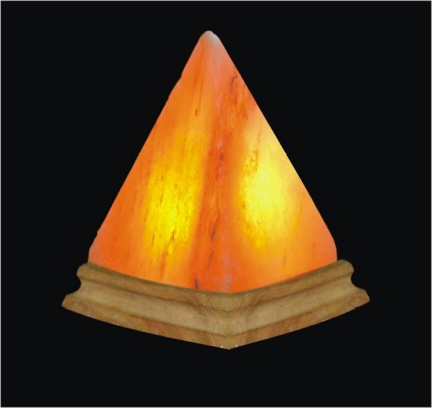
A salt lamp that “possess[es] the unique capability of generating negative ions in the air thus working as [an] ionizer. These negative ions are very essential for human beings because they purify the air, and kill bacteria and other harmful organisms and increase overall air quality.”
Magic Salt Lamp. As in, made of table salt, Na(+)Cl(-). Where are these negative ions supposed to come from? If from the salt, NaCl must be heated to 2575°F before it boils. Decomposition temperature- the heat necessary to make it break down into separate ions of Na(+) and Cl(-) - is much higher. And you’d get both anions and cations; both are very reactive. Chlorine anions may form ozone or chlorine gas; Cl2 gas is very poisonous. Sodium metal, whether ionized or not, is extremely reactive; the metallic form is prone to exploding, as we all remember from high school chemistry demos.
It is possible to ionize air using high voltage; this is what many commercial air ionizers do. But according to JPL , they must be calibrated regularly to ensure they continue to be negative ion sources. Polonium is also used; radioactive ionizers must be replaced yearly because of polonium's short half-life. (The manufacturer assures us that the capsules are very well sealed, to prevent anyone removing the polonium.)
A naked wire may indeed ionize air; this is part of why lightbulbs are evacuated- otherwise the wire would oxidize and burn out. UV light also ionizes air; many air purifiers are based on this, plus charged plates to remove the now-ionized dust and such. In any case, a sealed lightbulb won’t do it.
[By the way, I have no financial or other interest in any of the products or sites mentioned, nor indeed in any product or site. Links are provided solely for reference and entertainment.]
A salt lamp that “possess[es] the unique capability of generating negative ions in the air thus working as [an] ionizer. These negative ions are very essential for human beings because they purify the air, and kill bacteria and other harmful organisms and increase overall air quality.”
Magic Salt Lamp. As in, made of table salt, Na(+)Cl(-). Where are these negative ions supposed to come from? If from the salt, NaCl must be heated to 2575°F before it boils. Decomposition temperature- the heat necessary to make it break down into separate ions of Na(+) and Cl(-) - is much higher. And you’d get both anions and cations; both are very reactive. Chlorine anions may form ozone or chlorine gas; Cl2 gas is very poisonous. Sodium metal, whether ionized or not, is extremely reactive; the metallic form is prone to exploding, as we all remember from high school chemistry demos.
It is possible to ionize air using high voltage; this is what many commercial air ionizers do. But according to JPL , they must be calibrated regularly to ensure they continue to be negative ion sources. Polonium is also used; radioactive ionizers must be replaced yearly because of polonium's short half-life. (The manufacturer assures us that the capsules are very well sealed, to prevent anyone removing the polonium.)
A naked wire may indeed ionize air; this is part of why lightbulbs are evacuated- otherwise the wire would oxidize and burn out. UV light also ionizes air; many air purifiers are based on this, plus charged plates to remove the now-ionized dust and such. In any case, a sealed lightbulb won’t do it.
[By the way, I have no financial or other interest in any of the products or sites mentioned, nor indeed in any product or site. Links are provided solely for reference and entertainment.]
Wednesday, January 03, 2007
Department of Random Outrage
 Behold:
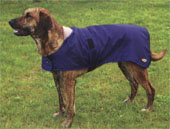
A dog blanket that, and I quote, has “Anion, Aloe, Anti-bacteria and Magnet complex functions” and “emit[s] Far Infrared Rays”.
I understand that people want cures, and are willing to suspend disbelief. But must they also suspend logic? Does anyone actually buy this stuff?
Magic Dog Blanket. I’ll believe it has aloe in it, and antibacterial fabric exists. But I bet you a dollar that any sterile dog is going right into surgery. Dogs, they roll in dead things. Additionally, no animal is ever truly sterile- there are always bacteria on the skin, in the gut, and in the mouth; alterations in natural flora can have bad consequences.
The blanket may even have magnets sewn into it. (You know, to align all the little iron particles in your cells.) But magnets don't do anything for circulation or pain. The greatest effect of magnetized fabric will be to erase the credit cards if Muffy gets close enough to your wallet- though only if it's a fairly strong magnet.
Far-IR rays are another thing altogether. Shorter IR wavelengths are what make you warm in the sun, and longer wavelengths (i.e., past far-IR) are what your microwave makes. But ceramic doesn’t just emit 'IR rays' [any more than anything else does at room temperature]. IR, just like a light bulb or an x-ray or every other part of the electromagnetic spectrum, is made of energy. Electricity goes into a microwave, is converted to IR, and is then converted to motion in the water molecules, which we call 'heat.' Energy input is required to sustain continuous [over-background] IR output.
This is also why microwaves have to be plugged in.
[Correction courtesy of Andre: I failed to specify that all materials emit some in the IR, as well as in other frequencies, at room temperature. See also: blackbody radiation in IR occurs between 30 and 4100 K.]
Thursday, December 21, 2006
More on Teaching Enthusiasm
My favorite cousin- let’s call her Jo- teaches in inner-city Philly. She’s on ‘special assignment’, so lately she’s been teaching remedial math. Except her kids don’t speak much English, so remedial English too. And they hit each other a lot, so remedial social skills. One of her sixth-graders is fifteen- but kids can’t be failed unless their parents sign off on it. Teachers can be forced to change schools every year. The privatization scheme is working very well indeed.
The last round of parent-teacher conferences, only one parent showed up. ‘I’m drunk,’ he confided, ‘and I came from the bar and, I won’t lie to you, I’m going back to the bar after this. But I said I’d be here, so I’m here!’ When Jo tells parents to help with homework, all they say is ‘Ayy! No se puede!!’. They don’t have the time, energy, or resources to be involved in their children’s educations.
The other side of teaching kids to love science is this: it’s easy to teach comfortable suburbanites whose parents will nag them to do their homework. What happens when you teach in a marginal environment?
Is there time for enrichment when half the students can’t read at grade level or add 5 + 17? In sixth grade? What do they need more: to love science or to read? If you only have a limited number of hours and a severely limited amount of resources, what do you prioritize?
These activities aren't necessarily incompatible. Maybe writing could play into the science lessons somehow- short essays, and grade on grammar and ideas. But I think what usually happens is, it's a lot of work; more than the Summer Vacation Essay. Teachers are overburdened with large classes; they don’t want to do innovative stuff. They don’t have time. They don't have money. They are tired. Jo is tired.
What’s the right answer? Is it legitimate to take an hour a week for fun, interesting science labs? I would like to believe in the long run, this will benefit kids more than memorizing spelling words. All the same, especially in the era of Every Child Left Behind, it becomes increasingly difficult to persuade already-struggling schools that a love of science is an essential ingredient for learning.
I believe that science ed is important because scientific critical thinking is more useful than the ability to play the recorder (though music programs are great! Not knocking music!). Still, the skills from critical reading, or history class, may be just as important. I want children to love science because I love science, but is it the most important thing?
When I take over the Department of Education, no school will have to choose. We will have it all: reading, science, music, history, and etiquette. The children will be perfect little darlings.
Until then, it is a difficult problem and a difficult trade-off.
The last round of parent-teacher conferences, only one parent showed up. ‘I’m drunk,’ he confided, ‘and I came from the bar and, I won’t lie to you, I’m going back to the bar after this. But I said I’d be here, so I’m here!’ When Jo tells parents to help with homework, all they say is ‘Ayy! No se puede!!’. They don’t have the time, energy, or resources to be involved in their children’s educations.
The other side of teaching kids to love science is this: it’s easy to teach comfortable suburbanites whose parents will nag them to do their homework. What happens when you teach in a marginal environment?
Is there time for enrichment when half the students can’t read at grade level or add 5 + 17? In sixth grade? What do they need more: to love science or to read? If you only have a limited number of hours and a severely limited amount of resources, what do you prioritize?
These activities aren't necessarily incompatible. Maybe writing could play into the science lessons somehow- short essays, and grade on grammar and ideas. But I think what usually happens is, it's a lot of work; more than the Summer Vacation Essay. Teachers are overburdened with large classes; they don’t want to do innovative stuff. They don’t have time. They don't have money. They are tired. Jo is tired.
What’s the right answer? Is it legitimate to take an hour a week for fun, interesting science labs? I would like to believe in the long run, this will benefit kids more than memorizing spelling words. All the same, especially in the era of Every Child Left Behind, it becomes increasingly difficult to persuade already-struggling schools that a love of science is an essential ingredient for learning.
I believe that science ed is important because scientific critical thinking is more useful than the ability to play the recorder (though music programs are great! Not knocking music!). Still, the skills from critical reading, or history class, may be just as important. I want children to love science because I love science, but is it the most important thing?
When I take over the Department of Education, no school will have to choose. We will have it all: reading, science, music, history, and etiquette. The children will be perfect little darlings.
Until then, it is a difficult problem and a difficult trade-off.
Wednesday, December 06, 2006
Cheap Science Labs: Friction
When I was in elementary and middle school, we did a lot of really, really boring labs. They were so dull, I don’t even remember them. But the basic principles being taught- how plants grow, how gravity works, etc.- are fascinating stuff.
I’ve been trying to come up with easy, cheap labs that teachers could use anywhere, without training, to teach in interesting, relevant ways. The point of these labs is not to have the right answer. Mild inaccuracy can surely be corrected later by memorization. I want to design labs that are easy for kids to think about in familiar terms, but that make them really consider and analyze what they're seeing.
Today: Elementary Science: Friction.
Equipment: 3 clear cups, jars, or beakers (or 3x number of groups); 6+ pennies and/or ball bearings; toy car or something with wheels; small tray; sandpaper; dirt; aluminum foil; water; corn syrup; oil. Optional: something flat that can make a ramp, another small tray.
Wheels
-Set out aluminum foil, a small tray with dirt in it, and sandpaper.
-Get a kid to give the toy car a push at the left side of each of these materials. Have another kid recording about how fast they go.
-Ask them about their experiences with bikes or cars going through dirt or mud, or running across a beach, or sliding (like in sock feet). Ask them to tell you what’s different about the materials, that makes things move across them differently (whether they ‘stick’ or whether you can slide). Ask how a toy car would move across a board with a bunch of needles stuck through it.
-Now have the kids drag the car across these materials with a string attached to it. Is it harder? Easier? On which materials? Why do they think it’s that way? What’s different between rolling and sliding?
-Lesson on friction: rough materials are like a bunch of needles, or like soft dirt: they catch little rough bits on other things, and slow them down. Rolling friction is different from sliding friction because the contact is different: a large surface moving as one, or something that only contacts through a small and changing area.
Liquids
-Fill one jar each with water, corn syrup, and oil.
-Drop a penny into each jar, flat side down. Ask the kids to tell you how they’re moving. Why? Drop a penny edge-on. How is it different? Why?
-Try for the connection between solids and liquids: that sticky liquids have something like friction, too. If you’re feeling ambitious, pour a little water, then corn syrup down a little ramp (into a container) to show that corn syrup moves more slowly on its own, and things move through it slower.
-Ask why does it work like this? How is it like a car going over dirt? How is it different? What would happen if you tried to swim through corn syrup? To drive over it? What if it were on top of a slick surface? (More slippery, to a point, then drag cuts in.) On top of dirt? (Enhancement of friction.) If you don’t care about the car, let the kids pour corn syrup on the dirt and on the aluminum foil and check it out.
-If you feel like it, introduce viscosity as liquid friction: how much something doesn’t want to move (down a ramp) and so how much it doesn’t want things to move through it. You can discuss rolling friction vs. dragging friction in combination with viscosity to explain the sliding-on-corn-syrup but dragging-through-syrupy-dirt effect.
Next: Solubility!
I’ve been trying to come up with easy, cheap labs that teachers could use anywhere, without training, to teach in interesting, relevant ways. The point of these labs is not to have the right answer. Mild inaccuracy can surely be corrected later by memorization. I want to design labs that are easy for kids to think about in familiar terms, but that make them really consider and analyze what they're seeing.
Today: Elementary Science: Friction.
Equipment: 3 clear cups, jars, or beakers (or 3x number of groups); 6+ pennies and/or ball bearings; toy car or something with wheels; small tray; sandpaper; dirt; aluminum foil; water; corn syrup; oil. Optional: something flat that can make a ramp, another small tray.
Wheels
-Set out aluminum foil, a small tray with dirt in it, and sandpaper.
-Get a kid to give the toy car a push at the left side of each of these materials. Have another kid recording about how fast they go.
-Ask them about their experiences with bikes or cars going through dirt or mud, or running across a beach, or sliding (like in sock feet). Ask them to tell you what’s different about the materials, that makes things move across them differently (whether they ‘stick’ or whether you can slide). Ask how a toy car would move across a board with a bunch of needles stuck through it.
-Now have the kids drag the car across these materials with a string attached to it. Is it harder? Easier? On which materials? Why do they think it’s that way? What’s different between rolling and sliding?
-Lesson on friction: rough materials are like a bunch of needles, or like soft dirt: they catch little rough bits on other things, and slow them down. Rolling friction is different from sliding friction because the contact is different: a large surface moving as one, or something that only contacts through a small and changing area.
Liquids
-Fill one jar each with water, corn syrup, and oil.
-Drop a penny into each jar, flat side down. Ask the kids to tell you how they’re moving. Why? Drop a penny edge-on. How is it different? Why?
-Try for the connection between solids and liquids: that sticky liquids have something like friction, too. If you’re feeling ambitious, pour a little water, then corn syrup down a little ramp (into a container) to show that corn syrup moves more slowly on its own, and things move through it slower.
-Ask why does it work like this? How is it like a car going over dirt? How is it different? What would happen if you tried to swim through corn syrup? To drive over it? What if it were on top of a slick surface? (More slippery, to a point, then drag cuts in.) On top of dirt? (Enhancement of friction.) If you don’t care about the car, let the kids pour corn syrup on the dirt and on the aluminum foil and check it out.
-If you feel like it, introduce viscosity as liquid friction: how much something doesn’t want to move (down a ramp) and so how much it doesn’t want things to move through it. You can discuss rolling friction vs. dragging friction in combination with viscosity to explain the sliding-on-corn-syrup but dragging-through-syrupy-dirt effect.
Next: Solubility!
Wednesday, November 29, 2006
Curiosity, Wires, Destruction
Kids are very curious. Whose kid hasn't taken something apart? Who hasn’t heard a two-year-old ask why? Why is the sky blue? Why do fish swim? Why is that car upside-down?
I have a theory (unsupported by facts, mind you): If kids are told ‘I don’t know’ too often, they lose some of their curiosity. They start to believe that answers can’t be found, or are too much trouble, or are ineffable. If parents say instead, ‘Let’s go find out!’, kids can learn that inquiry is worthwhile, that research can answer their questions, and that the answers are interesting.
My other theory is that everyone would love science if they were only shown it the right way. I’ve sat through a lot of lectures where the teacher clearly didn’t know the answer to ‘Why should my students care?’ And you know what? Those lectures were boring. But there should always be a convincing answer. Sometimes the answer is, so you can understand something else. Sometimes it’s, because it’s cool. Occasionally, it’s directly relevant to everyday life: why alpha particles only kill you when ingested, why allergy shots work, why you shouldn't get an antibiotic for your cold, why autism has nothing to do with vaccines. But I think science should always be presented as a framework for understanding the world. It’s not that knowing exactly how cells divide is so important, but it’s the ability to reason, to make connections, that lets you explain to your grandma why everyone she knows is getting cancer. (Age.)
A lot of chemistry and biology is presented as dogma rather than as ongoing questions. (Could we force every highschool teacher to read Kuhn and Popper? Please?) Gravity is written in stone, cells look just like those jello molds from the seventh grade, genetics are Mendelian, and chemotherapy kills cancer cells. I think this discourages inquiry. Maybe a kindergartener can’t handle it, but surely a highschool student can grasp the idea that data leads to theories, which are constantly evolving, and which are a best model for what has been observed so far, and that research is always ongoing. If kids- and then adults- know WHY science is interesting and relevant, they’ll have the knowledge to tackle questions on their own, and they’ll believe in their own ability to figure stuff out.
We had a microscope growing up. Pond scum, dog hairs, onion skins, dirt, leaves: you name it, we looked at it. Since my mom is a PA, bodily-function questions were referred to Gray’s Anatomy (now online! Free! Woo-hoo!); inquiries on what happens to potato starch in the microwave* and why were met with a potato, a bowl, and a knife. We took apart washers, computers, blenders, and cars. ‘Why?’ was always answered by ‘What do you think?’.
All three of us are scientists.
*It's amazing how many scholarly articles there are on microwaving potato starch. Who knew?
I have a theory (unsupported by facts, mind you): If kids are told ‘I don’t know’ too often, they lose some of their curiosity. They start to believe that answers can’t be found, or are too much trouble, or are ineffable. If parents say instead, ‘Let’s go find out!’, kids can learn that inquiry is worthwhile, that research can answer their questions, and that the answers are interesting.
My other theory is that everyone would love science if they were only shown it the right way. I’ve sat through a lot of lectures where the teacher clearly didn’t know the answer to ‘Why should my students care?’ And you know what? Those lectures were boring. But there should always be a convincing answer. Sometimes the answer is, so you can understand something else. Sometimes it’s, because it’s cool. Occasionally, it’s directly relevant to everyday life: why alpha particles only kill you when ingested, why allergy shots work, why you shouldn't get an antibiotic for your cold, why autism has nothing to do with vaccines. But I think science should always be presented as a framework for understanding the world. It’s not that knowing exactly how cells divide is so important, but it’s the ability to reason, to make connections, that lets you explain to your grandma why everyone she knows is getting cancer. (Age.)
A lot of chemistry and biology is presented as dogma rather than as ongoing questions. (Could we force every highschool teacher to read Kuhn and Popper? Please?) Gravity is written in stone, cells look just like those jello molds from the seventh grade, genetics are Mendelian, and chemotherapy kills cancer cells. I think this discourages inquiry. Maybe a kindergartener can’t handle it, but surely a highschool student can grasp the idea that data leads to theories, which are constantly evolving, and which are a best model for what has been observed so far, and that research is always ongoing. If kids- and then adults- know WHY science is interesting and relevant, they’ll have the knowledge to tackle questions on their own, and they’ll believe in their own ability to figure stuff out.
We had a microscope growing up. Pond scum, dog hairs, onion skins, dirt, leaves: you name it, we looked at it. Since my mom is a PA, bodily-function questions were referred to Gray’s Anatomy (now online! Free! Woo-hoo!); inquiries on what happens to potato starch in the microwave* and why were met with a potato, a bowl, and a knife. We took apart washers, computers, blenders, and cars. ‘Why?’ was always answered by ‘What do you think?’.
All three of us are scientists.
*It's amazing how many scholarly articles there are on microwaving potato starch. Who knew?
Subscribe to:
Posts (Atom)