Tuesday, December 12, 2006

Lesson of the Day

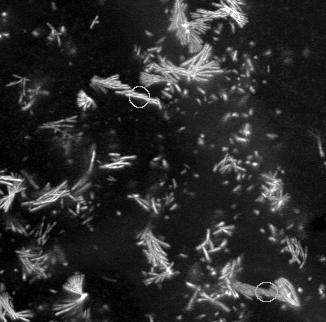
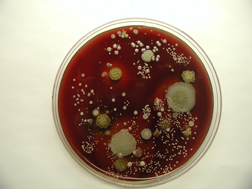
(From here: what lives on your hand.)

Don't stir sourdough starter with your finger.

Oops.

Monday, December 11, 2006

Excellent Buildings and Strange Experiments

The building where I work was designed by a Mr. Famous Architect Guy. As far as I can tell, he didn’t ask any scientists first. We hate it.

Aside from the usual problems (hot in winter, cold in summer, leaking basement, elevators programmed by monkeys), we’ve got a few special ones. For one, bats come roost in lab; screaming inevitably ensues. But my favorite ever is the fire alarm: it tells us weekly to WHIRR BEEP BEEP STAND BY FOR FURTHER INSTRUCTIONS BEEP WHIRR. We shut the doors and ignore it, on the grounds that it’s an idiotic announcement. Safe, no? Speaking of, Safety gets very upset if we leave a single razor blade out, but not if we store nitric acid next to acetone. Er?

And this is at a rich school. My college chemistry building was even worse. My advisor sat in a lawn chair and watched for days, when they finally demolished it.

And, from the Annals of Strange Experiments: A distinguished professor (i.e., old) was telling Mr. Scientist that back in the day, someone did do bat experiments in the building. (Maybe that’s where they came from). They were studying how bats ‘see’ things. So they built a bat sensory deprivation chamber: a little room covered everywhere with long, luxurious, white fake fur. Like a really weird bat boudoir.

Bats freaked way the heck out, inside: it felt like they were in the middle of the biggest-ever Nothing.

Bonus: Check out this excellent picture of an exploded, burnt-out centrifuge (via here).
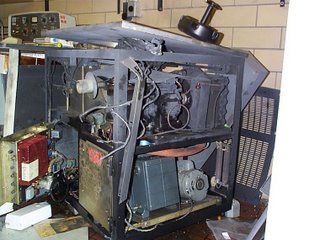
I once exploded a centrifuge, but it was less dramatic. Plus, it wasn't my fault.
Friday, December 08, 2006

Friday Library: The NSF (2)


Note that industry used to fund a huge proportion of all research in the U.S.
***
‘THEORY’ AND ‘PRACTICE’ invariably merge in the long run. Franklin engaged in ‘fundamental’ or ‘theoretical’ research when he established the identity of lightning and electricity, but he hardly lowered himself by inventing the lightning-rod. Lister conducted his fundamental study of antisepsis for the practical purpose of reducing the risk of infections in surgery. Many illustrations can be given showing that the great ‘practical’ discoveries have sprung from research that deals with fundamentals rather than with applications. Before we could have electron tubes and hence radio broadcasting and television, industrial laboratories had to conduct searching investigations (which deserve the name ‘fundamental’) on the flow of currents through tenuous gases or in a vacuum, of the emission of electrons from heated filaments, and of a hundred other problems…

Theory is the Father of Practice [sic]

All this does not mean that the distinction between ‘fundamental’ and ‘applied’ research is without significance. There is nothing so practical as a theory that works…. Out of a sound theory, many inventions flow. No technologist today would think of following the example of Goodyear, who performed hundreds of experiments before he at last hit upon the way to vulcanize rubber with sulphur… It is possible that a way of controlling cancer may be discovered by accident. But it is more likely to result from ‘theoretical’ studies of normal and abnormal growth. Hence the scientists are right in insisting that the government spend its money on what they call ‘theoretical’ research, rather than on inventions and processes that may be useful to industry.
***

One of my least favorite delusions is that fundamental research is unnecessary and we should just fund cancer research- as Teresa Nielsen Hayden so eloquently says about publishing: you can't only publish bestsellers.

Gleevec and AMN107 are the poster drugs for basic research making good. Chronic myelogenous leukemia is most often caused by a Bcr-Abl fusion protein that has uncontrolled kinase activity (also known as the Philadelphia Chromosome). A specific inhibitor was found for this specific mutation, which was discovered by basic research. Then another inhibitor (AMN107) was designed to work against resistant mutations.

Without the knowledge from other research, this would never have been possible. You can't fix the car if you don't know how the engine works.

Previously: Friday Library: The NSF (1)

Wednesday, December 06, 2006

Cheap Science Labs: Friction

When I was in elementary and middle school, we did a lot of really, really boring labs. They were so dull, I don’t even remember them. But the basic principles being taught- how plants grow, how gravity works, etc.- are fascinating stuff.

I’ve been trying to come up with easy, cheap labs that teachers could use anywhere, without training, to teach in interesting, relevant ways. The point of these labs is not to have the right answer. Mild inaccuracy can surely be corrected later by memorization. I want to design labs that are easy for kids to think about in familiar terms, but that make them really consider and analyze what they're seeing.

Today: Elementary Science: Friction.

Equipment: 3 clear cups, jars, or beakers (or 3x number of groups); 6+ pennies and/or ball bearings; toy car or something with wheels; small tray; sandpaper; dirt; aluminum foil; water; corn syrup; oil. Optional: something flat that can make a ramp, another small tray.

Wheels
-Set out aluminum foil, a small tray with dirt in it, and sandpaper.

-Get a kid to give the toy car a push at the left side of each of these materials. Have another kid recording about how fast they go.

-Ask them about their experiences with bikes or cars going through dirt or mud, or running across a beach, or sliding (like in sock feet). Ask them to tell you what’s different about the materials, that makes things move across them differently (whether they ‘stick’ or whether you can slide). Ask how a toy car would move across a board with a bunch of needles stuck through it.

-Now have the kids drag the car across these materials with a string attached to it. Is it harder? Easier? On which materials? Why do they think it’s that way? What’s different between rolling and sliding?

-Lesson on friction: rough materials are like a bunch of needles, or like soft dirt: they catch little rough bits on other things, and slow them down. Rolling friction is different from sliding friction because the contact is different: a large surface moving as one, or something that only contacts through a small and changing area.

Liquids
-Fill one jar each with water, corn syrup, and oil.

-Drop a penny into each jar, flat side down. Ask the kids to tell you how they’re moving. Why? Drop a penny edge-on. How is it different? Why?

-Try for the connection between solids and liquids: that sticky liquids have something like friction, too. If you’re feeling ambitious, pour a little water, then corn syrup down a little ramp (into a container) to show that corn syrup moves more slowly on its own, and things move through it slower.

-Ask why does it work like this? How is it like a car going over dirt? How is it different? What would happen if you tried to swim through corn syrup? To drive over it? What if it were on top of a slick surface? (More slippery, to a point, then drag cuts in.) On top of dirt? (Enhancement of friction.) If you don’t care about the car, let the kids pour corn syrup on the dirt and on the aluminum foil and check it out.

-If you feel like it, introduce viscosity as liquid friction: how much something doesn’t want to move (down a ramp) and so how much it doesn’t want things to move through it. You can discuss rolling friction vs. dragging friction in combination with viscosity to explain the sliding-on-corn-syrup but dragging-through-syrupy-dirt effect.

Next: Solubility!

Tuesday, December 05, 2006

Thrilling

After staring at moving lines for a week and a half, my brain is fried. For your enjoyment: an artistic representation of the squiggles I've been measuring.

Monday, December 04, 2006

Angels in the Rain (Or: observation fails under the relentless assault of illogic)

L 26:4 I will provide you with rain at the right time, so that the land will bear its crops and the trees of the field will provide fruit.

Conversation: Mr. Scientist and their Turkish technician

-Did you ever wonder how it rains?
-Oh, in Turkey they tell children that there’s a little angel in each raindrop.
-But didn’t you wonder how it really works?
-No, there is an angel in each raindrop.
-…What?
-Because each raindrop has a little gravitational pull and so if you have a cloud of raindrops they would all make one big rain blob because of gravity. So God sends angels to keep them raindrops…. What, don’t you believe that here?
-You do know that gravity falls off as the square of the distance.
-Of course.
-So gravity between raindrops is negligible and the gravity of the earth is much more important.
-No, they’d make a blob!
-If I took this ice bucket and threw it in the air would all the ice come down as a big blob?
-No, but--
-If I threw a glass of water at you would it hit you as a big blob?
-No, but raindrops are different. Because of the angels.
-[Aaaaaaauuggggh.]

Even more distressing: the woman in question is a scientist.

Friday, December 01, 2006

Friday Library: The NSF (1)


Should the Government Support Science?
By Waldemar Kaempffert
Public Affairs Committee 1946
Pamphlet No. 119


This pamphlet came to me courtesy of a bookshelf in the lobby with surplus libraries of dead or retired professors. It was published to support the soon-to-be National Science Foundation (NSF) in the Truman era. Please excuse the gender stereotyping and various phobias.

BONUS FACT: Did you know: The National Academies of Science were founded under...Lincoln!

----
WAR presents the scientist with a supreme opportunity. Resistance to innovation weakens. Years are telescoped into months, months into weeks. In a long global war*, civil and military technology move ahead at a pace that cannot be matched in twenty years of peace. Electronic devices control factory processes with a new precision. Television is brought to a new pitch of perfection. Radar makes it possible not only to detect far-off bombers but to fight naval battles in the blackest night; also to reflect signals from the moon, to prevent collisions at sea, and to make flying safer.... DDT powder strips typhus of its old terror and controls insect pests with ease. Fabrics are devised which are wrinkle-proof, mothproof, mildew-proof, and moisture-proof. Atomic energy, suddenly released by two bombs, blasts away two Japanese cities and promises to compete industrially with coal and oil.
...

[There were] thousands of scientists and engineers whom we card-catalogued and then assigned to specific research tasks were propelled by the momentum of the past. DDT, penicillin, plasma derivatives, synthetic rubber, radar, even atomic energy—all were known at least in principle before the war. What will happen if we are plunged into another war two or three decades hence—a war waged with atomic bombs hurled at us… There will be no time to organize our scientific and industrial resources, no time to raise, equip, and drill a huge army. And what of peace? Peace, as well as war, imposes scientific and technological obligations. To meet these, research is as necessary as it is in time of total war.
----
*Ah, like the one we're having now. Possibly the military is thinking up dreadful things, but they have yet to benefit me.