Wondering about my committee meeting? Let's just say, they don't have a future in motivational speaking.
***
Sur ma tombe je veux qu'on inscrive, or, My Favorite Student Evaluations, All From the Same Class:
"I wish she'd gone over what was going to be on the quizzes more."
"Wouldn't tell us what would be on the test."
"Didn't go over the lectures enough."
"Covered too much material."
***
Memo: To all present and future meeting schedulers
Subject: Appropriate meeting times
To Whom It May Concern:
The following times are never acceptable: Monday morning at 8:30; Friday morning at 8:30; any morning before 9:30; during lunch; Friday at 4 PM; Saturday afternoon; Sunday morning; really weekends at all. Thank you.
****
Also: To the Collection Agency:
(Beep) This is Grasping, Greedy & Smith. Please be advised that we may try to collect money from you, and that our souls are currently in receivership. Please call us back at 1-800-SOULLESS. (Beep.)
"My name is Jenny F. Scientist, and my phone number is 666-666-6969. You keep calling me. Actually, you keep calling Tyrone Jones, case number 2894650. Tyrone doesn't live here! Tyrone has never lived here! I don't know who Tyrone is! Jenny lives here, and I'm a WHITE GIRL FROM VIRGINIA. Stop calling me! (Click.)"
Next day:
'Hello?'
'This is CBC. May I speak with Tyrone Jones?'
'Are you the collection agency again? Tyrone doesn't live here! I don't even know who Tyrone is! Do I sound like a Tyrone? STOP CALLING ME!!'
'Do you have another number for him?'
'Aaaaaaaaaagh.'
Reminiscent of the woman who left my friend a detailed message about ordering a roast pig, and did they do coleslaw for 150? For next week? Despite the message that said 'Hi, this is Anne, have a blessed day' and not 'Hi, this is the Smokey Pig's Catering Office.'
Monday, April 30, 2007
Friday, April 27, 2007
Friday Library: 'Science Is Hard.'
I once attended a talk given by Paul Nurse. Who's Paul Nurse, you ask? Well, he won a Nobel Prize with Tim Hunt for discovering cyclin-dependent kinases. In other words, he figured out the architect's plan of how cells grow and divide, in the very most fundamental way, and made possible a lot of research to find the nuts and bolts of exactly how cell division is put together and what part talks to what.
He's done a few other things over the years, too.
Here's a new edition of Friday Library: Reports and Interviews. Not literally transcribed, but I assure you that the substance is more or less accurate.
****
Everyone else comes and gives seminars and they show you all their lovely results and they make it seem so easy. But we all know that's not true. So I'm not going to tell you about any of that. I'm going to tell you how hard it was and how I discovered things by accident. Not that I wasn't paying attention, mind you.
When I was a graduate student, I had to use this machine. It was the bane of my existence, I spent hours upon hours in front of it. The problem with it was, it had a pressure sensor and whenever it went over pressure, which was quite often, it would shut itself off and the experiment would be ruined. It shut itself off about one in three times, and the runs were hours and hours long, so it was awful. So one day I took a screwdriver to it and disabled the safety sensor, you see, and then it only went over pressure one of ten times, so I could do my experiments twice as fast. The only problem was that if it went over pressure, it would explode. So I used to sit on this stool in front of it, holding up an article to read with one hand and the other hand over a large red button so that the moment it started to get dangerous I would stop it. I spent years of my life in front of that machine, but I got a lot of reading done.
So I was in Edinburgh, doing a screen for cells that had gotten too big. And one day I mixed up the fractions from the centrifuge and took the wrong one, and it had very small cells in it. So I said 'That's funny', and set them aside for a while. Eventually I started to wonder if the same things that made cells big could do the opposite too, and it turned out that they were wee1 mutants [a cell cycle-kinase; part of the Nobel-winning work].
One night in Sussex, it was quite late and I was in lab and utterly nothing was working. And I had plates that had become contaminated with fungus and other things and I was utterly disgusted. Finally I threw my plates in the bin in disgust and got my bicycle and started cycling home to my family. It was raining, of course. And about halfway home, in the rain, cycling along, I thought, 'Wait... maybe I shouldn't...' So I turned around, and cycled back in the rain, and fished my plates out of the bin and started restreaking them. It took me a month or two to get them clean again. And it turned out that led me to cdc2 [the other thing that won the Nobel].
****
One strange thing: he didn't say a word about his wife or children, even in lunch-with-students or private meetings, which is relatively uncommon around here. In fact, I thought he was divorced. He's not.
He's done a few other things over the years, too.
Here's a new edition of Friday Library: Reports and Interviews. Not literally transcribed, but I assure you that the substance is more or less accurate.
****
Everyone else comes and gives seminars and they show you all their lovely results and they make it seem so easy. But we all know that's not true. So I'm not going to tell you about any of that. I'm going to tell you how hard it was and how I discovered things by accident. Not that I wasn't paying attention, mind you.
When I was a graduate student, I had to use this machine. It was the bane of my existence, I spent hours upon hours in front of it. The problem with it was, it had a pressure sensor and whenever it went over pressure, which was quite often, it would shut itself off and the experiment would be ruined. It shut itself off about one in three times, and the runs were hours and hours long, so it was awful. So one day I took a screwdriver to it and disabled the safety sensor, you see, and then it only went over pressure one of ten times, so I could do my experiments twice as fast. The only problem was that if it went over pressure, it would explode. So I used to sit on this stool in front of it, holding up an article to read with one hand and the other hand over a large red button so that the moment it started to get dangerous I would stop it. I spent years of my life in front of that machine, but I got a lot of reading done.
So I was in Edinburgh, doing a screen for cells that had gotten too big. And one day I mixed up the fractions from the centrifuge and took the wrong one, and it had very small cells in it. So I said 'That's funny', and set them aside for a while. Eventually I started to wonder if the same things that made cells big could do the opposite too, and it turned out that they were wee1 mutants [a cell cycle-kinase; part of the Nobel-winning work].
One night in Sussex, it was quite late and I was in lab and utterly nothing was working. And I had plates that had become contaminated with fungus and other things and I was utterly disgusted. Finally I threw my plates in the bin in disgust and got my bicycle and started cycling home to my family. It was raining, of course. And about halfway home, in the rain, cycling along, I thought, 'Wait... maybe I shouldn't...' So I turned around, and cycled back in the rain, and fished my plates out of the bin and started restreaking them. It took me a month or two to get them clean again. And it turned out that led me to cdc2 [the other thing that won the Nobel].
****
One strange thing: he didn't say a word about his wife or children, even in lunch-with-students or private meetings, which is relatively uncommon around here. In fact, I thought he was divorced. He's not.

Wednesday, April 25, 2007
Canards: Genetic Drift and Red Hair
Does every mutation have to be beneficial to succeed?
Imagine a change that increases incidence of red hair. Sound familiar?
In Africa, high melanin production (which makes skin and hair darker) is strongly selected because it's so sunny: low melanin= sunburn and dehydration --> death. In Ireland, on the other hand, it's much less sunny. In other words, there's almost no selection for high melanin because it's fairly irrelevant to reproductive success there. So the gene changes over time to low melanin production, which also causes red (and blond) hair.
When the frequency of a trait changes by chance, often because it is under weak or no selective pressure, this is called genetic drift. It's not necessarily beneficial. Sometimes it's neutral. Sometimes it's helpful. Sometimes it's not: Ashkenazi Jews have drifted-and-inbred enough to be strong carriers of Tay-Sachs.
Why are somany people in Ireland red-headed? Because it's an island. The population is limited, which increases the incidence of drift. Especially if there's a smaller generation once or twice, the effect is increased, because the drift goes through a bottleneck of sorts.
Imagine, for example, that an Irish generation had only four people, and three were carriers for red hair. The incidence of red hair would shoot up in the next generations. Now imagine it happened again: even more red hair. As drift increases in this or other ways, alleles (gene variants) head for fixation, or 100% occurrence in the population.
"The Age of Darwin" (still not worth reading) also tells us:
'Our genes were formed during the vast stretches when people were hunters and gatherers.' Riiiight. No, our genes were formed while we were the one-celled last common ancestor, and then a bunch of stuff and then squidgy fish things and then small furry mammals with lots of teeth and then larger mammals, and then monkeys. Oh yes, and then eventually hunters and gatherers. Earliest hominid: 8 to 4 million years ago. We only diverged from REPTILES 360 million years ago.
Eukaryotes and prokaryotes diverged from the last common ancestor around 1.5 billion years ago. Our genes were being 'formed' the whole time. They're still being formed.
As for being poorly adapted to nuclear weapons and fast food: Cheeseburger-eating Americans live a lot longer than the average Paleolithic hominid. And what's the world population again?
***
References:
1. Encyclopedia of Evolution. Mark Page, Ed. Oxford UP 2002
Genetic Drift: "Each genetic locus can exist in several versions that differ somewhat... Without selection, mutation, or migration, the relative frequencies of these alleles in a population are expected to remain the same from one generation to the next. However, because all populations are finite, allele frequencies can change by random chance, even when the frequency of alleles is expected to be the same on average. ... A good experimental example was provided by Buri (1956), who followed the frequency of eye color alleles in Drosophila populations of different sizes... In the extreme case, where only one allele copy by chance gives rise to all alleles in the next generation, the population will immediately become fixed (100%) for that allele and genetic drift will be at its maximum."
2. Classic Buri paper: "Gene Frequency in Small Populations of Mutant Drosophila",
Peter Buri. Evolution, Vol. 10, No. 4, 367-402. Dec., 1956. (Subscription through JSTOR, but if you want the article, email me.)
3. More on Drift: "Genetic drift additionally contributes to the evolutionary variance around expectations, under neutrality. Weak selection is difficult to distinguish against a background of genetic drift."
Imagine a change that increases incidence of red hair. Sound familiar?
In Africa, high melanin production (which makes skin and hair darker) is strongly selected because it's so sunny: low melanin= sunburn and dehydration --> death. In Ireland, on the other hand, it's much less sunny. In other words, there's almost no selection for high melanin because it's fairly irrelevant to reproductive success there. So the gene changes over time to low melanin production, which also causes red (and blond) hair.
When the frequency of a trait changes by chance, often because it is under weak or no selective pressure, this is called genetic drift. It's not necessarily beneficial. Sometimes it's neutral. Sometimes it's helpful. Sometimes it's not: Ashkenazi Jews have drifted-and-inbred enough to be strong carriers of Tay-Sachs.
Why are somany people in Ireland red-headed? Because it's an island. The population is limited, which increases the incidence of drift. Especially if there's a smaller generation once or twice, the effect is increased, because the drift goes through a bottleneck of sorts.
Imagine, for example, that an Irish generation had only four people, and three were carriers for red hair. The incidence of red hair would shoot up in the next generations. Now imagine it happened again: even more red hair. As drift increases in this or other ways, alleles (gene variants) head for fixation, or 100% occurrence in the population.
"The Age of Darwin" (still not worth reading) also tells us:
Human beings, in our current understanding, are jerry-built creatures, in which new, sophisticated faculties are piled on top of primitive earlier ones. Our genes were formed during the vast stretches when people were hunters and gatherers, and we are now only semi-adapted to the age of nuclear weapons and fast food.This kind of determinism postulates that we are headed for an 'evolved end', a higher function. Note that this same theory impelled colonization and forcible conversion: White people are more evolved. (See: number of times the word 'primitive' is used in the Jesuit Relations.) Again: mutation is random.
'Our genes were formed during the vast stretches when people were hunters and gatherers.' Riiiight. No, our genes were formed while we were the one-celled last common ancestor, and then a bunch of stuff and then squidgy fish things and then small furry mammals with lots of teeth and then larger mammals, and then monkeys. Oh yes, and then eventually hunters and gatherers. Earliest hominid: 8 to 4 million years ago. We only diverged from REPTILES 360 million years ago.
Eukaryotes and prokaryotes diverged from the last common ancestor around 1.5 billion years ago. Our genes were being 'formed' the whole time. They're still being formed.
As for being poorly adapted to nuclear weapons and fast food: Cheeseburger-eating Americans live a lot longer than the average Paleolithic hominid. And what's the world population again?
***
References:
1. Encyclopedia of Evolution. Mark Page, Ed. Oxford UP 2002
Genetic Drift: "Each genetic locus can exist in several versions that differ somewhat... Without selection, mutation, or migration, the relative frequencies of these alleles in a population are expected to remain the same from one generation to the next. However, because all populations are finite, allele frequencies can change by random chance, even when the frequency of alleles is expected to be the same on average. ... A good experimental example was provided by Buri (1956), who followed the frequency of eye color alleles in Drosophila populations of different sizes... In the extreme case, where only one allele copy by chance gives rise to all alleles in the next generation, the population will immediately become fixed (100%) for that allele and genetic drift will be at its maximum."
2. Classic Buri paper: "Gene Frequency in Small Populations of Mutant Drosophila",
Peter Buri. Evolution, Vol. 10, No. 4, 367-402. Dec., 1956. (Subscription through JSTOR, but if you want the article, email me.)
3. More on Drift: "Genetic drift additionally contributes to the evolutionary variance around expectations, under neutrality. Weak selection is difficult to distinguish against a background of genetic drift."
Monday, April 23, 2007
April, Flowers, Changes
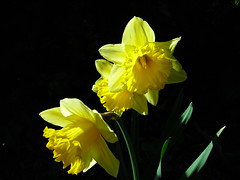
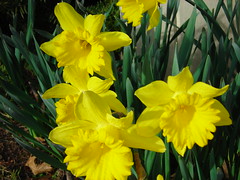
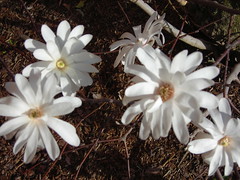
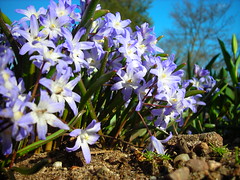
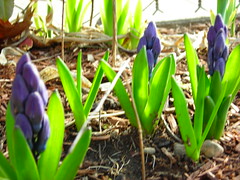
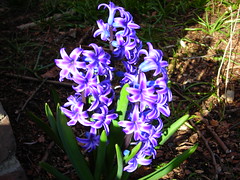
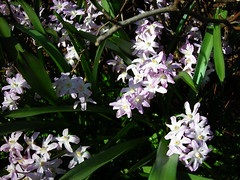
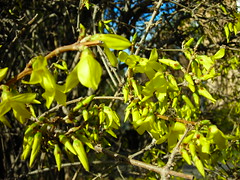
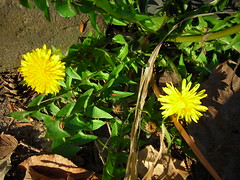
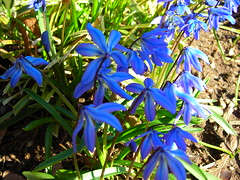
__________________________________________________
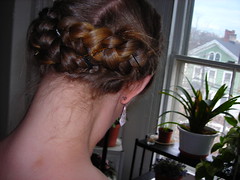
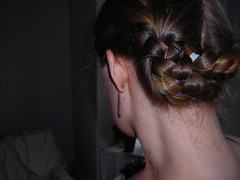
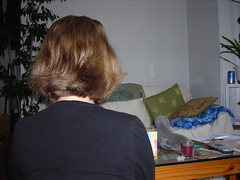
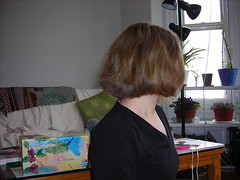
On a somewhat related note (only in that taking pictures occupies all the rest of my available brain space), I have a committee meeting tomorrow. I can hardly contain my joy.
Friday, April 20, 2007
Friday Advice: Choosing a Lab: Personal Factors (3)
Choosing a Lab 3: Personal Factors
1) Advising
Availability. You will occasionally want to consult your advisor. Is the PI always off in Greece, California, and DC? Are there regular lab meetings? One-on-one meetings? Are there certain hours the PI is in lab?
Advisingness. You will also want advice. Good advice encourages you when you’re at a professional dead-end, suggests new avenues or resources, refers you to other people when your PI doesn’t know the answer. Good advising trusts that you are a competent scientist, but recognizes its own limitations (dated knowledge, ignorance of a technique, etc.). Needless to say, bad advice is the opposite.
Ability to give good advice. That is, you want an advisor who recognizes her/his own limits. Your PI should tell you when she/he doesn’t know the answer to something, and suggest how to find out: look here, ask so-and-so, write to my colleague in Ithaca. Similarly, the PI should accept undesired results rather than pushing for the 'right' answer. If you believe you’ve done an experiment correctly but it's not the answer your advisor wanted, she should accept it. A bad advisor will say you did it wrong. Most importantly for a grad student, your advisor should tell you when to cut your losses and move on. This is the most difficult thing for an inexperienced student to recognize, and so the most important in an advisor.
Clarity of expectations. A good advisor will tell you what she/he wants from you, and why. They will help you lay out reasonable goals and tell you when you are or are not meeting expectations. A bad advisor will be passive-aggressive, will tell someone else that she’s displeased with your hours, will refuse to read your manuscript because you were late to lab meeting.
Commitment to getting you out. Related to the previous one. You want an advisor who wants you to graduate in X years, and who will help you stay on track. How long does the average grad student take in this lab? Does the advisor lay out what’s necessary for a thesis? Likewise, commitment to YOUR goals, not to making you into an advisor-clone, is desirable. Do people go on to non-academic careers? Do they get support?
Opportunities for professional development. Ideally, you want to learn stuff in grad school. Do students ever help review papers? (Neutral to good.) Do students have to review papers alone? (Bad.) Does the advisor play favorites, and only the Golden Child gets to review papers? (Also bad.) Do grad students have opportunities to write reviews? Do they go to conferences? Which ones, and how often? Does the advisor think conferences are for your own networking and professional development (good), or a prize for being a good little girl, or a reward for publishable data? (Not so good.)
Atmosphere. What kind of atmosphere does the advisor foster? Does he/she allow people to be derisive or attacking towards each other in public meetings? Does she/he ask mean, awful questions of seminar speakers? Are people afraid to talk to each other or the advisor? Do people make fun of the advisor behind his/her back?
2) Co-workers: Generally, a PI controls what kind of people are in his/her lab. (Sometimes, there is merely no selection.) The tenor of a lab will tell you something about what kind of people the PI tolerates and/or encourages.
Helpfulness. Good labmates are a knowledge base. They answer your questions, give you protocols, and help diagnose what’s wrong. Bad labmates tell you what to do all the time, refuse to share their reagents, and take you down in public.
Aggressiveness. Some people like the stags-in-mating-season lab style. However, if you prefer not to spar in public all the time, avoid labs that are full of people who may bite at any time.
Knowledge. Your co-workers should be like a miniature library of papers they’ve read and negative results. There should be fruitful scientific interactions. If it seems like everyone in a lab is brain-dead, don’t work there. If no-one there has heard of the Biggest Paper In The Field, run.
Optional: Selection for Bathing. Self-explanatory.
3) Everybody hates grad school. (Except the rare person like my darling spouse, who is a mostly happy grad student.) There are always awful parts, and science is 99% negative results. Steel yourself for personal disappointment, find some fun hobbies and distractions, and don’t take your work too seriously. You can always leave, after all.
4) Deal with your depression (if any). Some reports say 50% of all grad students become nonfunctionally depressed during grad school. Depression is a real illness, just like having the flu- for years on end. It will make your life miserable, your work worse, and your PhD take forever. If exercise, extracurriculars, and friendships don’t help enough, please seek treatment. Some of grad-school depression is situational, and having a life often helps, but it's still a real biochemical problem. SSRIs and other antidepressants can make the difference between crying on the couch every day and actually writing your thesis.
1) Advising
Availability. You will occasionally want to consult your advisor. Is the PI always off in Greece, California, and DC? Are there regular lab meetings? One-on-one meetings? Are there certain hours the PI is in lab?
Advisingness. You will also want advice. Good advice encourages you when you’re at a professional dead-end, suggests new avenues or resources, refers you to other people when your PI doesn’t know the answer. Good advising trusts that you are a competent scientist, but recognizes its own limitations (dated knowledge, ignorance of a technique, etc.). Needless to say, bad advice is the opposite.
Ability to give good advice. That is, you want an advisor who recognizes her/his own limits. Your PI should tell you when she/he doesn’t know the answer to something, and suggest how to find out: look here, ask so-and-so, write to my colleague in Ithaca. Similarly, the PI should accept undesired results rather than pushing for the 'right' answer. If you believe you’ve done an experiment correctly but it's not the answer your advisor wanted, she should accept it. A bad advisor will say you did it wrong. Most importantly for a grad student, your advisor should tell you when to cut your losses and move on. This is the most difficult thing for an inexperienced student to recognize, and so the most important in an advisor.
Clarity of expectations. A good advisor will tell you what she/he wants from you, and why. They will help you lay out reasonable goals and tell you when you are or are not meeting expectations. A bad advisor will be passive-aggressive, will tell someone else that she’s displeased with your hours, will refuse to read your manuscript because you were late to lab meeting.
Commitment to getting you out. Related to the previous one. You want an advisor who wants you to graduate in X years, and who will help you stay on track. How long does the average grad student take in this lab? Does the advisor lay out what’s necessary for a thesis? Likewise, commitment to YOUR goals, not to making you into an advisor-clone, is desirable. Do people go on to non-academic careers? Do they get support?
Opportunities for professional development. Ideally, you want to learn stuff in grad school. Do students ever help review papers? (Neutral to good.) Do students have to review papers alone? (Bad.) Does the advisor play favorites, and only the Golden Child gets to review papers? (Also bad.) Do grad students have opportunities to write reviews? Do they go to conferences? Which ones, and how often? Does the advisor think conferences are for your own networking and professional development (good), or a prize for being a good little girl, or a reward for publishable data? (Not so good.)
Atmosphere. What kind of atmosphere does the advisor foster? Does he/she allow people to be derisive or attacking towards each other in public meetings? Does she/he ask mean, awful questions of seminar speakers? Are people afraid to talk to each other or the advisor? Do people make fun of the advisor behind his/her back?
2) Co-workers: Generally, a PI controls what kind of people are in his/her lab. (Sometimes, there is merely no selection.) The tenor of a lab will tell you something about what kind of people the PI tolerates and/or encourages.
Helpfulness. Good labmates are a knowledge base. They answer your questions, give you protocols, and help diagnose what’s wrong. Bad labmates tell you what to do all the time, refuse to share their reagents, and take you down in public.
Aggressiveness. Some people like the stags-in-mating-season lab style. However, if you prefer not to spar in public all the time, avoid labs that are full of people who may bite at any time.
Knowledge. Your co-workers should be like a miniature library of papers they’ve read and negative results. There should be fruitful scientific interactions. If it seems like everyone in a lab is brain-dead, don’t work there. If no-one there has heard of the Biggest Paper In The Field, run.
Optional: Selection for Bathing. Self-explanatory.
3) Everybody hates grad school. (Except the rare person like my darling spouse, who is a mostly happy grad student.) There are always awful parts, and science is 99% negative results. Steel yourself for personal disappointment, find some fun hobbies and distractions, and don’t take your work too seriously. You can always leave, after all.
4) Deal with your depression (if any). Some reports say 50% of all grad students become nonfunctionally depressed during grad school. Depression is a real illness, just like having the flu- for years on end. It will make your life miserable, your work worse, and your PhD take forever. If exercise, extracurriculars, and friendships don’t help enough, please seek treatment. Some of grad-school depression is situational, and having a life often helps, but it's still a real biochemical problem. SSRIs and other antidepressants can make the difference between crying on the couch every day and actually writing your thesis.
Wednesday, April 18, 2007
Canards: Evolution and Selection
"The Age of Darwin" (paid subscription, but not worth reading, trust me) tells us:
While criticizing the NYT's science is like shooting fish in a barrel, this is nonetheless a distressingly common misconception. So let's talk some biology here. [Lengthy refs at the end.]
Evolution is the process of change. Many evolved traits provide no benefits. Evolution is not 'raising us higher' or going towards an ever-more-complex end. It can go from simplicity to complexity, but it goes the other way. It causes a set of both adaptive and nonadaptive responses to the environment.
So you have an organism, and it has DNA. The DNA codes for all kinds of RNAs and proteins, and there are all kinds of complex regulation going on, including a 'fact-checker' system that goes around seeing if the DNA doesn't match, or if it's gone funny-shaped, or if there are holes.
These problems happen all the time: radiation damage, oxidation; various proteins make mistakes. Normally, if a cell's DNA is screwed up, it won't divide- but if the checkers are messed up, the errors go through. (This is a vastly simplified explanation.) Main message: mutation is random.
Some mutations are harmful, like if you stop cells from making protein, they're dead. We call this selective pressure: there is a need for the function, and doing it better increases chances of thriving. More or less. Say a mutation causes a bird to not fly: it probably won't reproduce. If it flies slower, it won't reproduce as well, because it can't catch mates, or whatever. Its reproductive fitness is hurt.
But imagine a mutation that makes a bird fly a tiny bit slower. Will this make a huge difference? If there is little competition, or if resources (food, twigs, mates) are abundant, it won't. There doesn't have to be a selective pressure on every function.
'Emotion.' Does it do us any good? Well, I'm sure 'fear of a large animal eating me' was a useful trait. One can imagine more examples. But it doesn't have to provide advantages- if the selection is weak. If there's a smallish disadvantage to having a trait, you don't need a huge advantage to balance it out: you don't necessarily need any.
****
References:
1. Encyclopedia of Evolution. Mark Page, Ed. Oxford UP 2002
SJ Gould:"Suppose... that a trend to smaller average body size among the species of a clade occurs not because smaller bodies confer adaptive advantages on organisms, but because species composed of small organisms tend to manifest properties... that enhance their rate of producing new species. In that case, decrease in average body size would spread as a trend through the clade by 'hitchhiking' on the correlated species-level trait of high speciation rates, and not because small bodies confer Darwinian advantages on organisms. In fact, smaller body size might well be neutral or even slightly detrimental to organisms in competition with [bigger animals, but if there's not a lot of competition, smaller size wins out]".
SC Stearns: "Why is our neurobiology organized in such a way that we can become addicted to certain chemicals? One idea is that the chemical structures of addictive drugs are an unfortunate coincidence. They hijack pathways that evolved to increase fitness... Thus, susceptibility to addictive drugs is a nonadaptive byproduct of structures and processes evolved for other reasons. There are also evolutionary hypotheses for the existence of emotional moods. Depression might be adaptive if it could cause avoidance of risky or dangerous situations... This is a plausible explanation for a moderate level of depression but not of serious depression leading to suicide. If a selection process had repeatedly encountered the problem of deep depression in people young enough to have some remaining reproductive potential, one would expect countermeasures to have evolved..." [Ed.: But they didn't, did they? So no strong-enough-to-take-it-all-the-way-out selective pressure was ever applied.]
The logic of evolution explains why people vie for status, form groups, fall in love and cherish their young. It holds that most everything that exists does so for a purpose. If some trait, like emotion, can cause big problems, then it must also provide bigger benefits, because nature will not expend energy on things that don’t enhance the chance of survival.Quack.
While criticizing the NYT's science is like shooting fish in a barrel, this is nonetheless a distressingly common misconception. So let's talk some biology here. [Lengthy refs at the end.]
Evolution is the process of change. Many evolved traits provide no benefits. Evolution is not 'raising us higher' or going towards an ever-more-complex end. It can go from simplicity to complexity, but it goes the other way. It causes a set of both adaptive and nonadaptive responses to the environment.
So you have an organism, and it has DNA. The DNA codes for all kinds of RNAs and proteins, and there are all kinds of complex regulation going on, including a 'fact-checker' system that goes around seeing if the DNA doesn't match, or if it's gone funny-shaped, or if there are holes.
These problems happen all the time: radiation damage, oxidation; various proteins make mistakes. Normally, if a cell's DNA is screwed up, it won't divide- but if the checkers are messed up, the errors go through. (This is a vastly simplified explanation.) Main message: mutation is random.
Some mutations are harmful, like if you stop cells from making protein, they're dead. We call this selective pressure: there is a need for the function, and doing it better increases chances of thriving. More or less. Say a mutation causes a bird to not fly: it probably won't reproduce. If it flies slower, it won't reproduce as well, because it can't catch mates, or whatever. Its reproductive fitness is hurt.
But imagine a mutation that makes a bird fly a tiny bit slower. Will this make a huge difference? If there is little competition, or if resources (food, twigs, mates) are abundant, it won't. There doesn't have to be a selective pressure on every function.
'Emotion.' Does it do us any good? Well, I'm sure 'fear of a large animal eating me' was a useful trait. One can imagine more examples. But it doesn't have to provide advantages- if the selection is weak. If there's a smallish disadvantage to having a trait, you don't need a huge advantage to balance it out: you don't necessarily need any.
****
References:
1. Encyclopedia of Evolution. Mark Page, Ed. Oxford UP 2002
SJ Gould:"Suppose... that a trend to smaller average body size among the species of a clade occurs not because smaller bodies confer adaptive advantages on organisms, but because species composed of small organisms tend to manifest properties... that enhance their rate of producing new species. In that case, decrease in average body size would spread as a trend through the clade by 'hitchhiking' on the correlated species-level trait of high speciation rates, and not because small bodies confer Darwinian advantages on organisms. In fact, smaller body size might well be neutral or even slightly detrimental to organisms in competition with [bigger animals, but if there's not a lot of competition, smaller size wins out]".
SC Stearns: "Why is our neurobiology organized in such a way that we can become addicted to certain chemicals? One idea is that the chemical structures of addictive drugs are an unfortunate coincidence. They hijack pathways that evolved to increase fitness... Thus, susceptibility to addictive drugs is a nonadaptive byproduct of structures and processes evolved for other reasons. There are also evolutionary hypotheses for the existence of emotional moods. Depression might be adaptive if it could cause avoidance of risky or dangerous situations... This is a plausible explanation for a moderate level of depression but not of serious depression leading to suicide. If a selection process had repeatedly encountered the problem of deep depression in people young enough to have some remaining reproductive potential, one would expect countermeasures to have evolved..." [Ed.: But they didn't, did they? So no strong-enough-to-take-it-all-the-way-out selective pressure was ever applied.]
Tuesday, April 17, 2007
Scientiae 4: Read read read!
The fourth Scientiae carnival is up at See Jane Compute. Some excellent writing, funny stories, not-so-funny stories... Read! Write! Contribute!
Monday, April 16, 2007
Relationships, Being the Second Part
I've been slogging through (i.e., writing) the negative-data chapters of my thesis.
I was so eager and enthusiastic five years ago.
I am looking back through years and years of notebooks, filled with projects that never worked. The one where I screened 2000 colonies. The one where I sat alone in the dark every day. The one where I tried everything to get one piece of data, and the answer was 'It's dead.' And I regret the choices I made. Why didn't I do it better? Why did I listen to her? Why didn't I trust myself? Why did I waste all those years? Why didn't I know better?
But it's not fair to say that. Of course I learned. I shouldn't let the bitter ending poison those years. It's not fair to pretend it was all bad and every day was a decision to regret- to deny my choices. I did the best I could at the time. The sweet naïve girl who started grad school is gone, and if I'm a harder, harsher person now, I chose that too.
I learned from doing years of hopeless experiments. How could I know they wouldn't work? No-one else knew. I would choose differently now because I do know better. But that knowledge: I learned it from my mistakes.
What I do wish I'd done differently: I should have trusted myself, believed in my judgment, had faith in my intelligence. I let other people tell me I was a bad scientist, and I believed it. That is my true regret.
Does one ever learn to leave past mistakes behind?
I was so eager and enthusiastic five years ago.
I am looking back through years and years of notebooks, filled with projects that never worked. The one where I screened 2000 colonies. The one where I sat alone in the dark every day. The one where I tried everything to get one piece of data, and the answer was 'It's dead.' And I regret the choices I made. Why didn't I do it better? Why did I listen to her? Why didn't I trust myself? Why did I waste all those years? Why didn't I know better?
But it's not fair to say that. Of course I learned. I shouldn't let the bitter ending poison those years. It's not fair to pretend it was all bad and every day was a decision to regret- to deny my choices. I did the best I could at the time. The sweet naïve girl who started grad school is gone, and if I'm a harder, harsher person now, I chose that too.
I learned from doing years of hopeless experiments. How could I know they wouldn't work? No-one else knew. I would choose differently now because I do know better. But that knowledge: I learned it from my mistakes.
What I do wish I'd done differently: I should have trusted myself, believed in my judgment, had faith in my intelligence. I let other people tell me I was a bad scientist, and I believed it. That is my true regret.
Does one ever learn to leave past mistakes behind?
Friday, April 13, 2007
Friday Advice: Choosing a Lab: Professional Factors (2)
(Since I regularly repeat this whole thing to new students- sometimes without being asked.)
Choosing a Lab: The Personal and the Professional.
So you get to grad school and they hand you a 300-page booklet, one PI per page. But say you don't have any research experience. How do you know what kind of science you want to do? Well, I can't help you with that one. But how do you know what kind of lab to join? What should you look for?
Professional:
A good lab is well organized: things are put away when they arrive, there’s a chore list and people do chores, there’s an ordering system such that you’re not running out of reagents all the time. Ask: How does ordering work? How are chores assigned?
A good lab has adequate funding and support: A lab of more than five people should have a dish-washer. A lab of more than ten needs a support tech. A lab of more than fifteen should have a lab manager. There should be a secretary, an organizational structure to handle ordering, possibly a stockroom. There should be enough funding for all the people there. Check: how many grant apps has the PI submitted in the last three years? How many were funded? How many of the postdocs have outside fellowships? Do grad students have to apply for fellowships?* Who guarantees the funding, and for how long? How much longer and how much money is left on the current grant? Is money, even tight for essential reagents? Is there a good variety of equipment available?
[Note: I know there are plenty of wonderful labs- and entire fields- with inadequate funding. I'm not saying you should never go there, just you should know it'll make your life harder. Money is nice. Helpful, even. And a good lab manager is worth his or her weight in SDS.]
A good (biology) lab is scientifically diverse: People should be working on substantially different things, not all in one little corner. People should NOT, EVER, NEVER be competing within the same lab to publish first. In most cases, there should be a range of experience (cell biologists, biochemists, etc.). Ask: Where did people come from? What did they work on before?
A good lab has research with possibilities:The research should be headed somewhere, and not towards a dead-end. There should be branching possibilities. The model should support more than one assay. This is hard to define specifically, but if the research premise sounds like a narrow bad idea, you're probably right. Ask people in the lab, or the PI: where is this research headed? Where is this field headed? Where do you see this lab going in five years?
A good lab publishes regularly: Check how many publications per year for the last X years. Did they all go to Science? (Bad.) Did they go to a range of journals? (Good.) Did they all go to Journal of Molecular Catalysis B: Enzymatic? (Bad.) Will you have to churn out a Science paper to get out? Do all the papers have a bazillion authors? (Bad.) Do grad students get first-author papers? (They should).
Next week: Advisors and Colleagues and Depression, Oh My!
*In biology, it’s relatively uncommon for grad students to have their own fellowships- for example, I am funded entirely off my PI's RO1s- however, in other STEM fields it happens more often.
Choosing a Lab: The Personal and the Professional.
So you get to grad school and they hand you a 300-page booklet, one PI per page. But say you don't have any research experience. How do you know what kind of science you want to do? Well, I can't help you with that one. But how do you know what kind of lab to join? What should you look for?
Professional:
A good lab is well organized: things are put away when they arrive, there’s a chore list and people do chores, there’s an ordering system such that you’re not running out of reagents all the time. Ask: How does ordering work? How are chores assigned?
A good lab has adequate funding and support: A lab of more than five people should have a dish-washer. A lab of more than ten needs a support tech. A lab of more than fifteen should have a lab manager. There should be a secretary, an organizational structure to handle ordering, possibly a stockroom. There should be enough funding for all the people there. Check: how many grant apps has the PI submitted in the last three years? How many were funded? How many of the postdocs have outside fellowships? Do grad students have to apply for fellowships?* Who guarantees the funding, and for how long? How much longer and how much money is left on the current grant? Is money, even tight for essential reagents? Is there a good variety of equipment available?
[Note: I know there are plenty of wonderful labs- and entire fields- with inadequate funding. I'm not saying you should never go there, just you should know it'll make your life harder. Money is nice. Helpful, even. And a good lab manager is worth his or her weight in SDS.]
A good (biology) lab is scientifically diverse: People should be working on substantially different things, not all in one little corner. People should NOT, EVER, NEVER be competing within the same lab to publish first. In most cases, there should be a range of experience (cell biologists, biochemists, etc.). Ask: Where did people come from? What did they work on before?
A good lab has research with possibilities:The research should be headed somewhere, and not towards a dead-end. There should be branching possibilities. The model should support more than one assay. This is hard to define specifically, but if the research premise sounds like a narrow bad idea, you're probably right. Ask people in the lab, or the PI: where is this research headed? Where is this field headed? Where do you see this lab going in five years?
A good lab publishes regularly: Check how many publications per year for the last X years. Did they all go to Science? (Bad.) Did they go to a range of journals? (Good.) Did they all go to Journal of Molecular Catalysis B: Enzymatic? (Bad.) Will you have to churn out a Science paper to get out? Do all the papers have a bazillion authors? (Bad.) Do grad students get first-author papers? (They should).
Next week: Advisors and Colleagues and Depression, Oh My!
*In biology, it’s relatively uncommon for grad students to have their own fellowships- for example, I am funded entirely off my PI's RO1s- however, in other STEM fields it happens more often.
Wednesday, April 11, 2007
Let's Play 'Sexist Ninny Bingo'!!!
(Also known by a less polite name.)
Scene: Belle is in the offices of her Department of Hermeneutic Predicative Poststructuralism.* Two male graduate students- hereafter Sexist Ninnies 1 and 2- are in the lounge.
SN1: Yeah, so Arla is out on maternity leave now. I guess she took a year off.
SN2: Did you hear? The chick they hired to take her classes was pregnant too. She had to leave before the end of the semester.
Belle: [Thinks: Maybe the baby was early! You idiots.]
SN1: That is sooooo unfair. I mean, she should have told them. It was so inconvenient for the department!
Belle: [Tell them? So they could not hire her? Inconvenient??? You idiots.]
SN2: Or she shouldn't have taken the job.
SN1: Yeah, it's already so hard for men to get jobs in Hermeneutics, Poststructuralism, and Predication. The departments always want to hire a woman.
Belle: [No, there are more female PhDs in HPP. You idiots.]
SN2: I can't imagine how hard it's going to be for us to get jobs.
SN1: It's so hard to be a man in this field.
Belle: [There are seven tenured profs here and ONE is a woman! You idiots!]
Fade to the sound of a head banging against the copier.
How many squares can we fill in here? Let's see:
Bonus!
Advisor in lab meeting: 'I just sent Ruth [who had a C-section 24 hours ago] back her paper- we need to get it out soon. I'm sure she'll be able to read it right away. There's really nothing to do the first few weeks anyways!'
Us, in the background: Major surgery... newborn... yep, that screams 'editing figure legends' to me!
*Belle dear, I hope you don't mind me relating this story all anonymous-like and liberally interpreted. It was too good to pass up.
(scientiae-carnival)
Scene: Belle is in the offices of her Department of Hermeneutic Predicative Poststructuralism.* Two male graduate students- hereafter Sexist Ninnies 1 and 2- are in the lounge.
SN1: Yeah, so Arla is out on maternity leave now. I guess she took a year off.
SN2: Did you hear? The chick they hired to take her classes was pregnant too. She had to leave before the end of the semester.
Belle: [Thinks: Maybe the baby was early! You idiots.]
SN1: That is sooooo unfair. I mean, she should have told them. It was so inconvenient for the department!
Belle: [Tell them? So they could not hire her? Inconvenient??? You idiots.]
SN2: Or she shouldn't have taken the job.
SN1: Yeah, it's already so hard for men to get jobs in Hermeneutics, Poststructuralism, and Predication. The departments always want to hire a woman.
Belle: [No, there are more female PhDs in HPP. You idiots.]
SN2: I can't imagine how hard it's going to be for us to get jobs.
SN1: It's so hard to be a man in this field.
Belle: [There are seven tenured profs here and ONE is a woman! You idiots!]
Fade to the sound of a head banging against the copier.
How many squares can we fill in here? Let's see:
- Pregnancies must be scheduled for the academic calendar.
- It's okay to discriminate against pregnant women.
- It's too, too inconvenient to accomodate biology.
- Pregnancies are always on purpose.
- Babies can be precisely timed to two days after finals.
- Maternity leave is like vacation.
- Men are so discriminated against in the academic market.
- Departments with more than 50% women can't be objective.
- Statistics are totally over-rated.
- Men get ahead/tenure because they're better/more qualified/their organs really help with Hermeneutical Stuff.
- Women are only hired for 'diversity'.
- 'Diversity' hires are less qualified.
- Women want preference, not an equal playing field.
- If a department has a woman or two, why does it need more?
- Women do too get tenure, lots. I know one!
Bonus!
Advisor in lab meeting: 'I just sent Ruth [who had a C-section 24 hours ago] back her paper- we need to get it out soon. I'm sure she'll be able to read it right away. There's really nothing to do the first few weeks anyways!'
Us, in the background: Major surgery... newborn... yep, that screams 'editing figure legends' to me!
*Belle dear, I hope you don't mind me relating this story all anonymous-like and liberally interpreted. It was too good to pass up.
(scientiae-carnival)
Sunday, April 08, 2007
Because Getting Run Over Interferes With Your Research
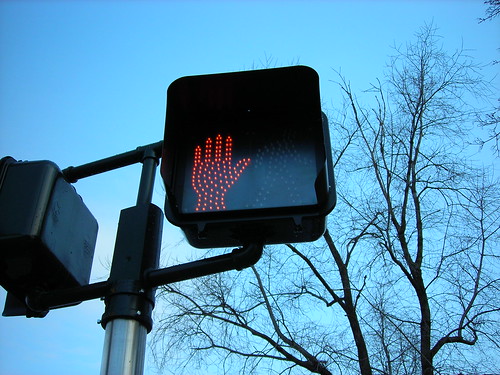
Cost of giant science complex: Who knows. $20 million? $50 million?
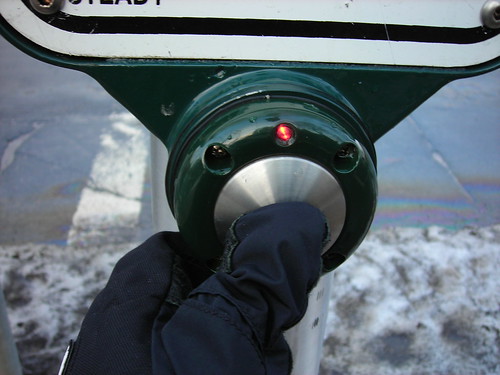
Cost of crosswalk: ~$3K
Frustration with lack of crosswalk: [(x)*(n^2) + 2^(m)]*H where x= number of times you must cross the road, n= years in grad school, m= near misses, and H= actual hits. (Mr. S is up to four times.)
Number of years it took for the city to install a fricking crosswalk already: 40.
Cost of crosswalk: ~$3K
Frustration with lack of crosswalk: [(x)*(n^2) + 2^(m)]*H where x= number of times you must cross the road, n= years in grad school, m= near misses, and H= actual hits. (Mr. S is up to four times.)
Number of years it took for the city to install a fricking crosswalk already: 40.
Friday, April 06, 2007
Friday Advice: Choosing a Lab: Intro (1)
I write this not in the expectation that any of my dear readers need my unsolicited advice, but from the need to get it off my chest. Besides, maybe someday, advice will surpass plastic wrap as my most-searched topic!
******
In the beginning, there was the delusion.
New grad students often think that only the professional climate matters, that interpersonal relationships will have nothing to do with their success. It's all about the science, and nothing else matters! Ha ha ha. WRONG.
A bad lab will suck out your life and energy. Your motivation and mental health will go to hell, which will wreck your thesis, health, and everything in between.
A good advisor will give the advice you need, when you need it. He will be tolerant when you are sick, or getting married, or taking a three-day vacation. She will read your manuscript even if you're late to lab meeting.
A sexist lab will treat you like an idiot if you don't fit into the alpha-whatever mold. You will be condescended to and dismissed. You will feel you can never wear a skirt again. A bad lab will leave you depressed and hopeless.
In a good lab, your co-workers will help you. When experimental disasters befall, there will be support. They will encourage you to keep going.
You think it won't happen to you
But it will. Bad labs don't make an exception because you're nice. And you think I'm making this up; no one lab could be that bad! But these things ALL happen in my lab.
Why yes, if I had known this five years ago...
One scream if by land?
The best way I know to discover a lab’s personal atmosphere is: ask a senior grad student. Not someone who’s been there a year or two and is full of bushy-tailed enthusiasm, no. A nice cynical fifth-year (or third if you're in Europe). If there aren’t any, try to find someone who’s left (check the lab’s webpage or the publication record for departed members).
The postdocs know some of the ups and downs, but they are both more experienced and less vulnerable than grad students. For one, they usually have their own funding. And they have enough experience that bad advising is less harmful; for example, a better handle on when an experiment will never work.
If you want the real dish, ask your informant to speak to you privately, and tell her/him you won’t repeat it. And don’t.
Bribery by coffee or chocolate won't hurt, either.
Next week: So Do Good Labs Smell Like Dead Chicken? (No.)
******
In the beginning, there was the delusion.
New grad students often think that only the professional climate matters, that interpersonal relationships will have nothing to do with their success. It's all about the science, and nothing else matters! Ha ha ha. WRONG.
A bad lab will suck out your life and energy. Your motivation and mental health will go to hell, which will wreck your thesis, health, and everything in between.
A good advisor will give the advice you need, when you need it. He will be tolerant when you are sick, or getting married, or taking a three-day vacation. She will read your manuscript even if you're late to lab meeting.
A sexist lab will treat you like an idiot if you don't fit into the alpha-whatever mold. You will be condescended to and dismissed. You will feel you can never wear a skirt again. A bad lab will leave you depressed and hopeless.
In a good lab, your co-workers will help you. When experimental disasters befall, there will be support. They will encourage you to keep going.
You think it won't happen to you
But it will. Bad labs don't make an exception because you're nice. And you think I'm making this up; no one lab could be that bad! But these things ALL happen in my lab.
Why yes, if I had known this five years ago...
One scream if by land?
The best way I know to discover a lab’s personal atmosphere is: ask a senior grad student. Not someone who’s been there a year or two and is full of bushy-tailed enthusiasm, no. A nice cynical fifth-year (or third if you're in Europe). If there aren’t any, try to find someone who’s left (check the lab’s webpage or the publication record for departed members).
The postdocs know some of the ups and downs, but they are both more experienced and less vulnerable than grad students. For one, they usually have their own funding. And they have enough experience that bad advising is less harmful; for example, a better handle on when an experiment will never work.
If you want the real dish, ask your informant to speak to you privately, and tell her/him you won’t repeat it. And don’t.
Bribery by coffee or chocolate won't hurt, either.
Next week: So Do Good Labs Smell Like Dead Chicken? (No.)
Thursday, April 05, 2007
Not Dead Yet
At last, I am released from toil. Oy. Wherever my personal Egypt is, it has a lot of unwashed dishes and uncut root vegetables.
Unfortunately, my dear friend Belle-et-Bonne who came all the way from France to visit and do Seder with me again? She promptly fell ill and spent the next four days horizontal, and only made it through the matzah ball soup before returning to bed. Also, to really emphasize the 'all who are hungry, let them come eat,' someone invited two extra guests, and five people didn't tell me they were coming.
Formal dinner for 11:
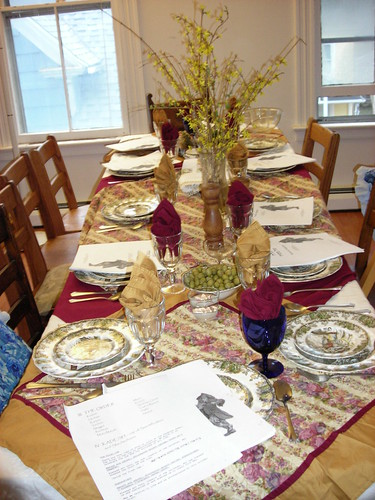
Complete with wedding tablecloths and some of the 100 napkins that my mother sewed. (I would have been happy with paper! Really!) Plus a plate for Elijah. Fortunately, we have twelve plates.
This morning I returned to lab (well, eventually; first Belle-et-Bonne and I had a leisurely breakfast first, including one of those entirely frank and refreshing conversations that, Mr. S tells me, he and his male friends avoid like a plague of boils).
I promptly walked into the cold room, and spent the next ten minutes wandering about muttering 'What is that smell?' Like a chicken died. Because last week, someone pureed chicken breasts in salty buffer. And... then let the goo stand for a week. It smells just like the last time I forgot raw poultry in the backcountry of the refrigerator.
After I finally determined what the Nasty Icky Smell was, I looked at my abandoned experiment that I was going to come do Monday, but instead I spent it waiting for the doctor with Belle-et-Bonne. And! My dialysis tubing burst! It is now dissolved in two liters. Glycerol ensued.
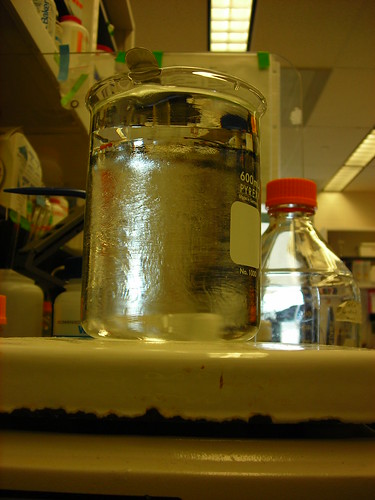
I love the sugary ribbons it makes when it stirs, and watching the threads whip around in lacy patterns. The photo doesn't do it justice.
Am I a total geek or what?
Unfortunately, my dear friend Belle-et-Bonne who came all the way from France to visit and do Seder with me again? She promptly fell ill and spent the next four days horizontal, and only made it through the matzah ball soup before returning to bed. Also, to really emphasize the 'all who are hungry, let them come eat,' someone invited two extra guests, and five people didn't tell me they were coming.
Formal dinner for 11:
Complete with wedding tablecloths and some of the 100 napkins that my mother sewed. (I would have been happy with paper! Really!) Plus a plate for Elijah. Fortunately, we have twelve plates.
This morning I returned to lab (well, eventually; first Belle-et-Bonne and I had a leisurely breakfast first, including one of those entirely frank and refreshing conversations that, Mr. S tells me, he and his male friends avoid like a plague of boils).
I promptly walked into the cold room, and spent the next ten minutes wandering about muttering 'What is that smell?' Like a chicken died. Because last week, someone pureed chicken breasts in salty buffer. And... then let the goo stand for a week. It smells just like the last time I forgot raw poultry in the backcountry of the refrigerator.
After I finally determined what the Nasty Icky Smell was, I looked at my abandoned experiment that I was going to come do Monday, but instead I spent it waiting for the doctor with Belle-et-Bonne. And! My dialysis tubing burst! It is now dissolved in two liters. Glycerol ensued.
I love the sugary ribbons it makes when it stirs, and watching the threads whip around in lacy patterns. The photo doesn't do it justice.
Am I a total geek or what?
Subscribe to:
Posts (Atom)