Wednesday, February 28, 2007

More Unpublished Editorial Comments (The Bad Mood Continues)

Chers Messieurs et Mesdames les auteurs,

Endnote is your very best friend. References in numerical order as they appear. Why? Why is this so hard?

Please note, o native English speakers, that some words sound alike but have different meanings! Transferrin is not the same as transferring, the effect of your grammar is dismay, and it affects my decision to reject your paper. Likewise, while the principal often has principles, cells rarely do.

I am fascinated to hear that when something dissolves it is attenuated. You don't say. I am also thrilled to read that your device was chronically embedded. I hear acute embedding can be fatal.

To the authors who had a friend translate your paper: Don't.

Je reste, très respectueusement et avec toute amitié, la vôtre,

Jeanne F. laChercheuse, l'éditrice.

Tuesday, February 27, 2007

It Is Good, It Is Bad, It Is Unpredictable

Brain space is full. Error. Error.

I have science-y topics to write about, and no brain cells to do it with. Instead, I am preoccupied with the essential questions of the universe:
  1. Will my wretchedly complicated assay ever reproduce my beautiful result?
  2. Will Merest Acquaintance In Big City help me do mass spec?
  3. Will I ever decipher the 110 incomprehensible pages in old notebooks, which I am now trying to turn into a thesis chapter?
  4. Will I ever graduate?
  5. Should I buy four pairs of shoes, or five?
  6. Should I chop off all my hair again? (Pros: easy to deal with, won't give me headaches; cons: have to get it cut every 8 weeks or looks awful, would need to buy clips and a headband so I don't set it on fire).
***
Elli asks, what is good about being in science? And I have, in point of fact, been feeling terribly negative. So here's what I love about research and science.
  • Independence. I design my own experiments, analyze my own data. I get to think about cool stuff and then do it however I want. As long as I can explain it, I'm free to go my own way.
  • Good funding. The lab has lots of money. This makes life easier.
  • Good company. I have smart, witty friends and colleagues who are handily concentrated for my enjoyment by the university .
  • They pay me to think. I love figuring stuff out; not the endless PCR, but the analytical thinking. The moment you finally drive a stake through a hypothesis with a beautifully simple experiment. And that moment where you look at your data and think "I'll be tied for a hog, I know what's happening! IT WORKED!!"
  • Discipline. I have learned to be efficient, productive, and more self-motivated than I thought possible.
  • Self-improvement. I have learned to be assertive, persuasive, and more self-confident than I thought possible.
  • Science Trivial Pursuit Champion! I have learned more scientific facts, both relevant and irrelevant, than I thought possible. I am a treasure trove of random information.
  • Sharing the love. I get to blog about science, meet fascinating people in the computer and out, and share my love of science. I love helping other people understand how stuff works and how much it makes a difference to know.
  • It only gets better. After this, anything else will likely seem easier.
  • What makes me stick it out? Knowing that being Dr. Scientist increases my chances of being in charge wherever I go next, and that I will have the knowledge, the experience, and the credentials to be able to do what I love: spreading the word of science.
Anyone else?

Monday, February 26, 2007

Carnival; Status Symbols

Write! Write for the Scientiae Carnival! Email our lovely hostess by tomorrow! (See the 'Welcome' tab for what it's about.)

***
I have observed a peculiar circumstance about lab coats here.

On the one hand, there are the doctors and residents and med students. They walk proudly down the street, in the bitter cold, but do they wear a winter coat? No! They must show off the possession of a white coat! The length is carefully calibrated to status. The name-badge is prominently displayed. The stethoscope is slung over the shoulder.* Doctors show up for meetings at 7 pm in their white coats lest anyone forget.

On the other hand are the lab scientists. To obtain a lab coat, we go to the stockroom and pay the princely sum of $25. Actually, our grants pay. Therefore they are not associated with status. The 'real researchers', as it were, have a limited number of reasons for wearing a lab coat:
  • Working with radiation
  • Working with something gross
  • Coomassie Brilliant Blue
  • Wearing nice clothes (usually: for a date, committee meeting, or teaching)
  • Being cold
Around here, only techs (and people in hot labs) perpetually sport the lab coat. It is a reverse status symbol.

Peculiar.

*Stethoscopes are rather expensive, aren't they? I'd put mine back in the box.

Friday, February 23, 2007

Friday Library: Howell's Physiology

Today's edition brought to you by my surpassingly bad mood and the Rescued Library Books fund.

Last night in the Scientist household, there was a somewhat acrimonious discussion on equilibria, due to a visual mind intersecting an entirely abstract one. "But you should be able to determine the stoichiometry at any concentration above the Kd!" "No, you have to saturate with one to eliminate cooperativity or weird stuff. Can't you picture it? And the inflection point is the ratio." "But it doesn't make sense mathematically!!!! Numbers!" "And this is why you balance the checkbook."

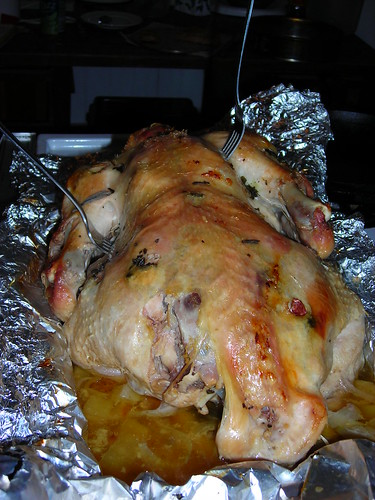
Here is a turkey.
Before, Turkey
(I removed the dissected turkey because I'd gotten sufficient enjoyment and it was rather gross.)

The equilibrium of the uncooked turkey tends towards it staying in the fridge; the forward reaction of decomposition is the rate-limiting step. With the application of sufficient activation energy (450 F x 3h) in the presence of garlic and potato catalysts, the equilibrium rapidly shifts toward completion. Be warned, however, that overenthusiastic heating may produce undesirable carbonized by-products.

Consumption of equilibrated turkey may prove catalytically activating for happy feelings, and may act against the pursuit of further argument.

****
Howell’s Textbook of Physiology
W. B. Saunders, 1946 (15th ed.)

Hunger. Hunger sensations are probably of some importance in determining when we eat, though the periodicity of eating is not interfered with by ending hunger sensations... That additional factors are involved is shown by a variety of evidence. For one thing, hunger pangs cease promptly with the ingestion of a few mouthfuls of food, but eating continues. Rats, after removal of the stomach… continue to eat periodically, to exhibit periodic random activity, to evidence normal hunger drive, and to maintain body weight. Such animals were as strongly motivated by a food incentive to learn a maze or overcome an obstruction as were normal rats.

…To maintain the delicate balance between food intake and food requirements demands some more specific mechanism for the control of the kind and amount of food ingested than hunger contractions and hunger sensations. Lower organisms adjust food intake to energy requirements with great exactness. Man without thought or other conscious activity does the same. [Ed.: HAH!] Thus qualitative and quantitative dietary deficiency induces a physiological hunger state which motivates the animal to food seeking or to self-selection of a diet until the state is relieved.

Digestion.
Stimulation of the gastric mucosa itself can also affect the hunger contractions. This was demonstrated when Carlson introduced various substances into the stomach of Mr. V., his patient. Ice-cold water was more effective in causing this inhibition than water at body temperature. Weak acids… caused a marked inhibition of the contractions but this inhibition was only temporary, which explains the fact that the hunger movements can occur when the acid juice but no food is present, as in starvation… Beer, wine, brandy, and diluted pure alcohol inhibit both the tonus and the contractions… Rogers showed that the hunger behavior of the decerebrated pigeon [Ed.: Yuk!] is completely abolished on removal of the optic thalami.

Cannon, in his observations upon cats, found that all movements of the stomach ceased as soon as the animal showed signs of anxiety, rage or distress.

Thursday, February 22, 2007

Child Care Survey

My professional society's Women-In-Science group is conducting a survey on childcare.

I have just done the research for Snooty U and I am, frankly, appalled. The ratio of eligible parent-type persons to available University-run childcare slots is roughly 100:1. No-one else subsidizes in any way, unless you're really really poor.

If we were blessed with an accidental squirrel, it would cost 20% of our combined gross income to put the kid in daycare. From 8 to 5. One of us staying home would a) drive someone insane from boredom, b) put our income at 150% of the federal poverty line, and c) qualify us for WIC and free state-run health insurance. Eeeee.

"Does the cost and availability of childcare affect your decisions to have children and/or the jobs you will take or have taken?" Ah, that would be YES.

[Another round of Ask-A-Scientist below.]

Ask a Scientist: Metformin and PCOS and Pregnancy

What's PCOS? Polycystic ovary syndrome is characterized by, among other things, a lack of normal menstrual cycles, lack of ovulation, and cysts in the ovaries. It's not clear exactly what causes it.

Some people believe it has to do with gonadotropin-releasing hormone (GnRH), which is itself secreted by the hypothalamus. GnRH acts on the pituitary to control secretion of two of our favorite hormones, luteinizing hormone and follicle-stimulating hormone (LH and FSH). Some studies indicate that GnRH secretion in PCOS patients happens in fast pulses, and doesn't have normal feedback with estrogen/progesterone down the line. The end result is that PCOS patients end up with high LH and low FSH and so don't ovulate.

-Much of the following information is summarized from this review; email me if you want but can't get the pdf.

PCOS and insulin: PCOS is strongly linked to insulin resistance, where cells doesn't react correctly to insulin, and so insulin is produced at high levels as the body attempts to compensate. Although this effect is increased by obesity, even 'lean' women with PCOS have some insulin resistance. Pretty soon testosterone production increases in the ovaries and levels of the main testosterone-binding protein decrease. (This doesn't help any with the ovulation problems.) There are theories that this gets into a feedback loop with the pituitary and then you get even more testosterone-producing-stimulation badness.

Because of this, drugs that counter insulin resistance are frequently prescribed to manage PCOS in women who wish to conceive. Birth control pills are given to women who merely wish to manage symptoms. Metformin, hereafter M, is the best studied (and the one I was asked about). Troglizatone, the next-best-studied drug, has been withdrawn by the FDA due to liver toxicity.

Metformin and ovulation: M alone, in clinical trials, has caused ovulation in 34% of an obese population; when combined with clomiphene, 90% was achieved. This has been confirmed multiple times; the increase is about 4-fold over untreated, or a total of 46% in non-obese patients. Clomiphene is sometimes used alone, but M works better alone or in combination with clomiphene.

There are a few studies where gonadotropins are combined with M; multiple follicles (associated with multiple implantations and, if no reduction is performed, poor pregnancy outcomes) were reduced from an average of 4.5 to 2.5. Cycle cancellations due to too many follicles were also reduced. Another study found that M increased mono-ovulatory cycles and decreased hyperstimulation (These are good things.)

When M is compared to laparoscopic ovarian diathermy (in obesity only), which sounds kind of icky and apparently lacks randomized trials, ovulation is the same but M is better at allowing and maintaining pregnancy (overall: 18 vs. 13% of patients have pregnancies, 15 vs. 29% SAs).

Metformin and pregnancy loss: Spontaneous abortion (SA) is increased dramatically in PCOS. Although anovulation is a major factor in the infertility of PCOS, women with PCOS are also at high risk of first-trimester early pregnancy loss. Compared with an SA rate of 10-15% of clinically recognized pregnancies in controls, the comparable EPL rate of women with PCOS is 30-50%. M treatment seems to knock the risk back down to the basal level, if it is taken throughout pregnancy, and may reduce the risk of gestational diabetes ['GD developed in 4% of pregnancies versus 26% of previous pregnancies without M'].

Metformin and teratogenicity: In a small study of 126 infants, there were no teratogenic effects observed. Other small studies have come to similar conclusions. M is currently a Category B drug (along with Sudafed). Note, however, that in 126 infants one would not expect to see more than 3 congenital defects, and M would have to increase risk at least two-fold to be reliably observed.

Motherisk conveniently summarizes the animal data for us: high doses (600 mg/kg/day) in some animal or other have no effect, and clinical doses have no effect, and cultured embryos are susceptible to M toxicity. There may be a low incidence of malformation in rat embryos.

Type II diabetes is, like PCOS, characterized by insulin resistance and hyperinsulinemia and is associated with not only pregnancy loss and infant mortality, but also a sharply increased incidence of congenital malformations (about 11-fold). This makes it harder to tell if M does cause congenital defects because most of the population taking M has these 'confounding factors'.

Summary:
  • M is often effective at increasing ovulation in PCOS.
  • It has been combined with other drugs, or with gonadotropins, to successfully induce ovulation in a majority of study subjects.
  • Usage through pregnancy, or at least the first trimester, sharply reduces the risk of SA in PCOS patients.
  • In small studies, there is no teratogenicity in humans and minimal teratogenicity in animals. However, because of complications, it is difficult to tell if there is an effect.

Wednesday, February 21, 2007

Sewing (Because Scientists Have Lives)

Continuing on the theme of stereotypes:

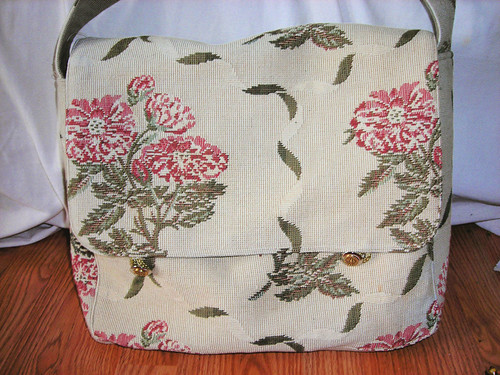
Look! My new bag. I'm so, so tired of 'pretty' being associated with 'unprofessional and probably ditzy'. I am so tired of never wearing skirts, dangly earrings, pastels, scarves... you get the idea. I have an entire closet full of clothing I can't wear to lab because it's too girly.

But! I decided: I've been mean enough to enough people that I can finally, metaphorically speaking, wear a little pink. I'm fighting the stereotype! With pink flowers.
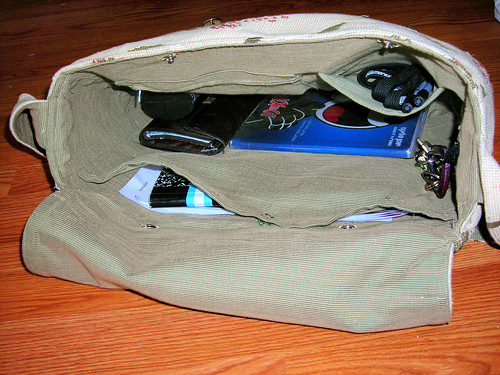
Bag 2Bag inside
Yours in Science and Sewing,

A Professional Biologist Who Likes Pretty Flowers

Tuesday, February 20, 2007

Men Mustn't Cry? Down With The Dominant Paradigm!

In honor of the impending carnival! Previously on women: Women Crying? Bad.; Am I a Woman Scientist? on rage; Aetiology on academia.

***
Several readers point out that a man crying in public implies disaster or nuclear emotional meltdown on the part of the man, and is met with near-universal distress, and doubts of his sanity/ stability/ whatever. Absolutely.

[I'm sure all my readers are brilliant and already singing in the choir, but just in case, let me emphasize that stereotypes are not representative or desirable and that I quite like many men. (For those who doubt the harm of stereotypes, see also Isn't a Millennium of Affirmative Action for White Men Sufficient?, the NSF report, the NAS report, Why So Slow, Lifting a Ton of Feathers, Zuska, and, you know, reality.) ]

Men crying: what a perfect example. This is what the current scientific (and business, etc.) paradigm does: it asks people to become less than they are to conform to a system established by, and largely favoring, white males with full-time wives.* As Zuska says: "We have come to valorize the traits most highly identified with masculinity as also being most highly identified with and necessary for science." (This is well-documented and I will spare you seeing all the references yet again.)

What I interpret from my experience of science is that women are heavily penalized for crying because we are already stereotyped as being fundamentally more "emotional, subjective, [and] irrational" (Zuska), or, if you like the Stupid Former Presidents Of Ivies hypothesis, also as less able. We all work to be taken seriously, to be tough and assertive and, frankly, to display stereotypically masculine traits.

Crying reinforces one's sterotypical femininity and, therefore, associates one more strongly with the feminine category. Feminine traits are dismissed as unscientific, because the pardigm is polarized. That is: by displaying traits other than the stereotypically masculine emotionless-analytical-scientist, we as either women or men remove ourselves from the categorization of good scientists. There is no paradigm of lacy-skirt-wearing kick-ass female scientists. And there is no paradigm of male scientists who come home early to cook dinner.

I would speculate that if a man cries, it takes him even further from his assigned place in the stereotype, and this is (part of) why it is met with such a high degree of dismay. Besides the fact that men are so strongly socialized not to cry that doing so implies disaster in and of itself.

This kind of narrow paradigm harms everyone, and this is a beautiful example. As Mr. S points out, it's difficult to convince the dominant group that they should, say, award grants more equally. Because it'll be more fair, but it takes money away from the majority group; there is a moral incentive but a personal disincentive. On the other hand, masculine/feminine stereotyping affects everyone who doesn't fit neatly into a rigid mold.

Say you're a man and you don't have a stay-at-home spouse. Say you want to take a paternity leave, or you have to pick the kid up from daycare. Say you have emotions and occasionally tire of leaving them in your mailbox while you work. Tough luck! I'm going to take a wild guess and say that distressingly often, these men will be categorized as less-masculine, less-scientific, more-emotional-and-girly. Many younger men, including my generation, have been socialized to greater domestic responsibility in their lives. They are expected by their spouses to live in a brave new world of equal household chores, and penalized for it by a system whose administrators are 65-year-old bearded white men.

That is: Crying is very heavily disfavored because crying bins the cryer as a subjective irrational being, regardless of gender. But many family-oriented activities can also bin the doer as feminine. I have seen this frequently come out as 'Doesn't prioritize science, isn't serious about his/her work'.

I've said it before and I'll say it again: I long for the day when one's scientific competence is judged on its own merits; when women and men both have strong role models whose lives are not eaten by science; when tenure will not depend on how many meetings you missed because the baby was sick.** No matter what your gender. And that day is not today.

Any other favorite harmful-to-men-too aspects of our beloved scientific paradigm, dear readers?

*My program has roughly 400 faculty. Two are African-American.
**I've been told that Snooty U is somewhere down in "Worst of the Worst" for these things, so pardon my extreme cynicism and anger. Maybe there are lots of places it's better! Yeah! Remind me to tell you about the 40% faculty turnover in Chemistry, my last 2 years at Beautiful Little College On A Hill.

Friday, February 16, 2007

Brief Updates

1) Skookumchick proposes a Women in Science (and Engineering and Technology) Carnival! Do you write about "gender in science and engineering"? Feminism in science? The ways the dominant, sharply gendered, paradigm's expectations hurt all scientists? Head over and sign yourself up!

2) Now with more blogrolling! If I forgot you I'm terribly sorry. Don't worry, I still love all my readers; blame my dreadfully short memory. Now where did I put those keys?

Friday Photo Library: A Week In Bad Ideas

Leaving that egg on the table.
Bad Idea

[Not pictured: Microwaving margarine 3 minutes on HIGH.]

Opening that crunchy dried tube of Ponceau Red over my bench.
Ponceau Red

[Not pictured: Getting Coomassie Blue all over my fingers.]

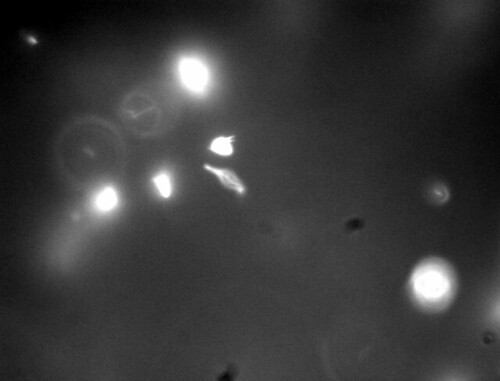
Thinking that experiment would work.
Failure
(This is never what it's supposed to look like.)

Buying this beer as consolation:
DSCN0182
And discovering it tastes of cotton candy dissolved in Heineken.

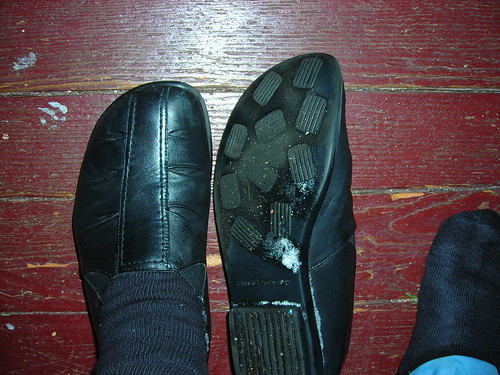
Wearing these shoes:
Flat shoes

In this.
Snow
Also, Snooty Town's spectacular plowing.

Not clearing off one's car.
Truck

Parking one's car in Snooty Town.
Dead car
(And you thought I was kidding about the gangs! This car did, indeed, end up in Even More Hellacious City.)

Bad idea and good idea together:

Offering to make challah for the friend who just had major surgery.
DSCN0180
But baking it late at night.

Bad idea:
Asking Mr. S to take it out of the oven. Before the ends charred.
DSCN0181

Only really good idea:

Buffy
Declaring Thursday a SNOW DAY and watching Buffy all morning.

[Not pictured: Lemon custard, tea, omelette, dressing gown, blanket, warm comfy laziness.]

Thursday, February 15, 2007

Ask a Scientist: Antidepressants and Pregnancy (6)

Series: Antidepressants, Pregnancy, Risks
  • Introduction
  1. Spontaneous abortion
  2. Premature birth
  3. Congenital or teratogenic defects; that is, malformations in utero
    • Cardiac defects
  4. Antenatal/ postnatal adaptation problems
    • Muscle stiffness
    • Breathing distress at birth
    • Neurological withdrawal symptoms
  5. Breastfeeding risks
    • Infant weight gain
    • Infant serotonin levels
    • Long-term neurologic development
  6. Maternal risks of going without treatment
    • Relapses
    • Infant failure to thrive
    • Parenting problems, attachment, child behavior
This information is drawn from published articles in medical journals, some of which are compiled here, and from public databases. (See also: summaries on Motherisk, FDA registries for pregnant women, this excellent Medscape article, and the FDA's index by drug name.) Information is also available through PubMed by searching various terms; I suggest starting with 'antidepressants and pregnancy'.

A list of generic and trade names is here.

*****
By the way, the pregnancy-and questions currently outnumber all others about ten to one. Who'd have guessed? Women are curious and underinformed!

6. Maternal risks and consequences of untreated depression

Aside from the obvious things about not being treated for depression (during or after pregnancy)- like not eating right, and never managing to wash the dishes, and being completely unable to take joy in anything, for example- it appears that being depressed affects children's growth and development. I find this entirely unsurprising: interaction with children, including how many words one speaks to them, has a huge impact on their development. (Here is where I would put references to 200 studies about this, if I had time.)

[Here is where I repeat that this is not medical advice, okay? These are my personal opinions.]

Each woman (possibly with her partner) decides what risks she is willing to take in pregnancy, and I'm all for that; the reason I wanted to write this is because so many doctors refuse to treat depression in pregnancy without evaluating the risks or letting the patient decide, and this in a situation where the risks appear to be relatively low (as opposed to, say, isoretinoin, which is associated with a roughly 25% incidence of major birth defects and a high rate of SA).

But especially once one is postpartum, I would argue there is NO reason to leave depression untreated. It is neither ennobling nor noble. It is merely dreadful.

And by the way, I have eliminated from consideration all studies that claim vitamins/ fish oil/ acupuncture will make all MDD patients, and especially women, feel all better. Because I don't do quackery. It exhausts me.

6a. Relapses

Relapses are very common in depression; one study, done over 1.5 years, cites a 40% relapse rate in the control group. They are investigating only one drug, but even in this isolated case, treatment reduces relapses to 26% and increases the time to relapse.
Another study cites a recurrence rate of 65% in controls vs. 27% treated with the same one drug. [And boy, are those control figures, um, depressing, by the way.]

These studies are both in cohorts with MDD. If you have MDD and it's untreated, guess what? It'll probably come back!

A series of small studies in pregnant women found that while half stopped or tried to stop taking ADs while pregnant, 75% of MDD patients "experienced depressive relapse". Of patients who discontinued or decreased AD dose, 61% went back to taking them.

6b. Infant failure to thrive
As previously mentioned, one study comparing 5 SSRIs and venlafaxine shows that maternal depression of >2 months decreases infant weight gain. This is confirmed by other studies, one longitudinal one which finds that 'infants of prenatally depressed mothers showed significantly more growth retardation than controls at all time points.'

A review mentions that extensive evidence shows that persistent deprssion is associated with higher cortisol levels and lower serotonin, and these stress effects are echoed in the infant's 'biochemical profile'. They also mention that prenatal depression is associated with both physical and behavioral complications throughout pregnancy, birth, and infancy. These results are supported by animal studies showing that maternal stress affects pregnancy outcome and offspring development.

To further sweeten the pot, an assortment of studies find that maternal depression and/or other psychiatric conditions are associated with missing prenatal checkups, prematurity, low birth rate, and more NICU stays: i.e., poorer self-and-fetus care during pregnancy, and poorer outcomes in birth.

6c. Parenting problems, attachment, child behavior

Here I'll quote because I couldn't put it any better:

"Depressive symptoms have also been found to be associated with negative parenting behaviors, insecure attachment, and subsequent internalizing behaviors in the child."

"Through children's early adolescence, maternal drug use [Ed: illegal, not prescription] is no more inimical for them than is maternal depression.... [on] mothers' everyday functioning [:] results showed that negative parenting behaviors were linked with multiple adverse child outcomes."

Child difficulty [to the parents] was associated with elevated levels of psychosocial stress, but only for some participants. Parental psychopathological symptoms during pregnancy should thus be considered as a risk factor for elevated and prolonged depression and elevated psychosocial stress in mothers and fathers across the transition to parenthood." So if you're stressed and depressed, your child may be even more of a handful. Eeeek.

"If depression persists into the postpartum period, it can have long-term consequences for both mother and baby. Mothers might go on to develop chronic mood disorders, and untreated postpartum depression can impair mother-infant attachment (level I evidence). Finally, being exposed to a chronically depressed mother can have cognitive, emotional, and behavioural consequences for a child."

Conclusions:

  • Depression is miserable and loathsome.
  • Untreated depression in pregnancy is associated with higher risk of poor outcomes.
  • Infants with depressed mothers have weight-gain delays.
  • Untreated depression after pregnancy is associated with developmental troubles and poor parenting.
  • Parental depression interferes with children's physical and emotional development.
Cheers, and thanks for reading to the end of this exhaustingly long series. Whoooo.

Wednesday, February 14, 2007

The Book of Tribulations

1. And it came to pass that the Prophetess of Science was sore dismayed by Winter. And she heard wisdom, and drank of the Water, unto many cups; yet it aided not. The Prophetess cried out, saying: O Mother, wherefore the afflictions of the sulfur taste and of the nose?

2. The Mother soothed her, saying: O Daughter, have ye drunk of Water and of Tea? Verily, bathe thy head in steam, thy affliction shall ease. As to the taste of sulfur, I know not, yet it shall pass. So the Prophetess heeded the words of her Mother, and went unto the fire and heated much water. She bowed down before the steam, and drank many libations.

4. Lo! For the great and mighty steaming of the head answered her trouble, and when she awoke in the morning, she rejoiced. For as the Mother had said, the taste of sulfur had passed her over. All praise be given unto the wisdom of the Mother.

5. Yet Winter had not finished with the Prophetess, and she soon became the Wearied One. For when she attempted the sacred ritual of Replicating The Experiment, the Deities heeded not her prayers.

6. And the Wearied One made anew of her potions, and it aided not. And she made again and yet again, and yet once more, of her consecrated incenses, and it aided not. Though she persevered, lo! Her vision failed her and she saw naught.

9. The Wearied One cried out, saying: Wherefore see I nothing? And a prideful and arrogant man answered her, Hast thou added sufficient oil? Hast thou used the correct filter? Yea, unto many times, she replied. Then hast thou removed the polarizer? And the Man removed it further, and it was good.

Failure10. But it availed not, for the Deities turned their faces from the Wearied One. For lo, the Experiment worked not. And the Wearied one laid her down on the mountaintop, and was grieved in her heart, and wept for her lost Vision. For she could not walk one more step on the holy mountaintop ere her Experiment were properly Replicated. Woe unto her. Woe.

Tuesday, February 13, 2007

In Which I Am Unusually Mouthy (Even For Me)

Setting: Meeting with the Hey Grad Students, Defend Already, What's Wrong With You (Or Possibly Us) Academic Taskforce

Me: And in the last five years, the sum total of guidelines I received from the department consisted of one page about quals.

Program Director: Really????

20 students, in chorus: YES!

Student in back: What? There were quals guidelines?

***
Ambitious Junior Prof: Well, if you don't have your committee meetings, the Program Director won't approve your registration. And then you won't get paid! Hah!

Ilya: I have not had committee meeting in four years and I graduate in December.

AJP: But... but...

***
Program Director: And only... let's see... half of you had committee meetings last year!

Rebecca: Or... half turned in the form with the signatures.

Alan: Wait, we have to turn in a form??

Program Director: Yes! It's in the handbook!!!

Rebecca: We have a handbook?

Program Director: [puts head in hands and weeps]

Monday, February 12, 2007

Ask a Scientist: How Does Kool-Aid Clean Brass?/ Also, Randomness

I know I promised (the one person still reading) the last part of ADs and pregnancy today, but... um, I haven't written it yet. I was impeded by a) laziness; b) a Jews Do Iron Chef competition; and c) a lingering cold which features drippiness, lethargy, and a nasty taste, rather as though I'd snorted DTT.

And my procrastinating little self has a ton of labwork, a meeting, and a postal trip (perhaps figurative, but certainly literal) to do yet today. So, here's a less deep topic for this fine Monday morning.

Also, birthday loot:

Loot2
Me to Mr. S: Good Scotch, shoes (not pictured on account o' he was wearing them).

Mr. S to me: 400 crossword puzzles.

Me to self: Port, silly pajamas.

Sister to me: scarf.

Sci-in-Law parental and grandparental units to us: Cash and cards. And a Superman paper airplane.

Mother to us: Hot water urn that doesn't leak on the cord. Not yet arrived on account o' neither of us plans in advance.


***
Irie asks: "My husband was in the Navy and told me that they used Kool-Aid to clean brass. How does that work?"

I think the first question is why on earth does the Navy use Kool-Aid? If there are any readers out there who know, please tell me; I'm fascinated.

Brass is an alloy of copper and zinc. Like most metals, it tarnishes: the metal combines with oxygen and/or water to form oxides, and it gets less shiny, or green, or brownish. If it's been touched, it will also accumulate a film of oil and minerals and dirt from the skin, which minerals etc. may hasten oxidation. Many metal oxides are insoluble or sparingly soluble in water. For example, if you put a tarnished penny in water, nothing happens: the tarnish doesn't dissolve off.

There are at least two easy at-home ways to shine metals: with a mild abrasive, or with acid. Abrasives such as baking soda or cleaning powders will simply rub off the layer of oxide, leaving the shiny metal visible beneath. So you can shine a penny with Comet, if you want. Or, if you're obsessive like me, you can shine your pots and pans with a baking soda paste.

The other popular way to clean pennies is to stick them in vinegar. Why? Because the acid reacts with the metal oxide and solubilizes it (by exchanging the hydroxide for the acid's counter-ion: Fe(OH)3 + 3H(CH3COOH) --> Fe(CH3COOH)3 + 3H2O, for example). This is also why you can clean pennies in soda (pop for you Yankees): it's acidic.

So why does Kool-Aid clean brass? As a powder, it's probably abrasive just like baking soda; as a liquid, it's quite acidic. (Irie notes that the Navy used it in the liquid form.) The ingredients, other than colors and flavors, are: citric acid, salt, cornstarch, calcium phosphate, and ascorbic acid. Tang also contains citric acid, which is why it can be used to clean various things including commodes. And in fact, non-Navy people do clean stuff with Kool-Aid. Personally, I go for vinegar. Or Comet.

Bottom line: The acid in Kool-Aid solubilizes the oxides that tarnish brass.

Fun random fact: You can mix Kool-Aid powder into your Rice Krispy treats to make tropical-punch-flavored red marshmallowy crunchy snacks. All together now: ewwww.

Friday, February 09, 2007

The Goods Are Odd, and the Odds are Family

Seventeen years ago today, I was in the delivery room, watching my sister Prudence’s birth.

Baby sisSis and me
Sis hosesis slide
(She's older now.)

Four years ago today, I was having a costume party. I've lost the pictures, but someone dressed up as a rooster.

Two and a half years ago, I was saying to Mr. S, ‘Really? Can I see your driver’s license?’

Two years ago today, I sat in front of a fire, next to my favorite person, and told him that yes, we should get married.

Wedding2Wedding

One year ago today, I was most of the way up a snowy mountain, crying hysterically and eating peanut butter on a spoon, with the early stages of frostbite.

Today, cake and tea. Indoors.

Happy birthday to Prudence, Mr. S, my Totally Rockin' Mentor, a friend of my mom's, my husband's co-worker's husband, and to me. (What are the odds!?!!?)

Thursday, February 08, 2007

...send liquor and red pens...

...drowning under manuscripts; out of vodka; help....

This week's lessons:
  • Sewing late at night, in complete exhaustion, is not a good idea.
  • However, the angle is such that breaking needles will NOT hit me in the eye.
  • Someday my experiments will work again and I will have to stop sewing so much.
  • Ten minutes is the correct amount of time to visit an in-pain, post-surgery, doped-up friend in the hospital.
  • A large fruity drink does not aid one's comprehension of papers entitled "Proteins That Are Kind of Like Other Proteins Don't Do What Other Proteins Do", case reports on "Hey, They Didn't Die As Fast As We Thought They Would" or reviews of "Sometimes Anticancer Antibodies Give You Nasty Immune Reactions".
  • On the other hand? Way less boring.

Ask a Scientist: Antidepressants and Pregnancy (5)

Series: Antidepressants, Pregnancy, Risks

  • Introduction
  1. Spontaneous abortion
  2. Premature birth
  3. Congenital or teratogenic defects; that is, malformations in utero
    • Cardiac defects
  4. Antenatal/ postnatal adaptation problems
    • Muscle stiffness
    • Breathing distress at birth
    • Neurological withdrawal symptoms
  5. Breastfeeding risks
    • Infant weight gain
    • Infant serotonin levels
    • Long-term neurologic development
  6. Maternal risks of going without treatment
    • Relapses
    • Infant failure to thrive
    • Parenting problems, attachment, child behavior
This information is drawn from published articles in medical journals, some of which are compiled here, and from public databases. (See also: summaries on Motherisk, FDA registries for pregnant women, this excellent Medscape article, and the FDA's index by drug name.) Information is also available through PubMed by searching various terms; I suggest starting with 'antidepressants and pregnancy'.

A list of generic and trade names is here.


*****
5. Breastfeeding risks
Okay, folks, there are a LOT of articles about this. If you want to see them, search 'breastfeeding antidepressants' on Pubmed. As far as I can tell, they largely come to the same conclusions. So here's a summary of the first 50 or so.

Did you know there's a Journal of Human Lactation??? They have an excellent 2001 review of various ADs in lactation.

Motherisk has a lovely patient-oriented summary about drugs and breastfeeding. (Thanks, Aurelia.)

Summary:

Use of SSRIs and TCAs (except doxepin) is considered safe. Occasional adverse events are reported. They generally resolve once either breastfeeding is stopped, the schedule is altered to minimize infant exposure, or the mother stops taking the drug.

Of the SSRIs, sertraline and paroxetine have very low numbers of adverse events. Mild adverse events are associated with fluoxetine and citalopram (colic, crying, etc.).

Antipsychotics and lithium are not recommended in breastfeeding.

5a. Infant weight gain

A study comparing the 5 most common SSRIs and venlafaxine shows absolutely normal weights in all infants. They note, however, that maternal depression of >2 months DOES make the babies gain less weight.

Paroxetine in 27 mothers has no effect on weight gain or developmental milestones. A meta-analysis of SSRIs (other than fluoxetine) and TCAs also showed no effect on weight gain.

One study on 26 breastfed infants whose mothers took fluoxetine, however, showed an average 1-pound difference in weight gain over 6 months. The JHL review notes that none of the weights, even the lower ones, were below the national mean. Another study notes lower birth weights in fluoxetine usage, but only studies five exposed infants (i.e., not enough to say).

5b. Infant serotonin levels

Unsurprisingly, this isn't exactly studied a lot. One editorial (pdf) summarizes a few studies on the matter: rats exposed to fluoxetine had a 50% occupancy of their serotonin reuptake protein (5-HTT); however, apparently about 80% is necessary for an AD effect. (Also, nobody's quite sure exactly what 5-HTT does or how it relates to depression.)

A human study on fluoxetine says that "most infants may continue to breastfeed without experiencing meaningful changes in" serotonin uptake and metabolism. A small study that lumps together three ADs seems to suggest that newborn serotonin levels are changed by maternal AD use, but stabilize within one month. They go on to suggest that it could have terrible! developmental! consequences but I think they're full of beans (and hand-waving).

5c. Long-term neurologic development

You'll be shocked (shocked!) to learn that basically, nobody has a clue. In infants followed for up to a year, they're perfectly normal. After that, well, neurology is complicated and poorly understood anyways. The best that can be said is that SSRIs and other ADs don't appear to do anything either a) really nasty b) quick or c) much of the time.

Reported infant exposures in breastfeeding

The medical literature says that infant exposure of <10% is largely considered safe. In addition, some data indicate that breastfeeding can alleviate neonatal abstinence syndromes (here in, for example, methadone exposure. Think how much more innocuous sertraline is.).

These exposures and reported adverse effects in lactation are taken from the JHL article and a review in Drug Safety. Both studies note that changing dosage time and breastfeeding times can significantly reduce/ minimize infant exposure.

A modeling study notes that the total infant yearly dose (of fluoxetine) is generally about 1 or 1.5 of the mother's daily dose. This isn't very much. Another meta-analysis summarizes overall exposures for many psychoactive drugs.

Fluoxetine: Infants may receive up to 20% of maternal daily dose (MD). Some reports of extreme infant fussiness which resolve on maternal drug or breastfeeding discontinuation. Other studies indicate no complications in infants. Labelling recommends not using in breastfeeding, but is generally considered low-risk.

Paroxetine: Infant exposure ~3% MD.

Fluvoxamine: May be contraindicted in infants who are taking caffeine (i.e. for apnea). Infant breastmilk dose 0.75%-1.4% MD. Alternatively, undetectable in infant serum.

Citralopram: 0.4%-1.8% MD. No adverse effects reported.

Sertraline: 0.5-2% MD; sometimes undetectable in infant. No known adverse effects. Considered safe and well-studied.

Nefadozone: Adverse event in preterm infant receiving 0.45% of maternal dose; attributed to reduced hepatic function. Calculated to be safe if infant is confirmed to receive less than 10%.

Bupropion: ~0.02% MD; therefore considered very safe in lactating mothers. One case report of seizures; may be avoided if family history of seizure.

Venlafaxine: up to 7.6% MD; metabolized well by infants. No apparent effect on weight. Well-tolerated.

Conclusions:
  • Being depressed affects infant weight gain.
  • SSRIs and TCAs in breastmilk don't.
  • There are no data on long-term neurological consequences.
  • In any case, infant AD dosage through breastmilk is very low.
  • On the other hand, infant/child exposure to maternal depression definitely has bad effects on weight gain, "emotional and behavioural development", maternal-infant bonding, cognitive development, and children's levels of fear and anxiety.
  • Many ADs are well-studied in lactating mothers; few-to-no adverse events are reported. Most are widely considered to be safe.

Wednesday, February 07, 2007

Only (Weak Unprofessional Emotional) Gurrrrls Cry

My mentor is a woman in her forties who has left academia; I am in love with her, she is wonderful, and I wish I'd met her years ago. Be advised, o women scientists: go ye forth and find women mentors, for verily, thy quality of life shall improve.

It was such a pleasure to connect with someone who has experience!! and useful advice!!! So we were talking about the need to be tough and on guard all the time, and I said, 'It's just been really hard...' and burst dramatically into tears.

Of course she was wonderful about it.

But here's the thing: I could not under any circumstances cry in front of my advisor, or any of the male professors; they would never take me seriously again. This is true of some of the female professors, but on the whole, I would expect it to be less career-destroying.

Why is there such a heavy penalty for women to cry in professional settings? I have a few theories:

1) Men project their own socialized constraints onto women: The social expectation that men only cry in serious crisis is projected onto women in professional settings. Because the dominant paradigm is still so male, a woman who cries in a situation where a man would not is judged by the male stereotype, and seen as weak and overly emotional.

2) Crying is simply not seen as professional: Emotion has no place at work, and showing emotion violates the normative code. Because the paradigm is dominated by a male tradition, especially in academia where turnover is glacial. See this Chronicle article: after a miscarriage, a woman holds back her tears, because "justified or not, I could not get past the thought that women who cry at work cannot easily, in the next breath (or on the next page), describe themselves as competent professionals."

3) Men are conditioned to be uncomfortable when a woman cries: Men are not expected to respond well to tears. Perhaps they have difficulty gauging the magnitude of the upset because of (1). This is complicated in professional settings because physical comfort might be seen as harassment. WISELI has a guide(pdf) which mentions this effect: the male prof next door sends all his crying advisees to the female prof, even when it's about, say, grades. Which she can't help with.

The problem is, this is a structure which fundamentally discriminates against women. First we're socialized to believe crying is okay, and then we're penalized for it. Even if it's women who are applying this paradigm, they are still guided by a norm which was not established by women.

-Opinions? Feel free to completely disagree.

-Have any of you ever cried in front of your advisor or committee? Other profs?

Tuesday, February 06, 2007

Learning and Memory

When people ask me how grad school is, I tell them, 'I've learned a lot of things, and almost none of them are what I thought I'd learn.'

Last night I realized I must unlearn the 'You're doing it all wrong! Give it to me!'. Mr. S and I may strangle one another before his thesis is done.

***
Yesterday I ran into a guy I hadn't seen in a couple years.

'You've changed,' he said, 'a lot. You're so assertive. But not in a mean or annoying way. Just so confident and together.'

'It's selected for,' I said.

'You're kind of scary now actually, in a totally take-no-nonsense way.... Most of the people I'm scared of are women.'

'Dear, we have to be a little scary, twice as tough as the men, or nobody will take us seriously. Five years of misogynistic BS, you don't put up with it any more.'

'Oh. Yeah, I think it's one of those things I'll never have to learn, because people will do their jobs and listen to me, and I can just smile and carry on, and it'll be fine.'

'Yep. Count your blessings: nobody will ever dismiss you because of what you're wearing.'

'Well, it's working for you. I'm impressed. And a little scared.'

'Thanks!'

And I wasn't even trying to scare him. It's the nicest compliment I've gotten in a while.

Monday, February 05, 2007

Messages to Google

"Is dioxin bad when you're pregnant?": Honey, dioxin's bad for you ALL the time. Did you see those pictures of Yuschenko?

On hallucinating plastic globules oozing out of one's skin: You have bigger problems than I can help you with. Have you considered calling the nice psychiatrist?

What happens if you eat plastic wrap?: Very little; plastic is fairly inert to stomach acids. It will make returns in short order. Unless it's a really big piece, in which case, it's likely surgery for you, dearie.

Microwave use in pregnancy
: Don't microwave yourself or the baby, and for the bazillionth time, microwaves do not cause cancer. Nor do cellphones. No.

How does friction act on a sliding penny?: The same way it works with anything else sliding. Sliding friction.

Any more questions?

Ask a Scientist: Antidepressants and Pregnancy (4)

Series: Antidepressants, Pregnancy, Risks
  • Introduction
  1. Spontaneous abortion
  2. Premature birth
  3. Congenital or teratogenic defects; that is, malformations in utero
    • Cardiac defects
  4. Antenatal/ postnatal adaptation problems
    • Muscle stiffness
    • Breathing distress at birth
    • Neurological withdrawal symptoms
  5. Breastfeeding risks
    • Infant weight gain
    • Long-term neurologic development
  6. Maternal risks of going without treatment
    • Relapses
    • Infant failure to thrive
    • Parenting problems, attachment, child behavior

[Disclaimer: I am not a medical professional; this is an academic summary of the evidence available and not a medical opinion. I do not offer medical advice. If you require medical opinions or treatment, please consult your physician.]

This information is drawn from published articles in medical journals, some of which are compiled here, and from public databases. (See also: summaries on Motherisk, FDA registries for pregnant women, this excellent Medscape article, and the FDA's index by drug name.) Information is also available through PubMed by searching various terms; I suggest starting with 'antidepressants and pregnancy'.

A list of generic and trade names is here.


*****
4. Antenatal/ postnatal adaptation problems

Certain post-birth symptoms are associated with maternal antidepressant- usually SSRI, but also venlafaxine- use in the last trimester. They are all categorized as 'neonatal withdrawal [or abstinence] syndrome'. These syndromes rarely lead to anything other than an unpleasant week with a cranky baby, and maybe a couple days in the NICU.

Muscle stiffness and/or convulsions are treated with support and/or low doses of SSRIs. A certain amount of breathing and/or neonatal distress is associated with maternal SSRI usage; it is rarely fatal except in infants with other complications, and is treated supportively.

4a. Muscle stiffness

A recent study looked at reported incidences of seizure-like symptoms in mothers taking SSRIs. They found 93 reported cases of these symptoms in a large adverse-event database and tried to eliminate other factors and drugs that might have caused the symptoms. Then they compared the incidence to the overall incidence in the adverse-event database. 74 cases were 'certain'; of those, 51 involved paroxetine use, 10 fluoxetine, 7 sertraline, and 6 citalopram.
Most of the incidents were neurological (see below); there were 11 total instances of hypertonia and convulsions.

Two case studies on venlafaxine report increased hypertonia (stiffness) in neonates; one treats with a low dose for a week, and the other recommends breastfeeding to mitigate withdrawal.

One case study reports convulsions associated with paroxetine.

4b. Breathing distress at birth (and other distress, ICU)

Third-trimester SSRI use is associated with babies more often having to go the NICU with breathing problems, neonatal lowered heart rate, or other unspecified distress. Various studies estimate the risk at various levels.

A large Canadian cohort of 75,000 mothers taking any of 6 SSRIs showed that 13.9% vs. 7.8% of controls had some neonatal respiratory distress (that is, had to spend some time in the NICU). A Finnish population study likewise showed that, of infants whose mothers bought SSRIs in the 3rd trimester, 15.7% vs. 11.2% for infants whose mothers bought SSRIs in the 1st trimester. A Motherisk study specifically on citralopram found an increased chance of having to go to a special-care nursery.

Another study, the inspiration for a recent mildly hysterical FDA alert, looked for infants with PPHN (a condition where there is high blood pressure in the lungs and therefore oxygen deficit) and then tried to see how many mothers used SSRIs. They found an increased risk of about 6-fold; that is, in their study, from 7/1000 to 37/1000. The problem with this study is they looked for a condition and then tried to check drug usage. It would be better to look among a large cohort of SSRI users (like in the Canadian study) and check for PPHN. Also, they only find 14 cases of PPHN with SSRI use. I find this not terribly credible due to poor design and small sample size.

4c. Neurological withdrawal symptoms

Many newborns with SSRI exposure do manifest neurological signs of a 'neonatal abstinence syndrome.' In addition to the higher incidence of respiratory distress (as above), many infants cry a lot and have trouble sleeping. This number is reported as high as 30% in a small study (60 infants). Of these, 8 had 'severe' and 10 'mild' symptoms. The average duration was about three days.

Another small study examines 76 mothers who took ADs and 90 control. 63% of exposed infants had some neurological symptoms. 75% of these infants resolved within 3 days; premature infants were more strongly affected by SSRI side effects. And yet one more study of 46 infants found much the same: about 30% of infants have mild respiratory distress or twitchiness. (They also found that clonazepam, a benzodiazapene, exacerbated the effect, probably due to metabolic effects.)

Numerous case reports have been published on neonatal withdrawal symptoms in maternal use of citralopram, fluoxetine, paroxetine, and I'm sure other drugs.
The above case studies on venlafaxine also report irritability, etc.

One exceedingly crappy case report tries to correlate paroxetine levels in one newborn with- gasp!- pneumothorax. They do not measure maternal paroxetine levels, but cord-blood levels are four times above the normal therapeutic range. And then the infant is irritable in addition to intubated, but gets better within a week. Correlation is NOT causation here.

Conclusions:
  • SSRIs cause some increase in post-natal problems.
  • These manifest as mild breathing distress, NICU time, and longer hospital stays.
  • Some infants will experience muscle stiffness and, occasionally, convulsions.
  • Some incidents of severe respiratory distress are reported.
  • Many 3rd-trimester-SSRI-exposed infants will be irritable for several days after birth, due to neurological withdrawal.
  • If symptoms are severe, some doctors recommend treating with tapered SSRI doses.
  • Breastfeeding may mitigate withdrawal.
  • These effects can be worse in premature infants, who are predisposed to breathing distress.
  • Motherrisk reminds us that "Among pregnant women, abrupt discontinuation of antidepressants has been associated with withdrawal symptoms, including nausea and vomiting, diarrhea, sweating, anxiety and panic attacks, mood swings, and suicidal thoughts."
  • They recommend exposed infants be monitored for a week or so after birth.
  • This sounds really alarming, but remember, this is an increase in nonfatal events.
  • A review on AD withdrawal in adults tells us that "Most reactions are mild and short-lived and require no treatment other than patient reassurance."

Friday, February 02, 2007

Friday Library: Marie Curie

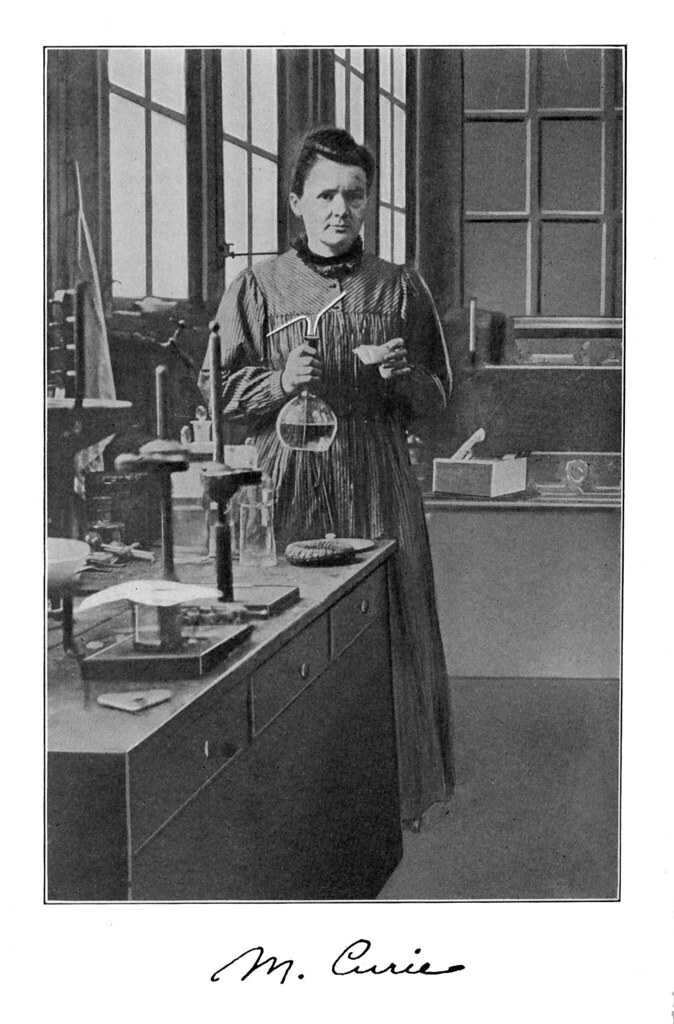
I know she's over-done, but I have this great old book about People, Mostly Men, Oh And Also Marie Curie!, In Science.

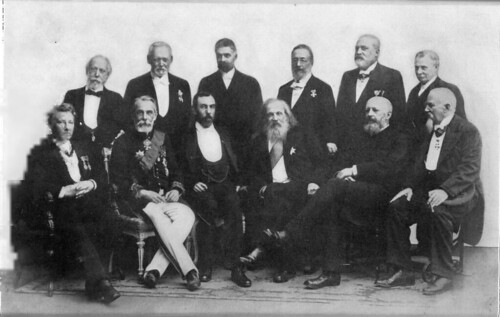
A propos of FSP's 'endless array of bearded men', the photo inside the front cover:

Men in Science
Top: Ladenburg, Jorgensen, Hjelt, Landolt, Winkler, Thorpe; Bottom: van't Hoff, Beilstein, Ramsay, Menedleeff, von Baeyer, Cossa.

It starts out pretty good: Here's a brilliant woman did great work and isn't being recognized! And then... worsens. She's an exception, you see, a genius, and that makes her equal to men. And 'mental fog which has incapacitated many a man' is fine, but weren't we talking about women's repression here?

This wouldn't be quite so distressing if these attitudes were, y'know, gone. Women have to work twice as hard to get recognition? Check. Given lesser positions for equal work? Excluded from Old Boys' Club? Check. It's tradition? Check. 'Don't worry, science doesn't make her completely unwomanly, she still cooks and cleans and dresses pretty'? CHECK.

This book is 80 years old. As long as science departments remain 80% male, as long as grant moneys go to men out of proportion to numbers and ability, as long as we keep discussing Nancy Pelosi's clothing, these attitudes won't change. We've been working on it; let's keep working.

****

Mme Curie

Eminent Chemists of Our Time
Benjamin Harrow
Van Nostrand; 1927 (2nd ed.)

The foremost scientist of France, and the greatest woman scientist in the history of mankind, [Curie] counts politically less than many a man fit for the lunatic asylum. And as if to encourage that conception of women to which so many men cling tenaciously, the French Academy, numbering among its members the élite of French intellect, decide [sic] that woman, be she ever so much a genius, cannot be admitted into their sanctum. If further proof were needed that intellect often runs counter to freedom, and that scientists who work so strenuously for an enlargement of their scientific horizon often belong to the most reactionary group in politics, the case of Madame Curie affords an excellent example.

Within the space of ten short years this woman has created a new science, radioactivity, and this has opened up more fertile chemical soil than any other discovery in the history of science... In speed of progress, radioactivity is to the science which has gone before what the aeroplane is to the tortoise.

This momentous discovery belongs to Madame Curie. To be sure, the way was paved for her by many; to be sure, her husband was a good helpmate; but in spite of analogous work in various parts of the world by the world's most gifted scientists, this woman triumphed where all others failed, and to her belongs the reward... to-day she stands crowned as the greatest woman and among the very greatest scientists of all times.

The inherent qualities which go to the making of genius certainly never have been the exclusive possession of half mankind, but whereas the male geniuses have, at times, been allowed to blossom, the females belonging to this species, have until recently, been suppressed with a Cossack's ferocity and a Cossack's justice. The past four years [WW I] of critical history from which mankind has just emerged will, perhaps, help to remove the mental fog which has incapacitated many a man [or woman?] from using his brains to the advantage of himself and of the world.
...
In the history of doctor's dissertations, Madame Curie's easily takes first place for importance of contribution, with Arrhenius's as a close second... With a bound Mme. Curie leaped from complete obscurity to the center of the world's stage...

Within the next few months the Nobel Prize, the highest mark of distinction that can come to any scientist, was divided between the Curies and Becquerel.

In [1901] Madame Curie was appointed Chef de Travaux, or chief of the laboratory, in the department at the Sorbonne that was especially created for her husband. [After his death, she was made head of this department.]
...
In 1911 Madame Curie was again the recipient of the Nobel Prize... So far Madame Curie is the only individual who has received the award more than once; this in itself speaks volumes as to her standing in the eyes of her fellow-scientists... In this same year the French Institute dishonored itself by refusing to elect Madame Curie to membership... This gave rise to a lively discussion on the eligibility of women for membership when Mme. Curie's name was brought before the one hundred and fifty Academicians at the quarterly meeting of the five academies... this august body went on record to the effect that... there was 'an immutable tradition against the election of women, which it seemed eminently wise to respect.' Science in its search for truth has thrown tradition overboard on innumerable occasions.
...
Mme. Curie may be the great scientist, but she has many of the traits of femininity and motherhood which most men of all ages have admired. Aside from her work, her attention is devoted almost exclusively to the welfare of her two daughters... When the two children were younger Mme. Curie made all their dresses, and washed and ironed the more delicate pieces of lingerie.

Thursday, February 01, 2007

Ask a Scientist: Antidepressants and Pregnancy (3)

Series: Antidepressants, Pregnancy, Risks

  • Introduction
  1. Spontaneous abortion
  2. Premature birth
  3. Congenital or teratogenic defects; that is, malformations in utero
    • Cardiac defects
  4. Antenatal adaptation problems
    • Muscle stiffness
    • Breathing distress at birth
    • Neurological withdrawal symptoms
  5. Breastfeeding risks
    • Infant weight gain
    • Long-term neurologic development
  6. Maternal risks of going without treatment
    • Relapses
    • Infant failure to thrive
    • Parenting problems, attachment, child behavior

[Disclaimer: I am not a medical professional; this is an academic summary of the evidence available and not a medical opinion. I do not offer medical advice. If you require medical opinions or treatment, please consult your physician.]

This information is drawn from published articles in medical journals, some of which are compiled here, and from public databases. (See also: summaries on Motherisk, FDA registries for pregnant women, this excellent Medscape article, and the FDA's index by drug name.) Information is also available through PubMed by searching various terms; I suggest starting with 'antidepressants and pregnancy'.

A list of generic and trade names is here.


*****
3. Congenital or teratogenic defects; that is, malformations in utero
  • All defects; cardiac defects
There is a lot of very good data tracking birth defects (and post-natal events) in SSRIs and several other antidepressants. These studies have used large numbers of study subjects, and have characterized the various possible adverse effects. I would say that these data are reliable and believable.

These studies are often reported as odds ratios (ORs): the chance that X will happen under condition Y, divided by the rate of X without condition Y. Sometimes ORs are high: 2-fold, 4-fold. Remember that the basal rate is important; does it increase from 1% to 2% or 10% to 20%? Is the basal rate noisy; that is, is it small enough that there is doubt what the basal rate really is; could it be 1-3% in reality? So a high OR is not always cause for alarm. (Moral: Read articles carefully.)

It is believed that first-trimester exposure has the most impact on congenital (i.e. pre-birth) deformities; for an example, see this; this is why many of these studies focus on women who took ADs in the first trimester.

For comparison, the CDC runs a long-term birth defect database called the MACDP. Its latest report, from 2004, reports 1.2% cardiac defects and 2.3% all birth defects (including trisomies) among all births in the study.

The same large Finnish database mentioned in Part 1 investigated rate of birth defects among women with SSRI purchases in 1st, 2nd, 3rd, or all trimesters. About 1400 women bought SSRIs in the first trimester, being: citalopram, fluoxetine, paroxetine, sertraline, and fluvoxamine. Most SSRIs had no effect on birth defect incidence. There was a questionable association between 1st-trimester fluoxetine exposure and cardiac defects: 2.3% vs. a reported rate of 0.8% in Finland. After the authors adjusted for other factors, however(they don't specify, but probably things like smoking, family history, cocaine use, etc.), they found no association.

A study of 150 women on venlafaxine (Effexor) detected no defects above the basal level of 1-3% in the general population. A literature review of many other studies says that fluoxetine, sertraline (SSRIs), bupropion, and low doses of paroxetine are not associated with birth defects. A few isolated cases are reported with venlafaxine.

A large study/database (pdf) by Glaxo-Smith-Kline tracking reported defects (incident reporting), especially in bupropion use for all purposes, finds the following incidences (selected data):

All congenital defects:
Bupropion: 3.4%
All other ADs: 2.5%

1st trimester use (smaller cohorts), all defects:
Paroxetine: 4%
Citralopram: 3.2%
Trazodone: 5%
Venlafaxine: 1.9%
Sertraline: 1.4%

Bupropion is associated with a 1.9% incidence of cardiac defects (CDC: 1.2%).

A recent study on the Quebec pregnancy registry also reports that 7% of infants in 1403 women taking paroxetine had congenital defects, and 1.7% had cardiac defects.

CONCLUSIONS:
  • SSRIs (except for paroxetine) are probably not associated with increased risk of birth defects, including cardiac defects. Neither is venlafaxine.
  • Paroxetine and trazodone are associated with increased risk of birth defects.
  • The Quebec study indicates that low doses of paroxetine are NOT associated with increased risk.
  • Bupropion may slightly increase cardiac defects; however, the effect is small and therefore not certain.