Friday recipe below.
***
Monday morning: Attempt to do thing with cells. Cells do not cooperate. Experiment delayed due to meeting. Cells continue to not cooperate. Throw up hands and leave.
Tuesday morning: Lab meeting. Boring papers. Smelly grad student sits next to me. Smells bad.
Wednesday morning: Postdoc: 'I think there's something wrong with that freezer...' Open freezer. Large puddle of water. Yelp. Begin slinging boxes onto a cart. Stuff boxes into 3 already-full freezers. Attempt to find something important. Fail. Sigh.
Wednesday morning, 30 minutes later: Postdoc: 'And this rotor, um, it....' Look at rotor. Tube stuck firmly into rotor. Rotor costs $4000. Get vise grips; spend 30 minutes extracting cap. Drain tube. Tube has imploded. Swear. Apply various tools, gingerly. Fail. Go yell at lab manager for other lab, whose idiot first-year imploded tube. Conduct training session on Proper Centrifuge Usage, Or How Not to Ruin Our Expensive Equipment, Morons. Stare at rotor. Give up.
Thursday morning: Go outside. Wait for bus. Bus does not come. Feel stabbing pain. Yellowjacket has stung sprained finger in joint. Whimper in pain. Apply baking soda. Doesn't help.
Thursday evening: Message on machine. 'That X-ray? On your finger? The sprained one? Someone should have called you. A week ago. Um, it's fractured. Would you like an appointment?'
Friday, August 31, 2007
Friday Corruption Recipe: Cambodian Rice-Vermicelli Soup
Num Ba Chok (the kosher and vegetarian versions)
4 quarts broth
2 pounds fillets of mild white fish
-or: 2 pounds pressed firm tofu
2 stalks lemon grass
5 strips krachai
1/2 t ground turmeric
1 clove garlic
6-10 dried anchovies
-or: 1 T fake chicken soup powder
-or: 2 t-2 T prahok
1 T sugar
If using tofu, slice and sautee with soy sauce and sesame oil until browned. Simmer fish or tofu in broth 5 minutes. Pound all remaining ingredients into a paste in mortar and pestle; add to broth. Simmer 5-10 more minutes.
Sauce
2 T oil
1 clove garlic
1 T crushed red pepper, or to taste
8 oz roasted peanuts, coarsely chopped
-or: 1/2 cup chunky peanut butter
7 oz coconut milk
1 rehydrated dried anchovy, smushed
5 T sugar
1 T tamarind concentrate
Chop garlic coarsely. Saute in oil, with pepper, until garlic is golden. Add rest of ingredients; cook until flavors are blended (10-20 minutes).
Garnishes
28 oz thin rice noodles (vermicelli)
1/2 pound green beans
1 green (unripe) papaya
4 oz fresh bean sprouts
2 small cucumbers
Banana blossoms
(Thai plum leaves)
Boil water. Put in noodles and cook until barely done, 2-3 minutes. Rinse in cold water and set aside.
Snap off ends, then blanch green beans. Peel papaya and cucumber and slice into paper-thin one-inch strips. Blanch banana blossoms if fresh; rinse if canned; quarter. Put each vegetable into a separate bowl.
Into a deep bowl, place a handful of vermicelli; cover with broth. Add a spoonful of the sauce and serve. Each diner will add their own vegetables. Enjoy!
***
All of these ingredients should be available at Chinese and Asian markets. If you cannot find a green papaya, an unripe mango is also excellent. Banana blossoms come canned, as does krachai; look carefully, since they will likely be labeled in Thai.
4 quarts broth
2 pounds fillets of mild white fish
-or: 2 pounds pressed firm tofu
2 stalks lemon grass
5 strips krachai
1/2 t ground turmeric
1 clove garlic
6-10 dried anchovies
-or: 1 T fake chicken soup powder
-or: 2 t-2 T prahok
1 T sugar
If using tofu, slice and sautee with soy sauce and sesame oil until browned. Simmer fish or tofu in broth 5 minutes. Pound all remaining ingredients into a paste in mortar and pestle; add to broth. Simmer 5-10 more minutes.
Sauce
2 T oil
1 clove garlic
1 T crushed red pepper, or to taste
8 oz roasted peanuts, coarsely chopped
-or: 1/2 cup chunky peanut butter
7 oz coconut milk
1 rehydrated dried anchovy, smushed
5 T sugar
1 T tamarind concentrate
Chop garlic coarsely. Saute in oil, with pepper, until garlic is golden. Add rest of ingredients; cook until flavors are blended (10-20 minutes).
Garnishes
28 oz thin rice noodles (vermicelli)
1/2 pound green beans
1 green (unripe) papaya
4 oz fresh bean sprouts
2 small cucumbers
Banana blossoms
(Thai plum leaves)
Boil water. Put in noodles and cook until barely done, 2-3 minutes. Rinse in cold water and set aside.
Snap off ends, then blanch green beans. Peel papaya and cucumber and slice into paper-thin one-inch strips. Blanch banana blossoms if fresh; rinse if canned; quarter. Put each vegetable into a separate bowl.
Into a deep bowl, place a handful of vermicelli; cover with broth. Add a spoonful of the sauce and serve. Each diner will add their own vegetables. Enjoy!
***
All of these ingredients should be available at Chinese and Asian markets. If you cannot find a green papaya, an unripe mango is also excellent. Banana blossoms come canned, as does krachai; look carefully, since they will likely be labeled in Thai.

Wednesday, August 29, 2007
On (Not) Being One of the Boys
Or: Networking Is So Important
In my lab, there are N people, where N>10, and 2 women.
The men spend a lot of time together outside lab. They play tennis. They go running. They go out for dinner. They go out for drinks. They invite one another to parties.
I don't. Why?
Well, probably they don't like me. They're civil enough at work- at least, now they are (and may the Evil Ex, the Untreated Bipolar, and the Physics Harpy be forever forgotten). But I'm sure I wander about with a scowl on, looking quite unfriendly. And then there's the three years I spent really, really depressed. I wasn't so good at the socializing then.
Besides that, it would be weird to invite a girl out for drinks; it would be weird for me to ask just one of the guys out for a drink. It somehow wouldn't be appropriate; insert bizarre societal taboo here. And then come the pursuits which women are expected not to share: basketball, golf, football watching. I read periodically of other women who are shut out of the 'network' because what, they're going to go golfing with the chair? Out for dinner with the male junior faculty down the hall? Not so much.
In fact, 'Lifting a Ton of Feathers', among other excellent scholarly works, confirms that We're Not Making This Up. It really happens. Women are, consciously or unconsciously, excluded from the social networks that will make up (on average) 60 to 75% of their professional colleagues.
It's frustrating when I see others assume I wouldn't be interested in, say, playing tennis, because I'm a girl. Many other women, as well as me, are excluded from the next generation of old boys' club because we're not boys, because it would be uncomfortable, because women don't talk about sports. I can see the club forming before my eyes.
How do women break in? How do we make ourselves part of the club?
We go to meetings. We organize parties for the department. We round up people to go to dinner. We hang out with... who? We find a mentor. But what else? What can take the place of golfing with the chair? Is it possible for the current chairs-of-departments to recognize the inadvertent discrimination and make an active effort to change? (I must say I am well acquainted with my department's chair and he thinks he isn't discriminating. It's hard for people to see their own bias, no?) How can we help this change? Discuss.
In my lab, there are N people, where N>10, and 2 women.
The men spend a lot of time together outside lab. They play tennis. They go running. They go out for dinner. They go out for drinks. They invite one another to parties.
I don't. Why?
Well, probably they don't like me. They're civil enough at work- at least, now they are (and may the Evil Ex, the Untreated Bipolar, and the Physics Harpy be forever forgotten). But I'm sure I wander about with a scowl on, looking quite unfriendly. And then there's the three years I spent really, really depressed. I wasn't so good at the socializing then.
Besides that, it would be weird to invite a girl out for drinks; it would be weird for me to ask just one of the guys out for a drink. It somehow wouldn't be appropriate; insert bizarre societal taboo here. And then come the pursuits which women are expected not to share: basketball, golf, football watching. I read periodically of other women who are shut out of the 'network' because what, they're going to go golfing with the chair? Out for dinner with the male junior faculty down the hall? Not so much.
In fact, 'Lifting a Ton of Feathers', among other excellent scholarly works, confirms that We're Not Making This Up. It really happens. Women are, consciously or unconsciously, excluded from the social networks that will make up (on average) 60 to 75% of their professional colleagues.
It's frustrating when I see others assume I wouldn't be interested in, say, playing tennis, because I'm a girl. Many other women, as well as me, are excluded from the next generation of old boys' club because we're not boys, because it would be uncomfortable, because women don't talk about sports. I can see the club forming before my eyes.
How do women break in? How do we make ourselves part of the club?
We go to meetings. We organize parties for the department. We round up people to go to dinner. We hang out with... who? We find a mentor. But what else? What can take the place of golfing with the chair? Is it possible for the current chairs-of-departments to recognize the inadvertent discrimination and make an active effort to change? (I must say I am well acquainted with my department's chair and he thinks he isn't discriminating. It's hard for people to see their own bias, no?) How can we help this change? Discuss.
Monday, August 27, 2007
One Weasel Fewer
Aaaaaand another one bites the dust. One more weasel down, hundreds to go.
I just hope his decision to leave was... torturous.
Wednesday: Old Boys' Clubs; Young Boys' Clubs.
I just hope his decision to leave was... torturous.
Wednesday: Old Boys' Clubs; Young Boys' Clubs.
Friday, August 24, 2007
You've Been In Lab Too Long When...
- The Geiger counter screams and you don't even notice.
- You're seized, halfway down the hall, with the paranoid fear that you've just tracked radiation through the elevator. But you haven't. Of course you haven't. Surely not.
- You break the electrode, and it takes you an hour to figure out where to buy a new one.
- You drop five things in five minutes and decide it's time to go home.
- Before you drop something really hot.
- You fall asleep to the hallucinatory sounds of an imaginary Geiger counter.
Wednesday, August 22, 2007
Truth: Still Stranger Than Fiction
Scene: Dreaded Semi-Annual Meeting With Advisor [In Which Said Advisor (Historically Speaking) Inspires In Me Two Entire Weeks Of Looking For a New Job, Whilst Moaning and Gnashing of Teeth; Also In Which Said Advisor Releases His Inner, Er, Advisor, In Consequence of Which I Am Shocked But Not Dismayed]
Advisor: So what's your plan for the next six months?
Me: Well, I'm starting an experimental wall-building series on Monday. Then every Tuesday I'm baking bricks, and every week I'm going to make a new decorative lattice until it's aesthetically and structurally sound. Once I've figured out what works best I'll start the final construction.
A: Sounds good. When will you be done with the test patterns?
Me: End of September, I hope.
A: (Technical question on clay mixtures and firing temperatures.)
Me: (Long boring answer on various details.)
A: This is going to make a really nice paper.
Me: ..... um, yeah.
A: I hope you're proud of all you've learned while you've been here. You've really made great progress.
Me: ..... Well, I'm a lot more efficient ....
A: So are you going to try to make the March deadline?
Me: .....
A: I think you probably could, but it might be a bit tight.
Me: ... uh ... as long as I defend by September, it'll be fine.
A: Well, it all looks great! You've done good work.
Me: .... [Abducted by aliens, maybe??] ....
A: I'm looking forward to seeing those walls!
Me: ... yeah, me too!
A: This was the shortest meeting I've had! It's because you're so organized.
Me: ....
Exit precipitously through office door, shaking head.
*****
I would like to imagine that my inner science-lover would be a happy, productive researcher, and that my three-year-long-headache only a bad dream, if the Inner Advisor were let loose more often. I would revel in my experiments, rather than dreading them; the long hours in lab would be an inconvenience gladly borne in the name of interesting data. I would believe that research science is my life's work, if only I occasionally received feedback instead of receiving attacks. I would also like to imagine that the anger which leads me to blog would be much diminished if not dissipated, in which case, alas, I wouldn't have your charming company, dear reader.
(scientiae-carnival)
Advisor: So what's your plan for the next six months?
Me: Well, I'm starting an experimental wall-building series on Monday. Then every Tuesday I'm baking bricks, and every week I'm going to make a new decorative lattice until it's aesthetically and structurally sound. Once I've figured out what works best I'll start the final construction.
A: Sounds good. When will you be done with the test patterns?
Me: End of September, I hope.
A: (Technical question on clay mixtures and firing temperatures.)
Me: (Long boring answer on various details.)
A: This is going to make a really nice paper.
Me: ..... um, yeah.
A: I hope you're proud of all you've learned while you've been here. You've really made great progress.
Me: ..... Well, I'm a lot more efficient ....
A: So are you going to try to make the March deadline?
Me: .....
A: I think you probably could, but it might be a bit tight.
Me: ... uh ... as long as I defend by September, it'll be fine.
A: Well, it all looks great! You've done good work.
Me: .... [Abducted by aliens, maybe??] ....
A: I'm looking forward to seeing those walls!
Me: ... yeah, me too!
A: This was the shortest meeting I've had! It's because you're so organized.
Me: ....
Exit precipitously through office door, shaking head.
*****
I would like to imagine that my inner science-lover would be a happy, productive researcher, and that my three-year-long-headache only a bad dream, if the Inner Advisor were let loose more often. I would revel in my experiments, rather than dreading them; the long hours in lab would be an inconvenience gladly borne in the name of interesting data. I would believe that research science is my life's work, if only I occasionally received feedback instead of receiving attacks. I would also like to imagine that the anger which leads me to blog would be much diminished if not dissipated, in which case, alas, I wouldn't have your charming company, dear reader.
(scientiae-carnival)
Monday, August 20, 2007
These Pictures (of People) Will Self-Destruct
[Now with less people, sorry.]
We have camped. There was bourbon. The mosquitoes were successfully repelled, and all is well with the world.
I had something brilliant to tell you, but I forgot it.
While we were away we saw salamanders


and efts and snakes


and frogs that looked a lot like this.
When we got back we saw police cars


and a man in the woods. ("What's that, hedge trimmers?" "A shotgun. Walk faster."')
We have camped. There was bourbon. The mosquitoes were successfully repelled, and all is well with the world.
I had something brilliant to tell you, but I forgot it.
While we were away we saw salamanders
and efts and snakes
and frogs that looked a lot like this.
When we got back we saw police cars
and a man in the woods. ("What's that, hedge trimmers?" "A shotgun. Walk faster."')
Friday, August 10, 2007
All The Essentials
Camping grocery list:
-soap
-bourbon
-lima beans
-kippers
-DEET
****
Because: I'm leaving town! In celebration of Mr. S's recent and successful defense of his thesis, which all went very well except the bit at the beginning where a summer program thought they had the room for 1 pm. And refused to leave. Fortunately, Titania arrived, and five minutes later, they'd all vanished. Then she had us all over to her lovely house for champagne and Brie.
One down; one to go.
So we are here (myself, Dr. S [!], and my favorite cousin, whose birthday we will be celebrating with chocolate cake). We will be in the woods, hiking about, gazing at birds, and setting things on fire (in a controlled and environmentally sensitive manner). Also, we will be drinking bourbon. Cheers all around.
-soap
-bourbon
-lima beans
-kippers
-DEET
****
Because: I'm leaving town! In celebration of Mr. S's recent and successful defense of his thesis, which all went very well except the bit at the beginning where a summer program thought they had the room for 1 pm. And refused to leave. Fortunately, Titania arrived, and five minutes later, they'd all vanished. Then she had us all over to her lovely house for champagne and Brie.
One down; one to go.
So we are here (myself, Dr. S [!], and my favorite cousin, whose birthday we will be celebrating with chocolate cake). We will be in the woods, hiking about, gazing at birds, and setting things on fire (in a controlled and environmentally sensitive manner). Also, we will be drinking bourbon. Cheers all around.
Wednesday, August 08, 2007
In Which I Lament Various Occurrences
Alas. Alas, I say! Why is it that:
- grad school seemed like a good idea?
- there are so many backorders in the world?
- my large shipment of radiation, to wit, is MIA? I needed it yesterday. Along with my Sigma order, also on Indefinite Backorder, i.e. Forget.
- but my in-laws, who showed up a day early, are not on back-order?
- my sleep is also backordered?
- giving up caffeine seemed like a good idea?
- giving up chocolate seems plausible?
- it is so wretchedly hot?
Monday, August 06, 2007
Ask a Scientist: Folate and Neuroblastoma
Aurelia asked rather a while ago (sorry, Aurelia!) if I'd supply a short review of folic acid and neuroblastoma incidence. Well, I'm sitting in lab waiting for something to cool off, so here goes.
Folate supplementation in pregnancy is known to reduce neural tube defects up to 70 or 90%, though only if taken in the first 28 days of pregnancy, after which the neural tube is formed and fused, i.e. it's too late. So if you're planning to become pregnant, either eat a lot of spinach or take your vitamins.
A Canadian Motherrisk study is one of the stronger pieces of evidence for folate preventing pediatric cancers. They survey NB cases before and after mandatory flour supplementation took effect, and find that the rate declines from "1.57 cases per 10,000 births before to 0.62 case per 10,000 births after folic acid fortification (P < .0001)". However, another author points out in a commentary that they would only be expected to catch about 40% of the NBs that would eventually arise. (I didn't check their calculations, but let's assume that's correct.) .62/.40 = 1.55 cases per 10,000 births. In other words, that implies no effect.
On the other hand, a recent meta-analysis looked at a bunch of studies on prenatal vitamins and cancers, and concluded that vitamins reduce NB risk by 50%. (Now, meta-analyses are notoriously flawed, because each paper is looking at something different, asking different questions of the patients, and using different samples.) So this could be true, but it could not. Who knows.
A large 'case-control' study- still interview-based, and I add quote marks because they didn't divide the mothers into groups and give half vitamins, they simply asked questions and then divided up the groups- did find an association between prenatal vitamin usage and decreased risk of brain tumor.
This study showed the same thing, but slightly more convincingly because they sample several hundred NB patients, comparing vitamin users to non-users. This German study, on the other hand, is rubbish. They do a case-control study of pediatric cancer incidence and conclude that vitamins cause cancer! Aaaaah! Eat your meat and potatoes. But. For the 'pain reliever use and bone tumor' association, for example, they have 93 (98.9% of respondents) who had cancer and didn't use pain relievers. But they only had one who did. From this they conclude that taking pain relievers lowers your risk of bone cancer by 70%, i.e. that the odds ratio is 0.33. Ah, no.
This is what's known as 'insufficient statistical power', i.e. 'Your sample's waaaay too small.' They are looking at a rare condition in 94 patients and it just so happens that only one mother took asprin. Well, to really study this, you need either a huge cohort of people who did and didn't take asprin, or a large set of bone cancer patients along with complete medication information for each mother. Neither is precisely ideal, but that's human studies for you. All those pesky ethics rules.
As far as I personally would judge, folate probably does reduce neuroblastoma risk. It makes sense, even though the mechanism isn't known, because folate clearly has something to do with proper neural development, migration, and signaling (to close the neural tube). To give a little perspective, we've used aspirin for hundreds of years until recently discovering it's a COX inhibitor. A mechanism isn't necessary to know something works.
Overall: The evidence that folate might cause cancer is weak. Prenatal vitamin use is strongly associated with lower rates of birth defects in many studies, is associated with a 90% reduction in neural tube defects, and may be associated with reduced risk for some pediatric cancers.
By the way: Methylenetetrahydrofolate reductase is apparently abbreviated 'MTHFR.'
Folate supplementation in pregnancy is known to reduce neural tube defects up to 70 or 90%, though only if taken in the first 28 days of pregnancy, after which the neural tube is formed and fused, i.e. it's too late. So if you're planning to become pregnant, either eat a lot of spinach or take your vitamins.
A Canadian Motherrisk study is one of the stronger pieces of evidence for folate preventing pediatric cancers. They survey NB cases before and after mandatory flour supplementation took effect, and find that the rate declines from "1.57 cases per 10,000 births before to 0.62 case per 10,000 births after folic acid fortification (P < .0001)". However, another author points out in a commentary that they would only be expected to catch about 40% of the NBs that would eventually arise. (I didn't check their calculations, but let's assume that's correct.) .62/.40 = 1.55 cases per 10,000 births. In other words, that implies no effect.
On the other hand, a recent meta-analysis looked at a bunch of studies on prenatal vitamins and cancers, and concluded that vitamins reduce NB risk by 50%. (Now, meta-analyses are notoriously flawed, because each paper is looking at something different, asking different questions of the patients, and using different samples.) So this could be true, but it could not. Who knows.
A large 'case-control' study- still interview-based, and I add quote marks because they didn't divide the mothers into groups and give half vitamins, they simply asked questions and then divided up the groups- did find an association between prenatal vitamin usage and decreased risk of brain tumor.
This study showed the same thing, but slightly more convincingly because they sample several hundred NB patients, comparing vitamin users to non-users. This German study, on the other hand, is rubbish. They do a case-control study of pediatric cancer incidence and conclude that vitamins cause cancer! Aaaaah! Eat your meat and potatoes. But. For the 'pain reliever use and bone tumor' association, for example, they have 93 (98.9% of respondents) who had cancer and didn't use pain relievers. But they only had one who did. From this they conclude that taking pain relievers lowers your risk of bone cancer by 70%, i.e. that the odds ratio is 0.33. Ah, no.
This is what's known as 'insufficient statistical power', i.e. 'Your sample's waaaay too small.' They are looking at a rare condition in 94 patients and it just so happens that only one mother took asprin. Well, to really study this, you need either a huge cohort of people who did and didn't take asprin, or a large set of bone cancer patients along with complete medication information for each mother. Neither is precisely ideal, but that's human studies for you. All those pesky ethics rules.
As far as I personally would judge, folate probably does reduce neuroblastoma risk. It makes sense, even though the mechanism isn't known, because folate clearly has something to do with proper neural development, migration, and signaling (to close the neural tube). To give a little perspective, we've used aspirin for hundreds of years until recently discovering it's a COX inhibitor. A mechanism isn't necessary to know something works.
Overall: The evidence that folate might cause cancer is weak. Prenatal vitamin use is strongly associated with lower rates of birth defects in many studies, is associated with a 90% reduction in neural tube defects, and may be associated with reduced risk for some pediatric cancers.
By the way: Methylenetetrahydrofolate reductase is apparently abbreviated 'MTHFR.'
Friday, August 03, 2007
Recently, In the News
This post brought to you by a week of working my sweet little tush off; a last-minute order for 1 mCi of hot ATP, followed by the realization that a) I needed maybe 250 uCi and b) it was much, much too late; and the letter 'J' for 'Oh my gracious do I have: a load of journal work this weekend, three people to harass in person, one pissed-off author to apologize to. Also, WHY must we have the quality/quantity argument EVERY TWO MONTHS???'. Remind me to tell you about lab misadventures; they have been many. (Anyone out there do NADH-linked ATPase assays? Mine hates me. A lot.)
*********
A less-ratty species of the tote bag. Because real people have real bags.
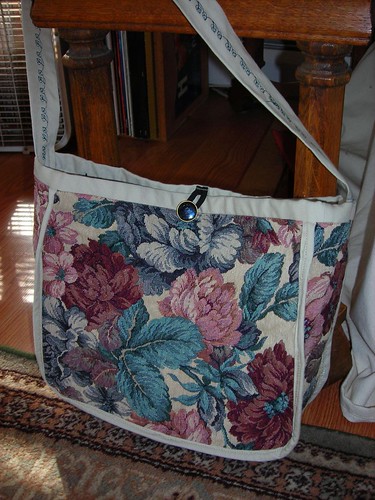
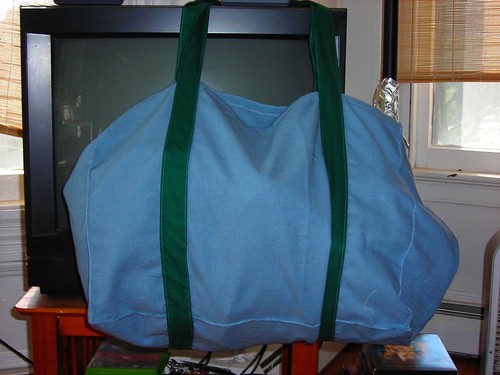
Virtuously ecological grocery bags. (Not pictured: with purple straps.)
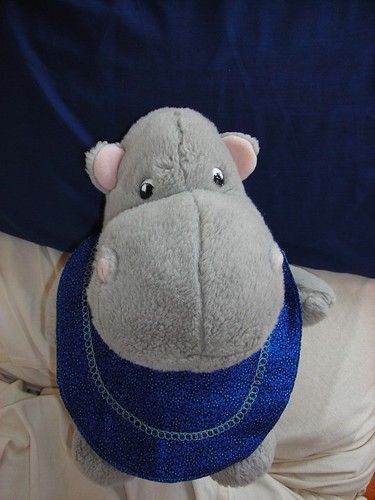
Baby gifts. Not Mr. Hippo; he's mine, all mine.
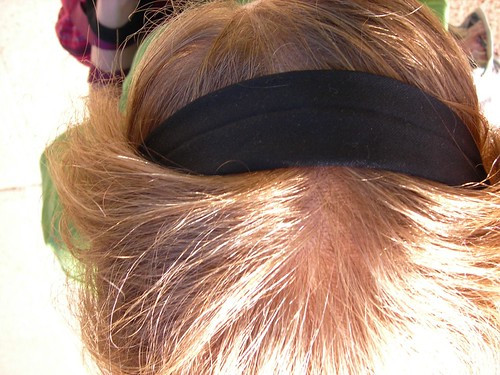
A large selection of headbands for my newly short, falling-into-Bunsen-burner length hair.
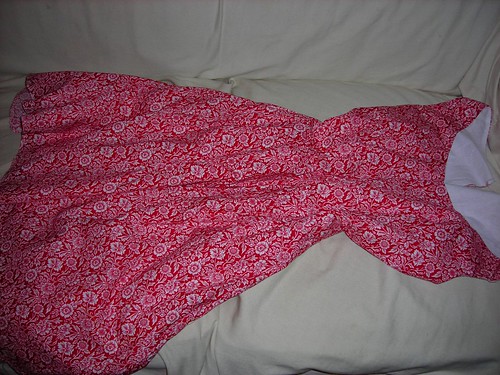
A dress that has been languishing, zipperless, for five (5) weeks.
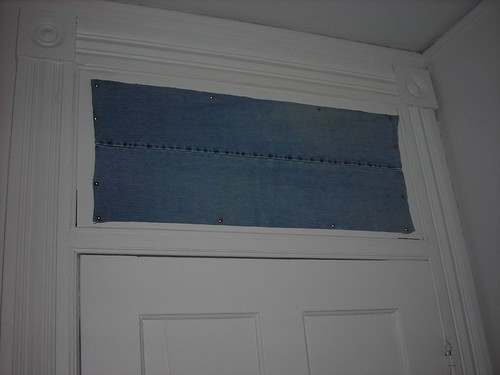
And finally, my deeply-ingrained 'Waste Not, Want Not' meets my desire to keep the aliens out.
Hope you all stay cool this weekend. Oy, it's hot.
*********
A less-ratty species of the tote bag. Because real people have real bags.
Virtuously ecological grocery bags. (Not pictured: with purple straps.)
Baby gifts. Not Mr. Hippo; he's mine, all mine.
A large selection of headbands for my newly short, falling-into-Bunsen-burner length hair.
A dress that has been languishing, zipperless, for five (5) weeks.
And finally, my deeply-ingrained 'Waste Not, Want Not' meets my desire to keep the aliens out.
Hope you all stay cool this weekend. Oy, it's hot.
Wednesday, August 01, 2007
'Unsuccessful Grad Students Blame Their Advisors'
I once read somewhere that unsuccessful grad students always blame their advisors for their lack of success. (Sorry, can't find the original piece.)
To what extent is this true?
I've known grad students who were discouraged at every step of the way, by being told they were bad scientists, by having their littlest result doubted, by having their professional competence impugned. Sometimes they kept on keepin' on. Sometimes they left work every day at 5 and went biking.
Sometimes their advisors praised them later, for working in the face of adversity. Sometimes their advisors told their peers and committees that they weren't working hard enough. Sometimes they got notes in their annual reports that said 'He really was a horrible student the first three years, but he's doing better now, I suppose.' Sometimes they just left.
So let's say there are several kinds of lack-of-success.
There's a lack of results, which is often minimally controllable in that particular project by its researcher.
There's the failure to move on to a new project. This one, I believe, deserves blaming both ways. The student should evaluate her projects to see if they are progressing or are likely too, but the advisor's job is to advise her how to cut her losses.
There's the should-have-worked-harder (more hours, more weekends, less vacations, should have turned over experiments faster... etc.). It's true, one could always work harder. At the same time, there's a finite limit to how much each person can work while remaining sane, healthy, and supplied with clean socks. Whose job is it to say a grad student worked hard enough? In my world, it's my job. When I say it's enough for the day, it is, because no-one wants me to get this PhD more than I do. But this can be problematic if the advisor doesn't agree, or thinks everyone should be in lab from 8 AM to 8 PM six days a week, and half-days on the seventh. Then the student is blamed for a lack of motivation. The student blames the advisor for unrealistic expectations.
There's the student who doesn't have as many papers as he/she could have, for whatever reason. You know, the one who's 'not working up to full potential.' Is it depression? Distraction? A partner who lives far away? Laziness? Hard to tell.
There's the student who runs into infinite technical difficulties, and is blamed by the advisor who doesn't have the foggiest memory of what bench science is like. Or who does. Sometimes this student has less-than-golden hands, and sometimes the experiment is really hard.
If Suzie Frustrated quits grad school after four years because she can't take the condescension, or grinding down, or putdowns, or four straight years of negative results, she may well blame her advisor. Advisors aren't cheerleaders, but good leaders of any sort learn to motivate their underlings. Suzie's advisor hasn't helped her scientifically, or she would at least have a plan that would lead her out of the tunnel. The advisor hasn't helped her professionally, because he hasn't provided any positive feedback: he's been quick to pounce on mistakes, but miserly with praise (and all of that backhanded, to boot).
It's Suzie's 'fault' for joining a bad lab. But it's also her advisor's fault for running a bad lab. Suzie has not reached her scientific potential in part because of the lack of support. Her advisor isn't to blame for her 'giving up', or reaching the end of her rope, but he is to blame for not doing anything positive about it. It's easy to tell when people are frustrated with their research, and it's not helpful to tell Suzie that she's a bad scientist or she'd have results.
So sometimes, yes, unsuccessful grad students do blame their advisors. But some of the time? They're right.
Any good advisor or bad-student stories? Do share.
To what extent is this true?
I've known grad students who were discouraged at every step of the way, by being told they were bad scientists, by having their littlest result doubted, by having their professional competence impugned. Sometimes they kept on keepin' on. Sometimes they left work every day at 5 and went biking.
Sometimes their advisors praised them later, for working in the face of adversity. Sometimes their advisors told their peers and committees that they weren't working hard enough. Sometimes they got notes in their annual reports that said 'He really was a horrible student the first three years, but he's doing better now, I suppose.' Sometimes they just left.
So let's say there are several kinds of lack-of-success.
There's a lack of results, which is often minimally controllable in that particular project by its researcher.
There's the failure to move on to a new project. This one, I believe, deserves blaming both ways. The student should evaluate her projects to see if they are progressing or are likely too, but the advisor's job is to advise her how to cut her losses.
There's the should-have-worked-harder (more hours, more weekends, less vacations, should have turned over experiments faster... etc.). It's true, one could always work harder. At the same time, there's a finite limit to how much each person can work while remaining sane, healthy, and supplied with clean socks. Whose job is it to say a grad student worked hard enough? In my world, it's my job. When I say it's enough for the day, it is, because no-one wants me to get this PhD more than I do. But this can be problematic if the advisor doesn't agree, or thinks everyone should be in lab from 8 AM to 8 PM six days a week, and half-days on the seventh. Then the student is blamed for a lack of motivation. The student blames the advisor for unrealistic expectations.
There's the student who doesn't have as many papers as he/she could have, for whatever reason. You know, the one who's 'not working up to full potential.' Is it depression? Distraction? A partner who lives far away? Laziness? Hard to tell.
There's the student who runs into infinite technical difficulties, and is blamed by the advisor who doesn't have the foggiest memory of what bench science is like. Or who does. Sometimes this student has less-than-golden hands, and sometimes the experiment is really hard.
If Suzie Frustrated quits grad school after four years because she can't take the condescension, or grinding down, or putdowns, or four straight years of negative results, she may well blame her advisor. Advisors aren't cheerleaders, but good leaders of any sort learn to motivate their underlings. Suzie's advisor hasn't helped her scientifically, or she would at least have a plan that would lead her out of the tunnel. The advisor hasn't helped her professionally, because he hasn't provided any positive feedback: he's been quick to pounce on mistakes, but miserly with praise (and all of that backhanded, to boot).
It's Suzie's 'fault' for joining a bad lab. But it's also her advisor's fault for running a bad lab. Suzie has not reached her scientific potential in part because of the lack of support. Her advisor isn't to blame for her 'giving up', or reaching the end of her rope, but he is to blame for not doing anything positive about it. It's easy to tell when people are frustrated with their research, and it's not helpful to tell Suzie that she's a bad scientist or she'd have results.
So sometimes, yes, unsuccessful grad students do blame their advisors. But some of the time? They're right.
Any good advisor or bad-student stories? Do share.
Subscribe to:
Posts (Atom)